





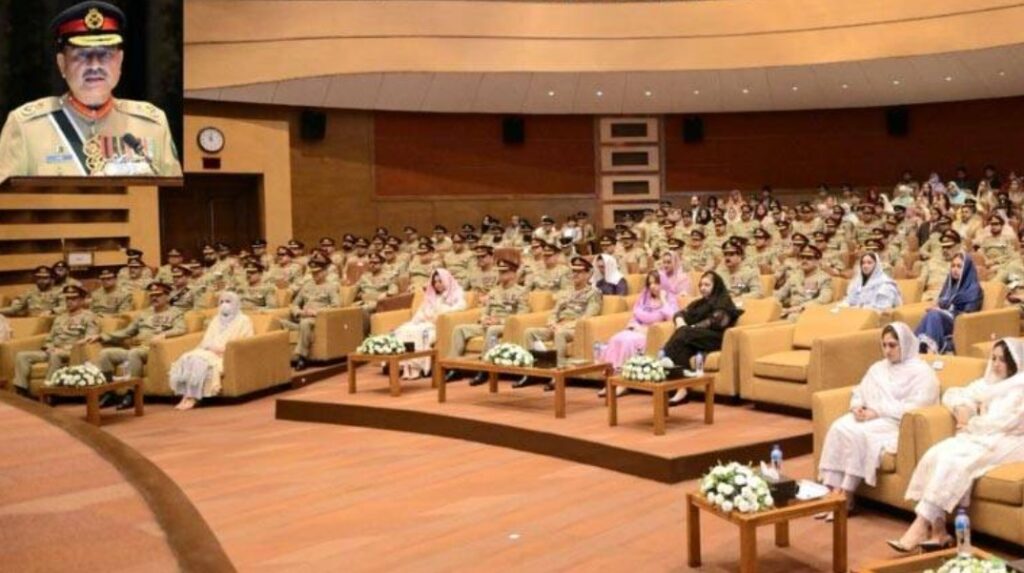
Field Marshal Munir said memory of martyrs and veterans’ service formed lasting honour and pride of the country Pakistan nation
By ISPR
RAWALPINDI: Field Marshal Syed Asim Munir has described the sacrifices of martyrs as a “sacred trust” carried collectively by the nation, saying they represented the enduring pride and moral foundation of Pakistan.
According to a statement issued by the military’s media wing, the Inter-Services Public Relations (ISPR), the remarks were delivered at a ceremony held at the General Headquarters in Rawalpindi, where military honours were conferred on serving officers, soldiers, and families of those killed in service.
Addressing the gathering, Field Marshal Munir said that the memory of martyrs and the service of veterans formed what he called the lasting honour of the country. He added that national peace and internal stability were inseparable from the sacrifices made by members of the armed forces, particularly in the context of long-running security challenges and counter-terrorism operations.
He reiterated that the fight against terrorism would continue with sustained national resolve until what he termed “durable peace” was achieved across the country. The army chief stressed the importance of operational readiness, discipline, and continuous vigilance among security forces, noting that evolving threats required constant preparedness rather than episodic responses.
During the ceremony, honours were awarded to the families of martyrs as well as to serving personnel recognised for exceptional bravery and distinguished service in military operations. The event also included formal acknowledgements of battlefield performance and institutional commitment across different formations of the armed forces, according to the statement.
Field Marshal Munir paid particular tribute to the resilience of bereaved families, praising their dignity in the face of personal loss and describing their strength as integral to the broader national narrative of sacrifice. He said their endurance reflected a form of collective national character that extended beyond the military institution itself.
He further commended what he described as the operational preparedness of both the armed forces and law enforcement agencies, highlighting their continuing role in maintaining internal security and responding to persistent threats. The remarks came amid ongoing security concerns in several regions, where counter-terror operations have remained a central focus of state policy.
