





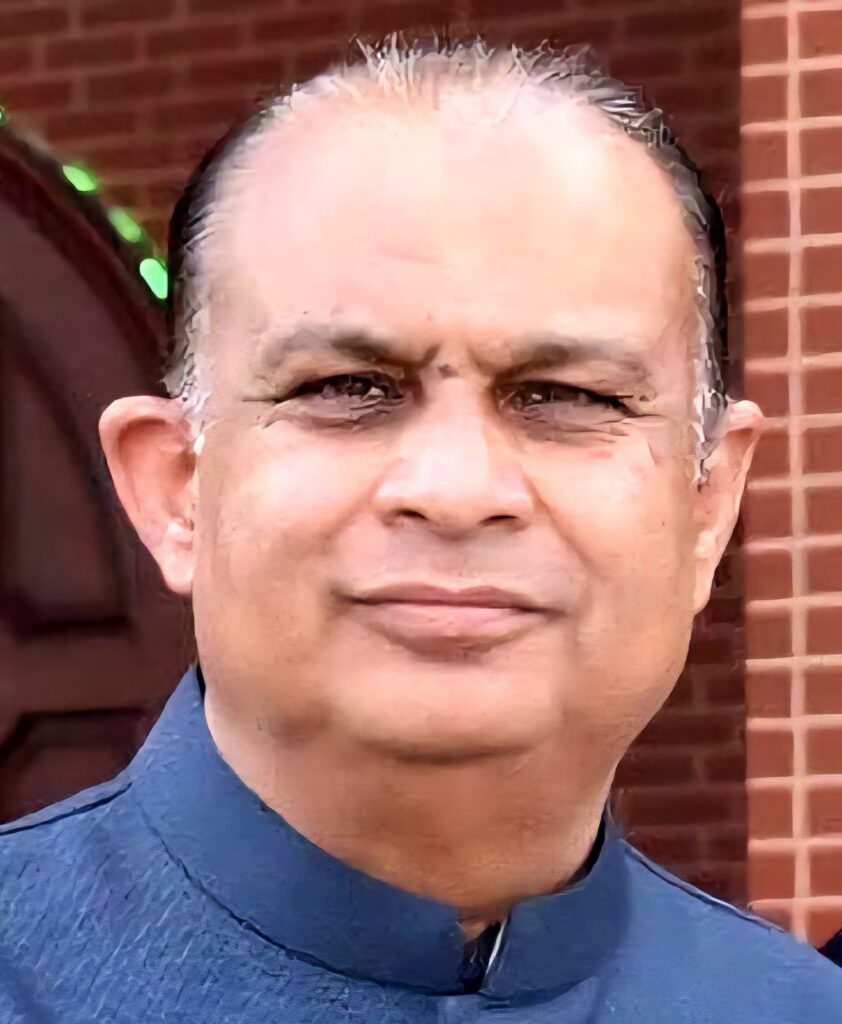
By A. Rehman Patel
A brief moment from the film Srikanth offers a lesson far greater than its few seconds on screen. It speaks not only about one individual’s struggle but about the enduring human battle against fear, injustice and helplessness. Sometimes, a simple sentence can reveal truths that remain hidden beneath years of political debate, psychological studies and historical analysis. In the film, Srikanth, a blind young man, is invited to play cricket by a group of boys. Instead of accepting him, they exploit his vulnerability and attack him. He tries to defend himself, but every attempt to resist brings greater violence.
When his father arrives and rescues him, he asks a simple yet painful question: “Why didn’t you run away?” Srikanth’s answer carries a meaning that extends far beyond his personal circumstances. “I am blind. I cannot run. I can only fight.” These words reflect a reality faced by countless individuals and societies throughout history. There are moments when escape is possible, when people can walk away from difficult circumstances. But there are also moments when every exit disappears, when retreat is no longer an option and survival depends on the courage to stand firm.
The question that history repeatedly places before humanity is not only why people fight, but why some remain silent in the face of suffering. Why do some societies challenge injustice while others endure it for generations? Why do some individuals risk everything for change while others accept hardship as an unavoidable part of life? The answers are complex. Every nation has its own history, political structure, cultural values and social realities. No two struggles are identical, and comparisons must be made with caution.
Yet beneath all these differences lies a shared human experience: the moment when fear begins to lose its power. Oppression does not survive through force alone. It survives when people are persuaded that resistance is useless. A system becomes stronger when those living under it begin to believe that nothing can change. This is what psychologists describe as learned helplessness — a condition where repeated experiences of failure, fear or control convince people that their actions have no meaning. In such circumstances, people may continue their daily lives, but something essential begins to disappear.
Questions become fewer. Expectations become smaller. Hope gradually fades into acceptance. History, however, reminds us that transformation begins when people reject the belief that they are powerless. Every major movement for freedom or justice started with a change in the human mind before it appeared on the streets. The French Revolution, the struggle against apartheid in South Africa, the independence movements of colonial nations and the democratic transitions in many parts of the world all emerged when ordinary people decided that fear could no longer determine their future.
Nations are not truly defeated only when they lose battles or face economic difficulties. The deeper defeat comes when a society loses the belief that it has the ability to influence its own destiny. This principle remains visible in the modern world. In recent years, young generations in several countries have raised their voices against corruption, economic hardship and political failures. Their movements have demonstrated that when frustration reaches a breaking point, even powerful institutions are forced to listen. The energy of young people has often become a reminder that silence is not always acceptance and that public pressure can reshape political realities.
Yet another difficult question remains. Across the world, millions continue to live under conditions of poverty, inequality and restricted opportunities. Some people with resources and choices leave their countries in search of stability and a better future. But many others remain behind, facing the same struggles day after day. Why do they remain silent? Have years of hardship weakened their courage? Have they become so familiar with suffering that they no longer recognize it as injustice? Or have they simply lost faith that change is possible?
Srikanth could not run, so he fought. His struggle was not only against those who attacked him; it was also against the idea that his circumstances defined his possibilities. The same question confronts individuals and societies today. When faced with injustice, uncertainty or hardship, what choice do we make? Do we surrender to fear, or do we defend our values and the future we wish to create? History eventually judges every generation. It remembers not only those who achieved victory but also those who refused to surrender their dignity when the odds were against them. So the question is not merely whether we are struggling. The question is far more important: Are we fighting well?
(The Pakistani-origin American writer and columnist, sheds light on various social and political issues, can be reached at news@metro-morning.com)
#Opinion #SocialJustice #HumanRights #Courage #Hope #Resilience #Leadership #Youth #Democracy #Freedom #Change #Society #Inspiration #CurrentAffairs #PoliticalThought #PublicVoice #MetroMorning #Pakistan #ARehmanPatel #Column
