





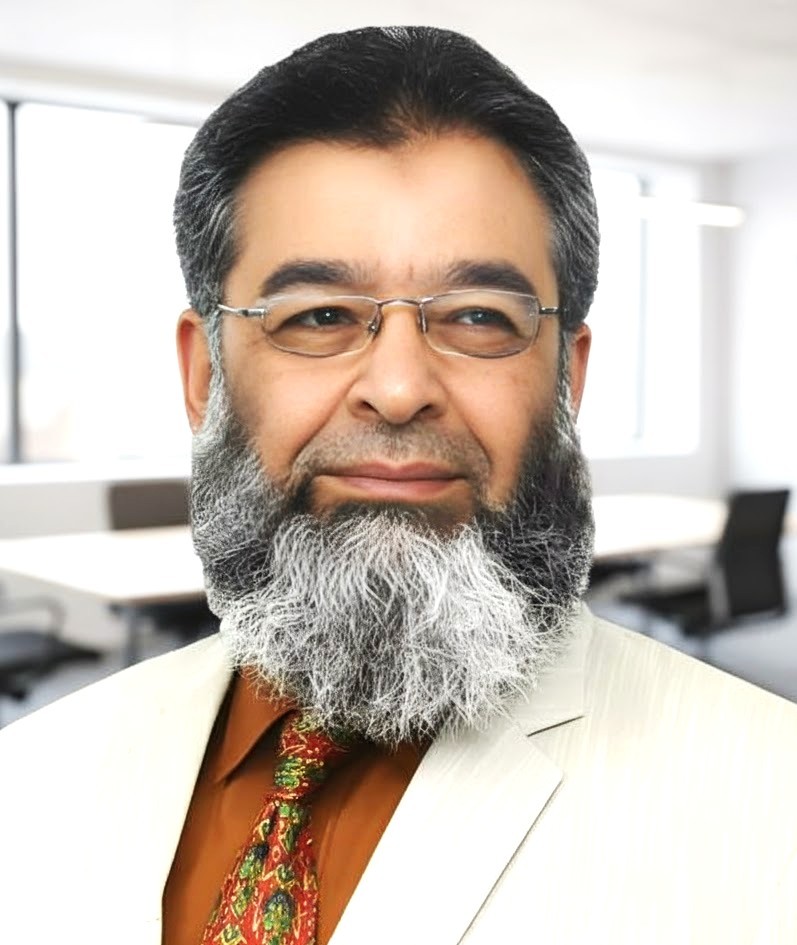
By Muhammad Mohsin Iqbal
The organization of a state, like that of a family, evolves with changing circumstances. As responsibilities grow, authority must be defined and distributed so that institutions can function effectively. Pakistan’s Defence Forces Amendment Bill 2026 is presented in this context as an attempt to modernize the country’s military command structure and bring greater coherence to the management of national defence.
The legislation gives effect to provisions of the 27th Constitutional Amendment and creates a Defence Forces Headquarters under the Chief of Defence Forces, a position to be held concurrently by the Chief of Army Staff. The new office is to serve as the principal military adviser to the prime minister on national security, defence and armed forces matters.
It also carries operational command and control over the armed forces, together with responsibility for joint operations, multi-domain integration, training, administration, combat readiness and coordination between the services. The law also grants the Chief of Defence Forces extensive authority over military personnel, including retirement, discharge, resignation, retention and, within prescribed limits, extensions to age and service. The former position of chairman of the Joint Chiefs of Staff Committee is replaced by the Chief of Defence Forces in the National Command Authority.
The provisions have retrospective effect from 27 November 2025. There is nothing unusual about the broad objective. Militaries around the world have increasingly sought unified command structures as warfare has become more complex. Air, land, sea, cyber and space capabilities increasingly operate together, making coordination between services essential. A senior officer responsible for jointness can reduce institutional rivalry, improve planning and provide governments with a single source of military advice.
But the international comparisons also show that the Pakistani arrangement is distinctive. In the United States, the chairman of the Joint Chiefs of Staff is the highest-ranking military officer and principal military adviser to the president, but does not exercise operational command over the armed forces. The chain of command runs from the president through the secretary of defence to combatant commanders. This separation is deliberate: military advice is centralized while operational authority remains within a structure designed to reinforce civilian control.
India’s Chief of Defence Staff similarly serves as the principal military adviser on tri-service matters and promotes joint operations, logistics, training, procurement and theatre commands. Yet the service chiefs retain operational command of their respective forces. The CDS is, in effect, first among equals rather than an overarching operational commander.
The British system offers a somewhat closer comparison. The Chief of the Defence Staff is the professional head of the armed forces and the principal military adviser to the prime minister and defence secretary. Reforms have strengthened the position, giving it greater authority over service chiefs and strategic military planning. Even so, the office remains firmly subject to ministerial direction and the Defence Council.
Canada and Australia likewise favor unified command under a senior defence chief, but within a framework of governmental authority, parliamentary accountability and civilian control.Pakistan’s model therefore shares the international emphasis on jointness but goes further in concentrating authority. The most significant feature is the decision to combine the offices of Chief of Defence Forces and Chief of Army Staff. Rather than creating a separate joint commander, the law places the Army Chief simultaneously at the top of the unified military structure. That may improve speed and coordination, particularly when decisions have to be taken across the services. A single command headquarters could reduce duplication and make the armed forces more responsive to the demands of modern warfare.
Yet the arrangement also raises a legitimate institutional question: whether concentrating such wide operational and personnel powers in an officer who already commands the army risks making the joint structure disproportionately Army-centered. This distinction matters because effective defence policy is not only about command efficiency. It is also about institutional balance. The air force and navy have distinct operational requirements, traditions and areas of expertise. A genuinely joint system must ensure that integration does not become simple centralization.
The same principle applies to the relationship between military authority and elected government. Modern defence structures work best when commanders have clear powers but remain accountable to civilian institutions. Parliamentary scrutiny, statutory limits and transparent rules are not obstacles to military effectiveness. They are safeguards that give military power democratic legitimacy. The new legislation can therefore be understood as part of a wider international movement towards integrated defence structures.
Its emphasis on joint command, multi-domain coordination and unified planning reflects the realities of contemporary warfare. Its distinctive feature is the breadth of authority given to a Chief of Defence Forces who simultaneously remains the Army Chief.The success of the arrangement will ultimately depend less on the title of the office than on how its powers are exercised. If the structure produces better coordination, stronger preparedness and clearer advice to the civilian government, it may prove useful. If it weakens institutional balance or diminishes meaningful civilian oversight, the concentration of authority could become a source of concern.
Pakistan needs an armed forces structure capable of meeting modern security challenges. It also needs institutions in which authority is clearly defined, accountability is preserved and professional military advice remains subject to elected civilian direction. The real test of the 2026 reforms will be whether they can achieve both objectives at the same time.
(The writer is a parliamentary expert with decades of experience in legislative research and media affairs, leading policy support initiatives for lawmakers on complex national and international issues, and can be reached at editorial@metro-Morning.com)
