





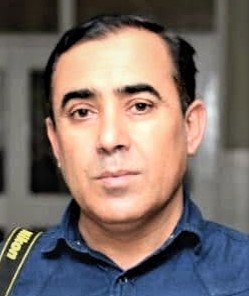
By Dawood Khan Batozai
For more than three decades, Pakistan has fought a disease that should have been consigned to history. Polio is preventable, the vaccine is inexpensive and effective, and repeated campaigns have brought the world close to eradication. Yet Pakistan and Afghanistan remain the only countries where wild poliovirus continues to circulate. That failure is usually described in terms of missed children, refusals, insecurity and weak campaign performance. Those explanations matter, but they do not tell the whole story. The deeper problem is trust.
Polio cannot be eradicated by vaccines alone when the communities that need them most feel excluded from the institutions delivering them. Pakistan’s Pashtun population offers the clearest example. Although Pashtuns make up roughly 18% of the country’s population, they have accounted for about 80% of reported polio cases since 2010, according to figures cited by the program. Such a disparity should force a much harder examination of how public health institutions operate in the communities they are trying to serve.
The problem is not that Pashtuns are inherently resistant to vaccination. It is that years of insecurity, political marginalization, poverty and institutional mistrust have created fertile ground for suspicion. The legacy of the CIA-linked fake vaccination campaign in Abbottabad, reportedly used in the hunt for Osama bin Laden, further damaged the credibility of legitimate health programs. Militants and extremist groups exploited that betrayal, presenting vaccination workers as agents of foreign powers. The consequences have been devastating. More than 200 polio workers have reportedly been killed in Pakistan, many of them in areas where insecurity is already severe.
Yet external betrayal is only part of the story. Institutions cannot demand trust from communities while failing to demonstrate accountability within their own ranks. My nearly seven years working with the polio program in Sindh gave me an unusually close view of that contradiction. I joined as Provincial Communication Officer in March 2018 and worked not only on communication but also alongside field teams in some of Pakistan’s most difficult environments. I saw the importance of persuading families, addressing refusals and understanding why communities distrust government services. I also saw how easily internal dysfunction can undermine that work.
In early 2025, I was among employees removed from the program during a restructuring that, in my view, disproportionately affected people from particular ethnic backgrounds. Components including high-risk mobile population work, religious support and communication were removed at the provincial level, although similar structures remained elsewhere. I believe the circumstances of my removal, and those of others, deserve independent scrutiny rather than dismissal as an ordinary employment dispute. There were also allegations of harassment, nepotism, data manipulation and misuse of polio workers for duties unrelated to eradication.
Complaints, including allegations concerning sexual misconduct and workplace abuse, were raised through official channels. The failure to investigate serious allegations properly is itself damaging, regardless of whether every allegation is ultimately substantiated. An organization that asks its workers to confront hostility in the field must be capable of protecting them inside the institution. The same principle applies to money. Pakistan’s polio program receives substantial international support because eradication is considered a global public good. That makes transparency essential. Reports of workers receiving inadequate or delayed payments, being assigned unrelated duties, or being denied basic workplace protections should not be treated as peripheral administrative problems.
Every such failure feeds the perception that the program values targets more than people. The international agencies involved cannot escape responsibility either. If employees raise serious concerns through internal oversight mechanisms and receive little meaningful response, confidence in those mechanisms inevitably declines. Accountability cannot consist merely of recording complaints, reproducing allegations and returning them to the same structures in which the disputes arose. Independent scrutiny must have consequences when wrongdoing is established. Representation matters as well.
In a province such as Sindh, where Karachi is a major national and international population movement hub and a significant polio risk area, linguistic and cultural competence should be treated as an operational necessity, not a matter of symbolism. A program seeking acceptance among Pashto-speaking communities should have people who understand those communities in meaningful positions of responsibility. The lesson is uncomfortable but straightforward. If Pakistan wants to eradicate polio, it must eradicate the institutional habits that make eradication harder. Hiring and dismissal processes need independent oversight. Complaints need credible grievance mechanisms. Workers need protection from retaliation.
Program spending should be subject to transparent auditing. High-risk districts should have mechanisms through which communities can question and monitor the program. Most importantly, staff should be judged by professional standards rather than ethnicity, connections or willingness to remain silent. The polio worker who knocks on a family’s door carries two things: a vaccine and the reputation of the institution behind it. The first can protect a child from paralysis. The second determines whether the family will open the door.
That is why the persistence of polio is ultimately a question of justice as much as public health. Pakistan does not need another generation of slogans about eradication. It needs institutions that deserve to be trusted. Two drops may be enough to prevent polio, but rebuilding public confidence requires something much harder: honesty, representation, accountability and the courage to confront failures within the system itself. Until that work begins in earnest, the virus will continue to exploit the cracks created not only by poverty and insecurity, but by institutional neglect.
(The writer is a key member of Pakistan’s anti-polio program and served several years fight against polio. He is keen to come with saying on difference topics and can be reached at editorial@metro-morning.com)
