





By Mehrab Shah Afridi
ISLAMABAD: Jhpiego-Pakistan formally handed over the findings of a major nationwide study on cervical cancer prevention to the federal government this week, offering the first comprehensive insight into how families view the human papillomavirus (HPV) vaccine ahead of its introduction in Pakistan.
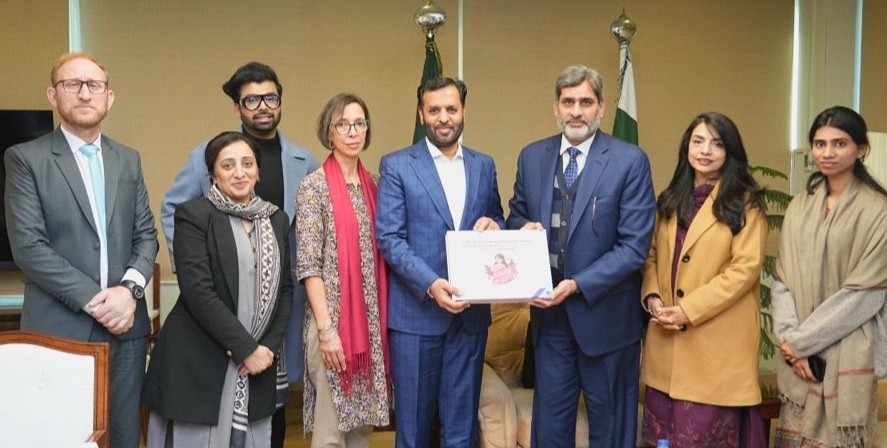
The report, titled “HPV Vaccines Among Young Girls in Pakistan: A Mixed-Methods Study on Knowledge, Attitudes, Behaviors, and Barriers,” was presented to the federal health minister, Syed Mustafa Kamal, during a meeting at the Ministry of National Health Services in Islamabad.
The study, completed shortly before Pakistan prepared to roll out the HPV vaccine, drew on responses from 4,673 caregivers of girls aged nine to fourteen across all provinces. Researchers sought to map, for the first time at scale, how caregivers understood cervical cancer risk, HPV transmission and the protective value of vaccination.
They also examined broader attitudes towards childhood immunization, confidence in healthcare providers and the practical challenges families faced in accessing routine health services.
Jhpiego’s Pakistan team, led by Dilbar Khan and joined by Dr Fahad Abbasi, Elizabeth Oliveras—Jhpiego’s global director for monitoring, evaluation, research and learning—and partners from IPSOS, told the ministry that the findings revealed both encouraging trends and significant gaps.
Awareness of cervical cancer and HPV remained uneven, particularly in rural districts, while misconceptions about the vaccine’s purpose and safety persisted. At the same time, many caregivers expressed strong trust in healthcare workers and a willingness to vaccinate their daughters if clear information and accessible services were provided.
