





By Mehrab Shah Afridi
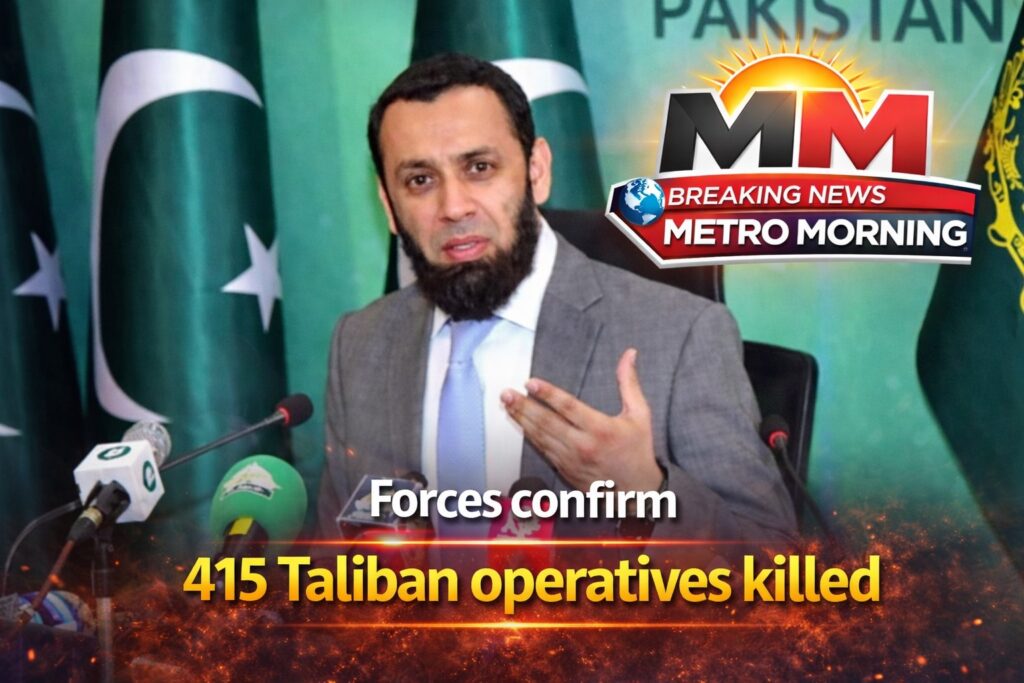
ISLAMABAD: Pakistan’s recent military operation against the Afghan Taliban has left the militant group reeling, according to official statements. Information Minister Fawad Ataullah Tarar reported that Operation Ghazb-ul-Haq, launched in retaliation to cross-border attacks, inflicted heavy casualties on Taliban forces.
Speaking on the social media platform X, Tarar said at least 415 fighters were killed and more than 580 injured, marking one of the most intense escalations along Pakistan’s western border in recent years. The operation, he said, involved targeted airstrikes at 46 locations within Afghanistan, focusing on Taliban positions and infrastructure.
Authorities claimed that 182 Taliban checkpoints were destroyed, with 31 others captured, while 185 tanks, armed vehicles, and artillery guns were neutralized. The scale of the operation underlines Pakistan’s determination to assert control over its border regions and respond decisively to militant threats.
Officials framed the strikes as both a tactical and symbolic show of force, intended to disrupt the Taliban’s operational networks and prevent future incursions. Observers noted that the operation comes amid a period of heightened tension, with previous cross-border attacks having raised concerns in Islamabad about the security of communities along the frontier.
For residents living near the border, the escalation has brought both anxiety and relief: fear of renewed clashes alongside a sense of reassurance from the government’s apparent resolve to protect national sovereignty. Analysts suggest that while the figures reported by Pakistani authorities indicate a substantial impact on Taliban capabilities, independent verification from the Afghan side remains limited.
