





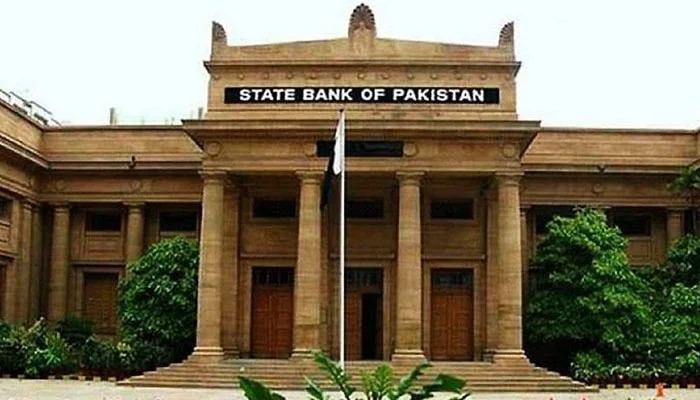
State Bank of Pakistan spokesperson says funds were held with the central bank as a secure safe deposit arrangement, assuring financial stability
By S.M. Inam
KARACHI: The State Bank of Pakistan (SBP) confirmed on Saturday that the government had repaid $2 billion in debt to the United Arab Emirates, marking another significant movement in the country’s shifting external financing position at a time of heightened fiscal pressure.
According to an SBP spokesperson, the funds had previously been held with the central bank as a safe deposit arrangement before their repayment. The clarification came as officials continued to navigate a complex cycle of repayments, rollovers and new borrowing to stabilise foreign exchange reserves and meet external obligations.
The development followed closely on the heels of a separate agreement between Pakistan and Saudi Arabia, under which Riyadh agreed to extend the maturity of a $3 billion deposit placed with the SBP through the Saudi Fund for Development. The extension provided Islamabad with temporary relief, even as other repayments were simultaneously being settled.
Earlier in the week, the central bank had also confirmed the receipt of another $2 billion from Saudi Arabia, dated April 15, 2026, underscoring the role of bilateral deposits in supporting Pakistan’s external accounts. However, despite these inflows and rollovers, analysts have pointed to a widening external financing gap, particularly after the repayment to the UAE was combined with an estimated 6 percent interest payment.
Pakistan has also recently cleared additional external obligations, including $1.43 billion in debt repayments, among them a $1.3 billion Eurobond. These outflows have added further pressure on already tight reserves.
Finance Minister Muhammad Aurangzeb has said the government was actively exploring multiple financing avenues, including Eurobonds, Islamic sukuk and commercial borrowing, to replace maturing liabilities and maintain stability in foreign exchange reserves. He had indicated that reserves were being maintained at roughly 2.8 months of import cover, which he described as crucial for macroeconomic stability.
While Pakistan had not yet requested changes to its IMF program, officials said adjustments could still be considered depending on how external pressures evolved in the coming weeks. The IMF board is expected to approve the next tranche of funding later this month or early next, which would unlock nearly $1.3 billion under existing arrangements.
