





MM Report
SAINT PETERSBURG: The digital transformation is reshaping not only economies and production processes but the very structure of the labour market. Automation, artificial intelligence and the rise of digital platforms are steadily dissolving conventional boundaries between “male” and “female” professions.
Competencies, adaptability and the ability to work in an environment of constant innovation have become the key drivers of competitiveness. Experts note that modern technology does not discriminate by gender: it demands professionalism, flexible thinking, strong communication skills and the capacity to make decisions under uncertainty.
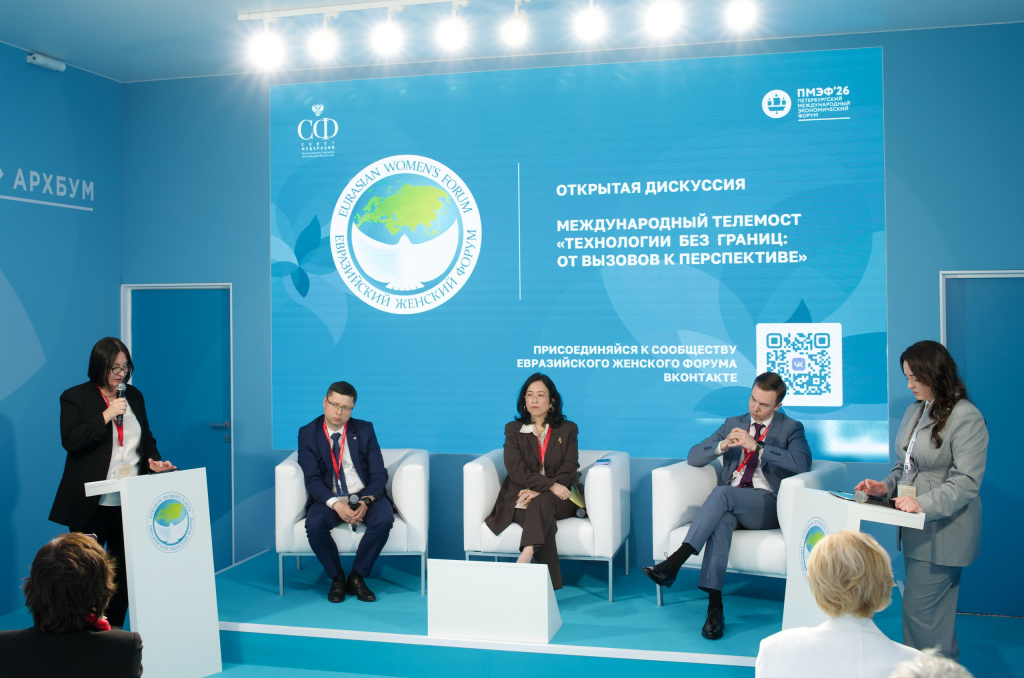
These issues took centre stage at the international discussion “Technologies Without Borders: Challenges and Prospects”, held at the Eurasian Women’s Forum stand during the St Petersburg International Economic Forum (SPIEF) 2026. Experts from Russia, Kazakhstan and the Philippines examined how digital transformation, automation and AI are reshaping the labour market, industry and education, while creating new opportunities for women in high-tech sectors.
The discussion was moderated by Alexandra Ryabykh, head of the Rosatom Women’s Community and coordinator of the Eurasian Women’s Forum Council’s “Women in High-Tech Industries” project. Opening the session, Ryabykh stressed that technological change is blurring the lines between traditionally male and female professions.
Digital transformation and automation, Alexandra Ryabykh said, are turning modern high-tech companies into barrier-free environments for women – from laboratory benches to smart city systems. She added that the speed of innovation is now directly linked to the competition for talent.
Ryabykh further elaborated, “Whoever wins the battle for talent wins on quality and, of course, on economic performance. Companies with a high proportion of women grow faster and outpace their rivals. Countries with equal access to industrial skills grow faster.”
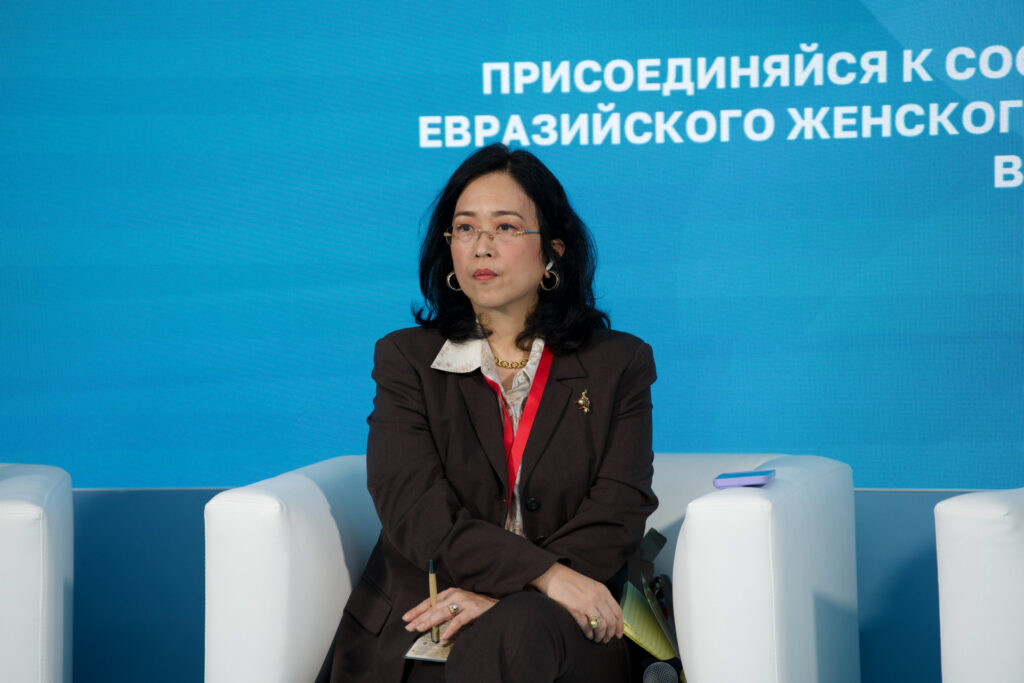
Olivia Limtuaco, President of the Filipino family-owned company Destileria Limtuaco & Co., spoke about the role of technology, digital platforms and AI in business development. Modern technologies open up access to markets, customers and new possibilities, she explained, but the key question is whether people and companies are ready to seize them.
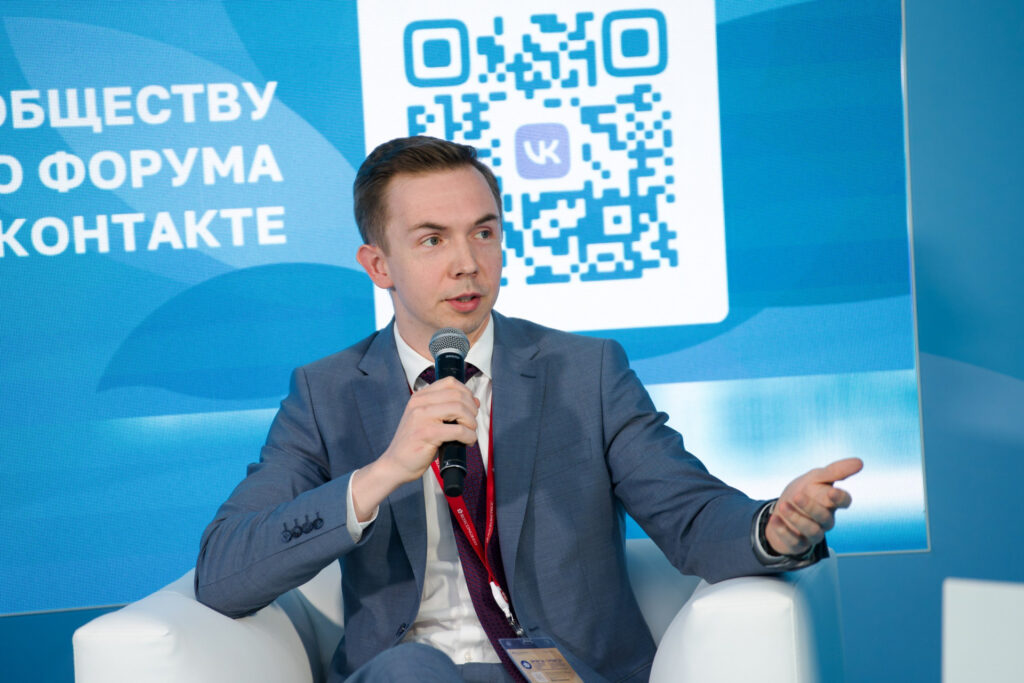
“We live in a time when access to technology, markets and customers offers a wealth of opportunity. Technology democratises this. The question is not whether we have opportunities, but whether we are ready to embrace them. Leaders must learn and embrace technology – because if we do not learn, we will not know what is available. And if we do not know what is available, we will not be able to do it.”
Irina Galakhova, chair of the board of directors of the Arkhangelsk Pulp and Paper Mill, addressed the implementation of AI in the pulp and paper industry. She emphasised that AI poses no threat to employment; rather, it opens new career paths for women. “Our main thesis is that artificial intelligence is in no way a threat to employment. It is a powerful boost for women across industry.”
Technology, Irina said, makes it possible to automate routine processes, analyse equipment performance, forecast demand, develop new products and reduce physical barriers in professions once considered predominantly male.
Mikhail Tsyferov, president of Petrovaxpharm, discussed the role of women in the pharmaceutical industry and the development of innovation. He noted that more than 60% of his company’s workforce are women, and over half of its management positions are held by women.
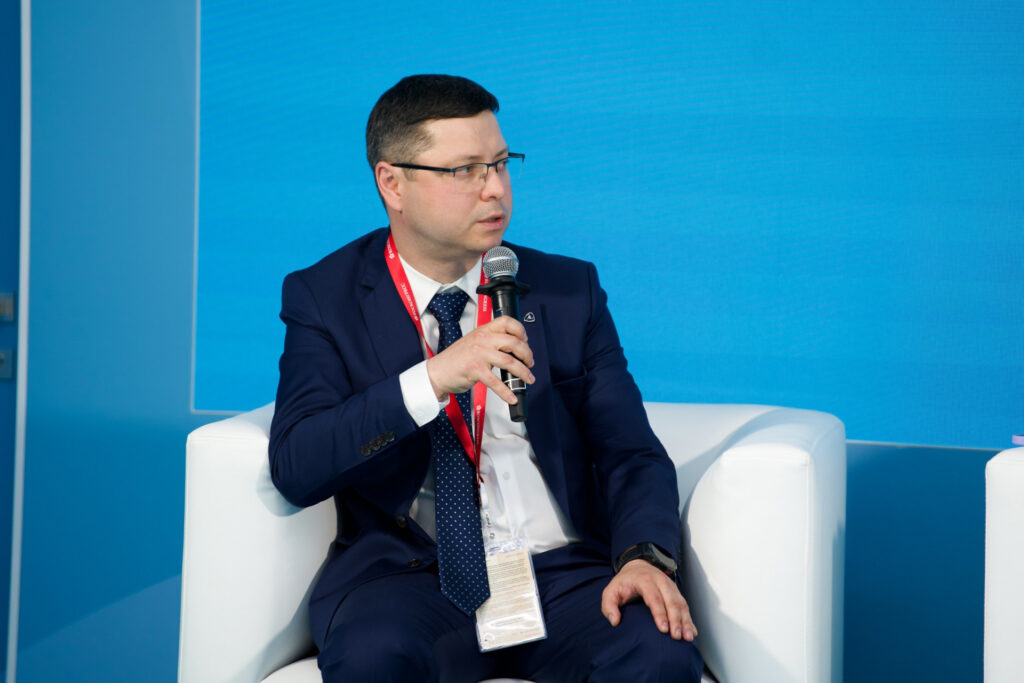
Tsyferov said, “Pharmaceuticals are about both innovation and women. We do not focus on gender, but we have seen that over 60% of our team are women, and over half of our managers are women.” He added that women are actively involved in the company’s AI implementation: of the 12 people currently rolling out artificial intelligence at Petrovaxpharm, seven are women.
Aziza Shuzhiyeva, chair of the board of the non-profit organisation TechnoWomen and founder of a Kazakhstan-based public foundation for digital transformation, explained how the digital economy is expanding opportunities for women in IT and entrepreneurship. She noted that being a programmer is no longer a prerequisite for entering digital professions.
Artificial intelligence, digital platforms, e-commerce and freelancing are creating new opportunities for women of all ages. “Artificial intelligence and new digital platforms open up a vast sea of opportunities. You can break into IT even if you are not an IT professional.”
As an example, she cited the IT-AEL project, running in Kazakhstan since 2023: 23,000 women have already completed free training under the project, including mothers on maternity leave, women of pre-retirement age and those seeking to learn a new profession and increase their income.
Dmitry Poyarkov, Severstal’s director of brand sustainability, spoke about women’s participation in the digital transformation of the metallurgical industry. Automation, robotics, AI and machine vision are helping to reduce physical barriers and expand women’s access to previously closed professions.
“Thanks to digital transformation, the percentage of women in our team is constantly increasing. It now exceeds 30%. We have 55% women in our engineering and technical workforce, and 30% women in management.” He added that women’s participation in management and production processes positively affects the quality of decisions, sustainable development and the social orientation of companies.
Ekaterina Glebova, director of the Centre for the Promotion of International Youth Relations at RUDN University, emphasised the importance of education and international student exchanges in developing tomorrow’s high-tech professionals. Developing future specialists, she said, begins not only with building skills but also with fostering responsibility, passion for one’s work and the ability to engage in dialogue with representatives of different cultures. “A truly barrier-free economy is built on connections between hearts. That is what turns foreign countries into friends and former students into lifelong allies.” Summing up the discussion, Alexandra Ryabykh observed that technology today asks not about gender but about competencies. “Technology today does not ask your gender. It asks what competencies you possess. And those companies that provide equal opportunities win in technological development.”
