





Russian President Vladimir Putin strongly rejected Indian journalist’s claim and clarified that Pakistan bows to no one, least of all China, and is fully sovereign
By Ehtasham Anwar
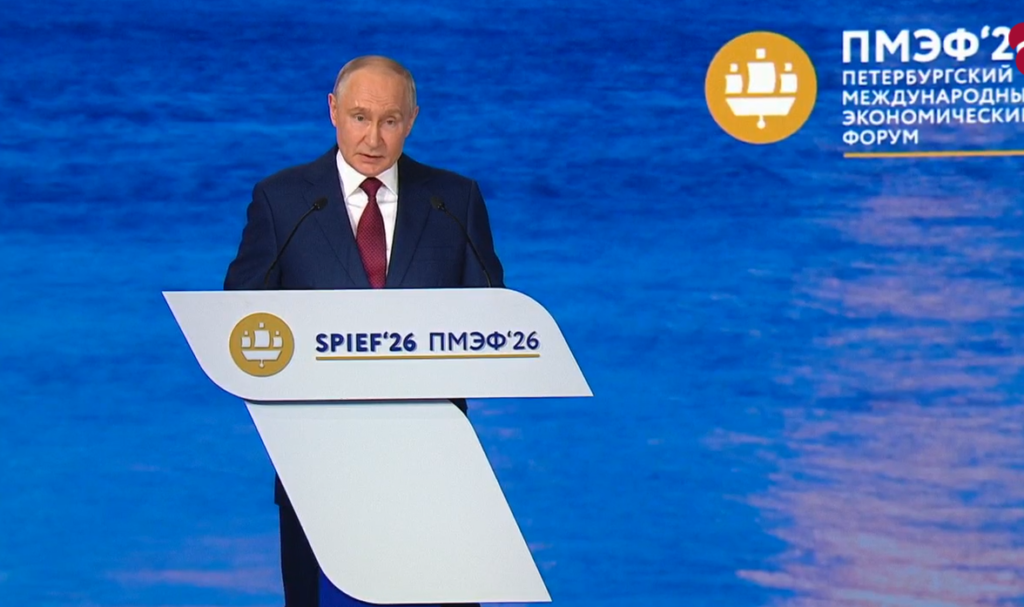
SAINT PETERSBURG: Vladimir Putin, the Russian president, delivered a sharp public rebuke to an Indian journalist at the Saint Petersburg International Economic Forum-2026 (SPIEF’26) on Thursday, shutting down a line of questioning that sought to portray Pakistan as a Chinese client state. “Pakistan is a major country,” Putin said flatly, silencing the room. “It does not act under pressure from anyone – least of all China. It is a fully sovereign state,” he irately replied.
When asked about the deepening ties between Moscow and Islamabad, President Putin added that Russia is fully aware of the unresolved nature of the Kashmir dispute between Pakistan and India. The recent rapprochement between Russia and Pakistan, coupled with India’s gradual distancing from Moscow driven by fears of the United States, has left the Indian government and public in a peculiar state of uncertainty.
It is for this reason, observers note, that the Indian establishment, through its compliant media, continues to invite global embarrassment upon itself. The exchange was prompted by an Indian journalist’s question suggesting that given Pakistan’s heavy reliance on Chinese weaponry, had it not become a client state of Beijing?
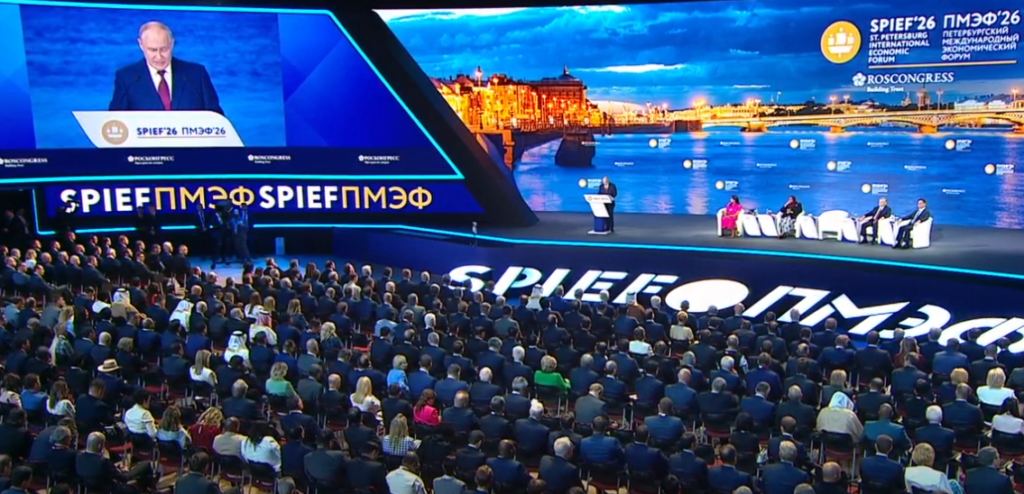
Putin’s response left the entire conference hall in silence as Russian President saying Pakistan is a large country with diverse relationships spanning many major powers. He went on to say that while there is no doubt Pakistan enjoys excellent ties with China, the same could be said of almost every nation today, all of which are actively seeking closer engagement with Beijing.
It is pertinent to mention that India has asked Russia to deliver S-400 air defence system after getting a blow from Pakistan during the May 2025 war. Modi’s government has continuously been trying to get a positive statement about May 2025 war against Pakistan and using its paid national media that continuously irritating the world leaders.
The exchange, which unfolded on a packed panel stage, laid bare the shifting tectonic plates of Asian diplomacy. The Indian journalist had suggested that Pakistan’s reliance on Chinese weaponry had rendered it dependent on Beijing. Putin dismissed the premise, noting that while Pakistan enjoys excellent ties with China, the same is now true of nearly every nation actively seeking closer engagement with the Chinese economy.
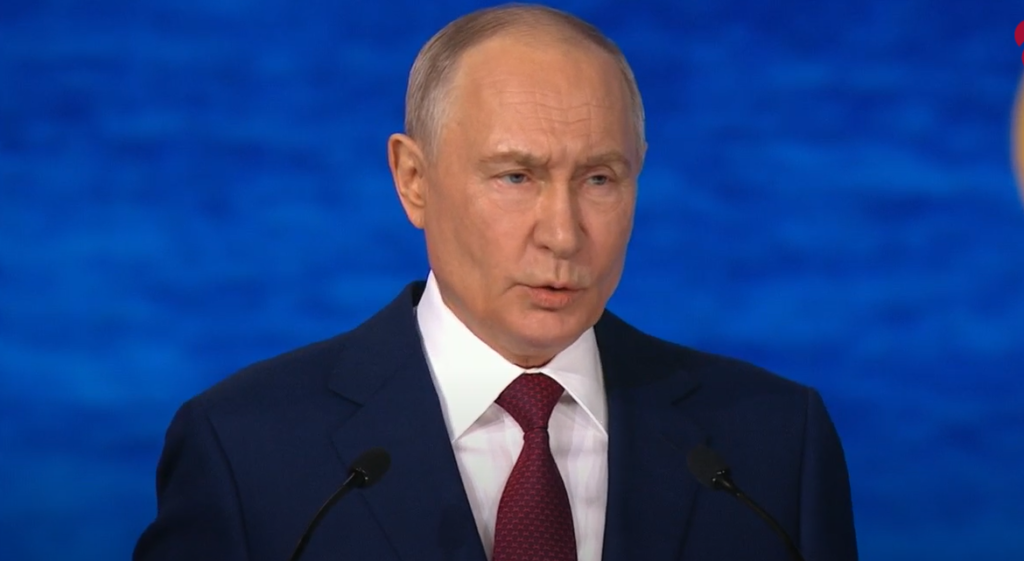
The Russian leader added that Moscow is fully aware of the unresolved nature of the Kashmir dispute. The recent rapprochement between Russia and Pakistan, coupled with India’s gradual distancing from Moscow driven by fears of the United States, has left New Delhi in a peculiar state of uncertainty. Indian officials have quietly asked Russia to expedite delivery of the S-400 air defence system following the May 2025 war with Pakistan, a request that underscores India’s own military anxieties.
Other leaders on the panel provided a broader geopolitical backdrop. Shavkat Mirziyoyev, the president of Uzbekistan, spoke of regional connectivity and the importance of non-aligned sovereignty. Samia Suluhu Hassan, the president of Tanzania, called for a multipolar world free of coercive diplomacy. Han Zheng, vice president of China, reaffirmed Beijing’s commitment to equal partnerships but did not directly address the exchange.
Observers note that the Indian government, through its pliant domestic media, has sought to extract favourable statements from world leaders – a strategy that appears increasingly to backfire. Putin’s intervention lingered longest in the hall: a quiet reminder that for all its strategic depth, India’s campaign to isolate Pakistan may be yielding the opposite result.
