





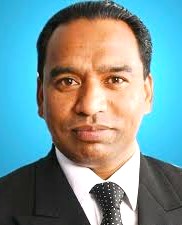
Asghar Ali Mubarak
Pakistan finds itself at a defining demographic moment, where its future will be shaped less by distant policy cycles and more by the energy, skills and direction of its youth. With more than 60 percent of the population under the age of 30, the country is no longer simply young in numbers; it is young in destiny. The question that now presses upon policymakers is whether this vast cohort will become a sustained engine of growth or remain trapped in cycles of underemployment and unrealised potential.
It is against this backdrop that the government’s “Pur Azm Pakistan” initiative has been launched under the Prime Minister’s Youth Prograe, framed as a decisive attempt to shift the national mindset from dependency towards self-reliance. Developed in partnership with international organizations including Generation Unlimited and UNICEF, the program signals an ambition to reposition youth policy away from short-term relief and towards long-term human capital development.
At its core lies an acknowledgement that traditional approaches are no longer sufficient. Job markets are changing too quickly, digital economies are expanding too sharply, and global competition is too intense for incremental reforms to make a meaningful difference. In response, the government has placed technical education at the centre of its strategy, approving a substantial allocation of Rs 19 billion for skills development. The stated aim is not only to produce graduates, but to produce workers, entrepreneurs and digital professionals who can compete beyond national borders.
This marks a notable departure from older education models, where credentials often outweighed competence. The current approach seeks to bridge that gap by introducing vocational training aligned with international demand, alongside soft skills and language training in Japanese, Korean, German, French, Arabic and English. The underlying assumption is clear: Pakistan’s youth should not be confined to domestic labor markets when global opportunities are increasingly accessible.
The program is structured around what is described as a “4Es framework” education, employment, engagement and environment. While the language may be institutional, the intent reflects a broader effort to create a holistic youth ecosystem. Education initiatives focus on expanding scholarships and endowment funds, including the Pakistan Education Endowment Fund, designed to support students who possess talent but lack financial means.
Employment and entrepreneurship schemes, particularly the Youth Business and Agriculture Loan Scheme, are aimed at encouraging self-started enterprise. With loan packages ranging from modest support to larger investment capital, and with some categories offering interest-free credit, the policy signals a recognition that formal job creation alone will not absorb the scale of Pakistan’s youth population. Entrepreneurship is therefore being positioned not as an alternative path, but as a central pillar of economic strategy.
The engagement component extends beyond economics, touching on sports, arts and civic participation. Youth councils and state-supported sporting events suggest an effort to rebuild a sense of national inclusion among young people, many of whom often feel disconnected from institutional decision-making. Meanwhile, environmental initiatives such as the Green Youth Movement attempt to channel youthful energy into climate awareness and ecological action, an area of growing urgency for a country already exposed to environmental stress.
Perhaps the most significant shift, however, lies in digitalization. The Digital Youth Hub is emerging as a central platform connecting job seekers with employers, bypassing traditional bureaucratic layers that have historically slowed recruitment and limited transparency. With hundreds of thousands of users and thousands of registered companies, it reflects a wider attempt to digitise opportunity itself. If scaled effectively, it could become one of the more consequential labour market tools in the country’s recent history.
International observers have largely welcomed the direction of travel. United Nations representatives have described Pakistan’s youth as its most valuable asset, while also noting the importance of aligning domestic training with global market realities. At the same time, UNICEF’s warnings about millions of children still out of school underscore a persistent structural challenge. Ambition, however well designed, will remain constrained unless foundational inequalities in access to education are addressed.
This tension between aspiration and reality defines the current moment. On one hand, there is a visible effort to rethink how the state engages with its youngest citizens, moving towards skills, digital integration and entrepreneurship. On the other, there remain deep gaps in schooling, infrastructure and regional equity that risk limiting the reach of these reforms.
The success of “Pur Azm Pakistan” will therefore depend not only on policy design but on implementation at scale, sustained political commitment and the ability to adapt to feedback from the ground. Youth programs have often been launched with optimism in Pakistan’s past, but have struggled when confronted with institutional inertia or uneven delivery.
What makes the present effort different is its framing of youth not as beneficiaries of state support, but as active participants in economic transformation. It is a subtle but important shift in language and intent. If matched with consistent execution, it could help reposition a generation long spoken about in terms of risk into one defined by opportunity.
The stakes are considerable. For Pakistan, this is not simply a question of youth empowerment policy. It is a question of whether a demographic majority can be converted into a productive national force. The answer will shape not just economic outcomes, but the country’s broader social cohesion in the years ahead.
(The writer is a senior journalist covering various beats, can be reached at news@metro-morning.com)
