





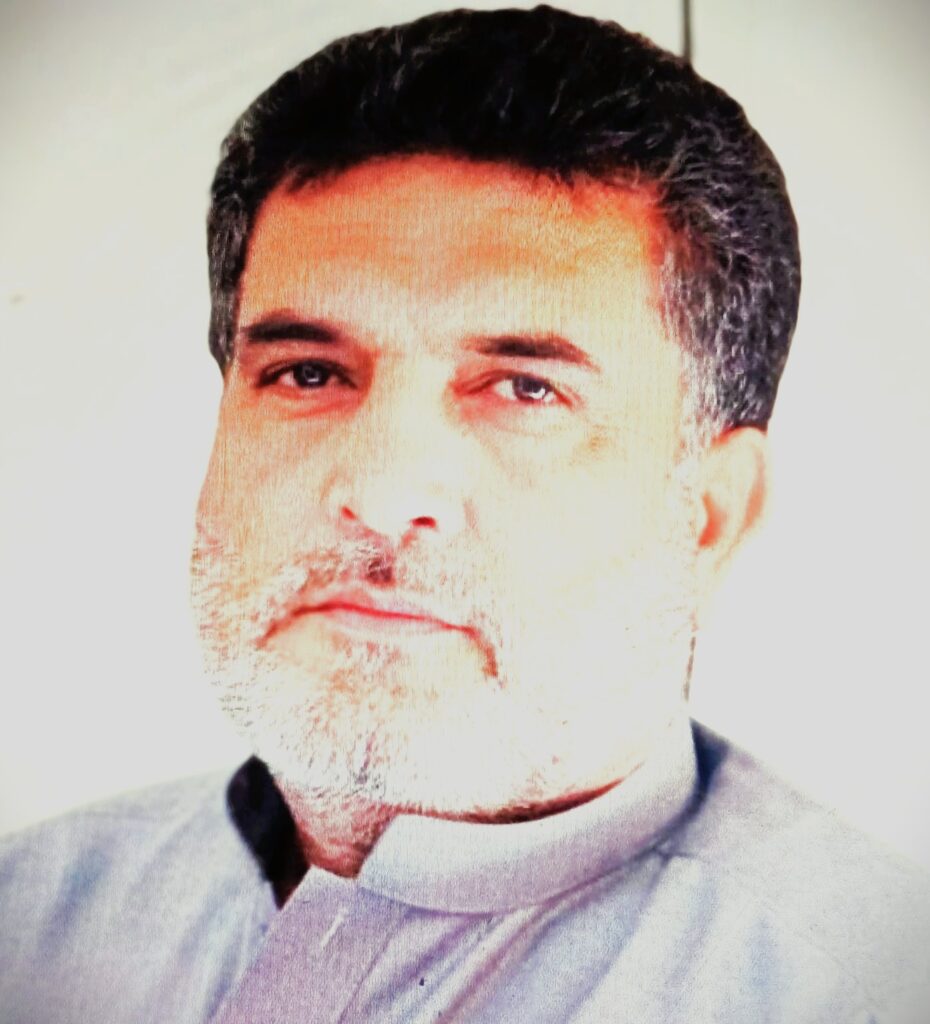
By Khpalwak Mohmand
There are moments in the slow burn of international affairs when a piece of legislation, not yet even law, functions less as a statute and more as a mirror. It holds up a reflection not merely of the government that drafts it, but of the world that watches it pass. The recent noise from the Israeli parliament regarding the legal status and treatment of Palestinian prisoners is precisely such a moment. Before a single clause is finalized or a single vote counted, we are forced to ask ourselves a question that no longer belongs only to the lawyers and the diplomats. It belongs to the rest of us. What are we willing to tolerate?
The specific proposals, as they have been debated, carry an unmistakable chill. To speak of collective punishments, of altering the very definition of detention and due process for a captive population, is to walk away from the last shreds of international humanitarian law. For the Palestinian prisoner, already stripped of the ordinary comforts of liberty, the threat is not abstract. It is the difference between a cell and an unmarked grave. But for the rest of the world, particularly for the Muslim world, this is not merely a legal crisis. It is a spiritual and political one.
And yet, the response so far has followed a wearyingly familiar script. There are the emergency sessions of the Organization of Islamic Cooperation, the carefully worded statements from foreign ministries, the ritualized condemnations that fill the evening news and then vanish by morning. The machinery of outrage grinds on, but it produces very little flour. The gap between what a billion people feel in their bones and what their governments are willing to risk for those feelings has never been wider. Palestine remains a cause of the heart, but rarely of the state treasury or the military command.
One does not need to be a cynic to understand why. The Muslim world today is a fractured landscape of competing interests. Some capitals have chosen the quiet pragmatism of diplomatic normalization, believing that economics and security outweigh symbolism. Others maintain a rhetoric of resistance but lack the means to make it consequential. Most, frankly, are stuck in the middle, paralyzed by their own dependencies. When the choice is between a strong statement and a strong trading partner, the statement nearly always loses. It is a cold calculation, but it is made in warm offices every single day.
The tragedy is that silence here is not neutrality. It is a vote. Every time the world looks away from the slow degradation of Palestinian detainees, every time muscle memory produces another communique devoid of teeth, we are collectively signing off on a new normal. The prison cell becomes harsher. The trial becomes a formality. And the prisoner, already a symbol of a stateless people, becomes a ghost before death. There is still time, though perhaps not much. The laws are not yet etched in stone. Diplomatic pressure, economic signals, and genuine political courage could still alter this trajectory.
However, that requires something the Muslim world has not mustered in a generation: the willingness to treat the Palestinian condition not as a secondary cause, but as a primary one. Not as a card to play, but as a wound to heal. The Palestinian prisoner stands behind bars, certainly. However, the real lock may be on the rest of us. The question has never really been about what Israel will do. It has always been about what we will allow. And if the answer continues to be very little, then we have built a far more effective prison than any parliament ever could. It is called a clear conscience, and it is undeserved.
(The writer is senior journalist at tribal district Mohmand, has in-depth knowledge of national and international issues, can be reached at editorial@metro-morning.com)
