





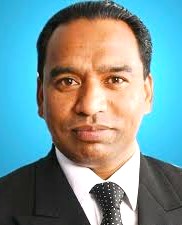
By Asghar Ali Mubarak
Pakistan’s recent diplomatic posture has begun to acquire a clearer shape, one that departs from the familiar language of security preoccupations and instead foregrounds economic purpose. The shift is neither accidental nor rhetorical. It reflects a recalibration born of necessity, where the state increasingly recognises that its long-term stability depends less on strategic alignments and more on sustainable growth, regional connectivity and a reputation for reliability. In that sense, Islamabad’s emerging role as a mediator and facilitator is not simply about avoiding conflict; it is about constructing the conditions in which economic life can take root and endure.
At the center of this transition lies a simple proposition: peace is not an abstract ideal but a material requirement. Without it, trade routes falter, investors retreat and domestic industry struggles under uncertainty. Pakistan’s message, increasingly articulated in diplomatic engagements, is that it seeks to be a trading partner rather than a theatre of conflict. That distinction matters. It signals a move away from reactive foreign policy towards a proactive economic strategy in which diplomacy serves development.
The recent talks held in Islamabad must therefore be understood beyond their immediate political context. They represent a potential inflection point, not only in regional relations but in Pakistan’s economic trajectory. If tensions in the wider region ease, the implications for Pakistan’s economy could be significant. Energy, transit trade, investor confidence and financial systems are all closely tied to the stability such diplomacy seeks to foster.
Energy remains the most immediate constraint on Pakistan’s industrial ambitions. Chronic shortages and high costs have long undermined competitiveness. A breakthrough in relations with Iran, particularly the revival of the long-delayed gas pipeline, could begin to alter that equation. Access to relatively cheaper energy would reduce production costs, allowing domestic industries to compete more effectively in global markets. It would also provide a degree of predictability that businesses have historically lacked.
Beyond energy, Pakistan’s geography offers an underutilized advantage. Positioned at the crossroads of South Asia, Central Asia and the Middle East, the country has long aspired to function as a transit hub. Yet ambition alone has not been enough. Political instability in the region has often disrupted trade corridors before they could fully mature. If diplomatic efforts succeed in lowering tensions, ports such as Karachi and Gwadar could assume greater significance as gateways for regional commerce. The revenues generated through transit fees and associated services would not merely supplement the economy; they could help reshape it.
Investor sentiment, often sensitive to perceptions as much as realities, is another critical factor. Global capital tends to flow towards environments that promise stability and continuity. Pakistan’s role in facilitating dialogue between rival states carries symbolic weight in this regard. It projects an image of a country capable of managing complexity and contributing to regional order. For investors, that perception can be as important as any policy reform. Initiatives such as the Special Investment Facilitation Council aim to build on this by offering a more coherent framework for investment, reducing bureaucratic friction and signaling policy consistency.
There is also a less visible but equally important dimension to this transformation: the strengthening of financial and digital systems. Efforts to combat illicit financial flows and improve regulatory standards are not merely compliance exercises. They are integral to building trust with international financial institutions and enabling the growth of sectors such as information technology and e-commerce. A secure and transparent financial environment is, in effect, a prerequisite for integration into the global economy.
The convergence of major projects further illustrates the scale of what is at stake. The alignment of the China-Pakistan Economic Corridor with the Iran gas pipeline has the potential to create a broader economic architecture, one that extends beyond national boundaries. Industrial zones envisaged under CPEC require reliable and affordable energy. If supplied through regional cooperation, they could accelerate industrialization and attract both domestic and foreign investment. The prospect of enhanced connectivity between Gwadar and Iran’s Chabahar port adds another layer, offering complementary routes rather than competing ones. Such integration could provide landlocked Central Asian states with alternative access to global markets, while reinforcing Pakistan’s position as a central node in regional trade.
Yet these possibilities are not without obstacles. Geopolitics continues to impose constraints that cannot be ignored. Sanctions regimes, particularly those involving Iran, complicate the execution of cross-border projects. Pakistan must navigate these pressures carefully, balancing its economic interests with the realities of global power dynamics. The broader rivalry between major powers further complicates this balancing act, as Islamabad seeks to maintain constructive relations with multiple partners without being drawn into exclusive alignments.
Against this backdrop, institutions such as the Special Investment Facilitation Council assume greater importance. By bringing together civil and military leadership within a single decision-making framework, the council aims to address long-standing coordination problems. Its success, however, will depend on its ability to translate intent into execution. Guarantees of policy continuity, integration of infrastructure and energy planning, and the effective mobilization of external investment are all necessary if ambitious projects are to move beyond the planning stage.
The transition from a security-centric to a geo-economic framework is neither swift nor guaranteed. It requires sustained political will, institutional discipline and a measure of good fortune in an unpredictable region. Yet the direction is clear. Pakistan is attempting to recast its role, presenting itself as a facilitator of dialogue, a conduit for trade and a partner in development. Whether this vision can be fully realized will depend on the interplay between external dynamics and internal reform. For now, it marks a notable departure from the past and a tentative step towards a different future, one in which peace is not merely the absence of conflict but the foundation of economic possibility.
(The writer is a senior journalist covering various beats, can be reached at editorial@metro-morning.com)
