





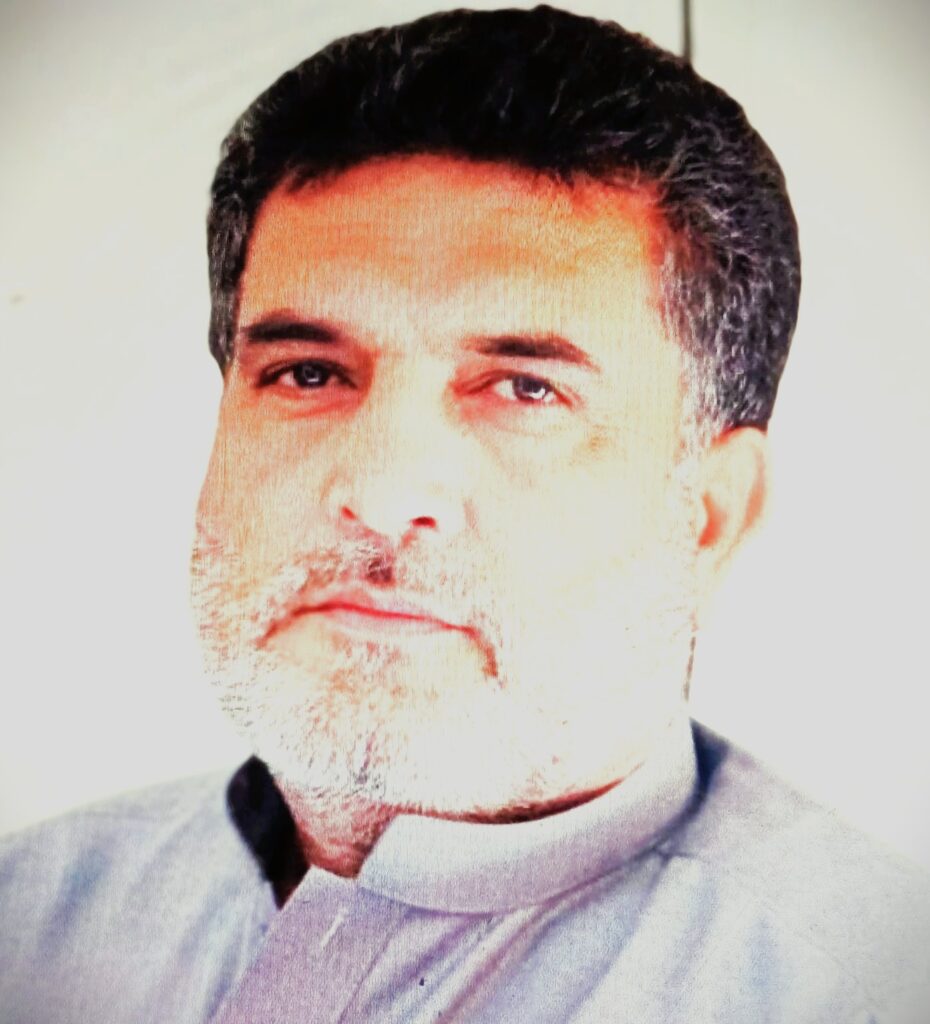
By Khpalwak Mohmand
Every nation carries a story about itself. Some stories are written in constitutions, others are carved into barracks walls. And then there are those stories that are never written down at all, the ones whispered in kitchen conversations when the electricity fails again, or muttered in waiting rooms of public hospitals where medicine is always out of stock. Pakistan, seventy-nine years after its creation, still cannot decide which story is true. Is it an Islamic democratic state, as its official name declares? Is it a welfare state, as its founding fathers promised? Or has it quietly, almost imperceptibly, become a security state, where the uniform speaks louder than the ballot? This is not an academic question for political science seminars. It is the most urgent, most uncomfortable conversation the country refuses to have.
Because how a state defines itself determines everything. It determines whether a child in rural Punjab gets a textbook or a toy gun. It determines whether a widow in Balochistan receives a pension or a warning. It determines, in the most literal sense, who eats and who goes hungry. Let us begin where all Pakistani identity debates must begin: with the dream. In 1947, the vision was deceptively simple. A homeland for Muslims of the subcontinent, where justice, equality and social welfare would flourish under the guiding principles of Islam. Not a theocracy, not a priesthood, but a democratic republic where sovereignty belonged to Allah Almighty and the people exercised that trust through their elected representatives. That was the deal. That was the promise.
The constitution, for all its subsequent amendments and betrayals, kept that architecture intact. Islamic republic. Democracy. Fundamental rights. On paper, it was a beautiful building. But paper does not fill bellies. In addition, somewhere between the idealism of the founding moment and the grinding reality of survival, the building developed cracks. Consider the welfare state. In theory, a welfare state guarantees basic necessities: education, health, employment, housing. The government does not merely govern, it nurtures. From time to time, Pakistani governments have tried on this costume. Poverty alleviation programs have been launched. Social safety nets have been stretched across the most vulnerable. The Benazir Income Support Program, the Ehsaas initiative, various health cards, all of these are genuine attempts to build a floor beneath the falling.
However, here is the uncomfortable truth: a welfare state is not defined by its intentions. It is defined by its outcomes and the outcomes in Pakistan remain stubbornly, heartbreakingly insufficient. Millions of children are still out of school. Maternal mortality rates shame a country of this size. Clean drinking water is a luxury for entire districts. The government spends a fraction of what it should on health and education. This is not because leaders are monsters. It is because the treasury is empty, and the treasury is empty partly because the priorities have been elsewhere. Which brings us to the third mask: the security state. No country in the world has a more justified claim to insecurity than Pakistan. Its geography is a curse and a crossroads.
It shares borders with a hostile eastern neighbor, a volatile western neighbor, and a northern frontier that has seen two decades of American drones and fleeing armies. Tensions, real and manufactured, have never ceased. Internal militancy, sectarian violence, and the long shadow of the Afghan war have made security not just a priority but an obsession. A major portion of the national budget goes to defence and internal security. The military establishment is not just an institution, it is a parallel state. And for millions of Pakistanis, especially those living in border regions, the soldier is more present in daily life than the schoolteacher or the civil servant. None of this is inherently wrong. Every sovereign state has the right, indeed the duty, to defend itself.
The problem is not security. The problem is when security becomes the only story. When welfare programs are cut because the army needs a new missile. When democracy is reduced to an election every five years, after which the real power returns to the cantonment. When the constitution is cited but its social clauses are ignored. That is when the security state devours the democratic and welfare ideals it was meant to protect. And so Pakistan lives with a fundamental contradiction. It tells itself it is an Islamic democracy striving for welfare. However, it behaves like a security state running on survival. The people feel this dissonance in their bones. They vote, but they do not believe their vote changes the security calculus.
They hear speeches about Islamic social justice, but they see generals on every television screen. They read about welfare budgets, but they pay for their own children’s medical emergencies. This is not paranoia. This is pattern recognition. The way forward, if there is one, is not to abandon any of these identities but to balance them. Security cannot be ignored, no rational person would suggest that. However, it must be placed in service of the people, not the other way around. Democracy must become governance, not just a five-year theatrical performance of elections. And the welfare state cannot remain a slogan for political pamphlets. It requires actual resources, actual accountability, actual distribution of land and opportunity and dignity.
(The writer is senior journalist at tribal district Mohmand, has in-depth knowledge of national and international issues, can be reached at editorial@metro-morning.com)
