





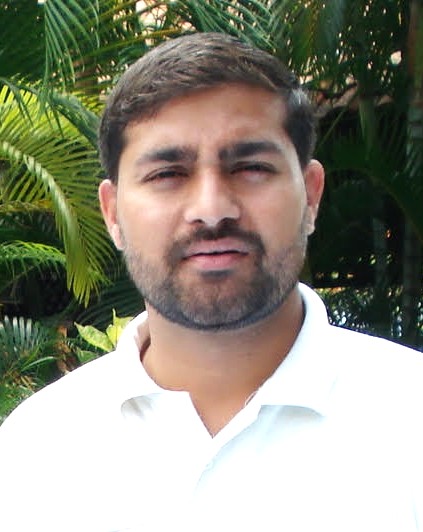
By Dr Zawwar Hussain
There is a moment, just before dawn, when the sky holds its breath. The darkness is at its deepest, but a thin line of gold on the eastern rim promises that light is on its way. For a nation that has so often felt trapped in that pre-dawn gloom, wrestling with floods, debt, and the exhausting arithmetic of survival, the promise of a new beginning is not just welcome. It is necessary. And so it is with quiet, almost startled pride that we learn of Pakistan’s first human space mission, slated for the end of this year.
For decades, space travel felt like someone else’s story. It belonged to the Cold War giants, to billionaires in sleek capsules, to the Chinese and the Americans who could afford to throw their ambitions beyond the pull of gravity. Pakistan, we told ourselves, had more urgent matters: power cuts, broken schools, a rupee that would not hold still. But here, unexpectedly yet unmistakably, is our own answer to that old, resigned question. What are we doing looking at the stars when we cannot fix the roads?
The answer, delivered not by politicians but by the scientists of SUPARCO, is that a nation which stops looking up has already begun to wither. Two men, Khurram Dawood and Muhammad Zeeshan Ali, are now training in China for a journey to the Tiangong space station. They are not superheroes or Hollywood archetypes. They are Pakistani professionals, selected from a rigorous pool, and they are currently learning to live in a world where a dropped screwdriver can float away forever. By the end of 2026, if all goes as planned, they will become the first of us to see the curvature of the Earth from above. They will raise a green and white flag in silence, where no wind blows.
It is worth remembering that this did not happen overnight. There is a longer, quieter history here, one that began in 1961 with the founding of SUPARCO. Just a year later, Rehbar-1 lifted off, making Pakistan one of the earliest nations in the space race. That era was fueled by the luminous mind of Abdus Salam and a brief, shining faith in science as the engine of nationhood. Then came the long, distracted decades of the seventies and eighties, when the frontier moved indoors and the dream stalled. Badr-1 in 1990 was a flicker, Badr-B in 2001 a tentative step. PakSat-1R in 2011 modernized communications, but it was not until 2018, with PRSS-1 and PakTES-1A, that something like momentum returned.
What changed? Simply put, the world did. The global space economy is now worth half a trillion dollars and is climbing towards a trillion by the end of this decade. To sit this out would be not wisdom but folly. More importantly, a new generation of Pakistani engineers and coders grew up not on nostalgia but on broadband, on the quiet confidence of digital tools. They do not see space as a luxury. They see it as the next normal.
The cooperation with China has been crucial here, and there is no point in pretending otherwise. The Chinese Space Agency has provided training, infrastructure, and a seat on Tiangong. But to call this a Chinese mission would be to miss the point entirely. The experiments those astronauts will conduct in microgravity, on material science and biotechnology, are designed by Pakistani minds for Pakistani needs. Better crops, new alloys, cleaner medicines: these are not abstract trophies. They are practical returns on a very expensive bet.
And yet, a Guardian reader would be unforgivably soft if they did not ask the hard question. Can we afford this? The answer is not simple. Pakistan’s human development indicators remain troubling. Millions of children are still out of school. Malnutrition is a silent emergency. There is a legitimate, gut-level argument that every rupee spent on a space suit should have gone to a hospital bed. That argument deserves respect. But it is also a false choice. The same logic would have kept us from building motorways, dams, or digital infrastructure. A society that invests only in today’s emergencies guarantees tomorrow’s.
The real failure would be to treat this mission as a spectacle, a one-off firework to distract from the grind of governance. The success of Khurram Dawood and Muhammad Zeeshan Ali will not be measured by the height of their orbit, but by what comes after. Will Pakistan build its own launch capabilities? Will universities create space-science programs that feed into a domestic industry? Or will we watch this moment fade, as we have watched so many others, into memory and regret?
For now, though, there is something precious and rare: a reason to look forward. In every generation, a country needs a story larger than its problems. It needs to believe that the children peering at the night sky from a village courtyard might one day walk among the stars. When those two men strap into their capsule later this year, they will carry not just instruments and food packets. They will carry a weary, hopeful, argumentative nation with them. And for a few glorious minutes, as they raise that flag against the black velvet of space, we will all remember what it feels like to dream without apology.
(The writer is a PhD scholar with a strong research and analytical background and can be reached at editorial@metro-Morning.com)

1 Comment
Beautifully written, this article brings hope, reality, and the future together in a way that enlightens both the heart and the mind