





By our correspondent
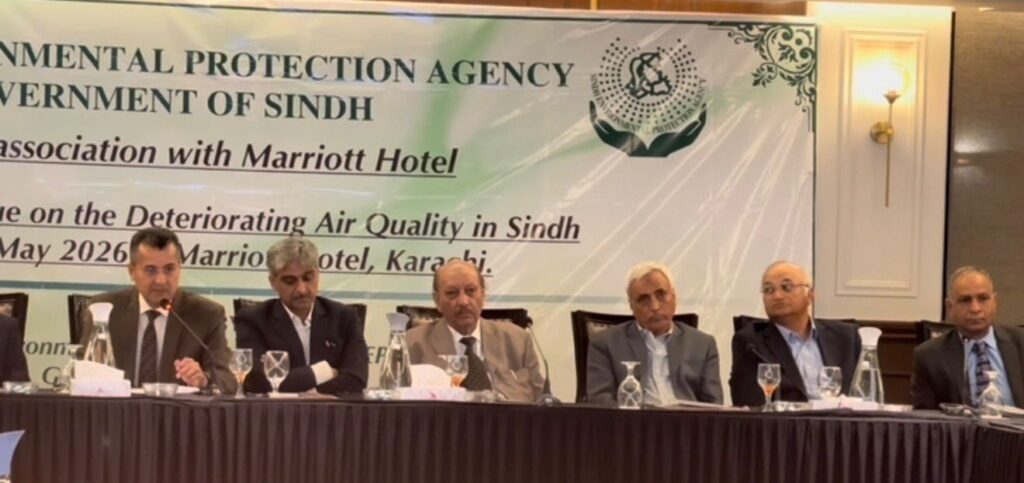
KARACHI: A roundtable discussion on the worsening air quality in Sindh was convened at a local hotel in Karachi organized by the Sindh Environmental Protection Agency (SEPA). The session brought together senior government officials, environmental engineers, academics, consultants, and civil society representatives to examine the drivers and consequences of rising air pollution in the province, as well as to explore workable policy and technical responses.
Participants reached a broad consensus that air quality management in Sindh demands urgent, coordinated action grounded in accurate data and inclusive stakeholder engagement. They agreed that assumptions and ad hoc measures must give way to evidence-based policy, and that no single institution can address the scale of this challenge alone.
Across the discussion, several priorities emerged consistently: modernizing monitoring infrastructure, strengthening regulatory enforcement, engaging low-income communities, promoting sustainable transport, and ensuring that dialogue translates into measurable, time-bound interventions. Participants also emphasized the importance of public awareness as a driver of behavioral change and community participation.
Secretary Environment, Climate Change and Coastal Development Sindh, Zubair Ahmed Channa stressed that air pollution is not a single-sector problem. Addressing it effectively requires detailed identification of contributing industries and sub-sectors, including cement, refinery, and transport.
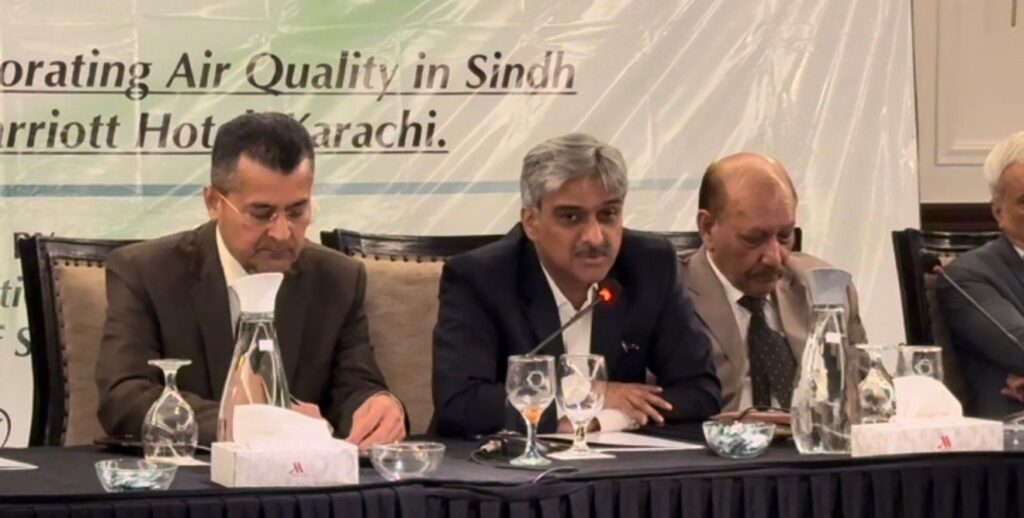
Zubair Ahmed Channa noted that the transport sector alone accounts for approximately 30 percent of air pollution in the province, with motorcycles and municipal operations among the leading contributors. He called for quantifying emissions by sector and location as a prerequisite for targeted, technology-driven responses, describing this as a logical and methodical approach; identify pollution sources precisely, then address them systematically.
Channa also flagged improper waste management as a significant source of harmful gas emissions, and pointed to methane emissions from rural areas as an under-assessed contributor that warrants greater policy attention. He assured participants that once consistent monitoring data becomes available, it will generate stronger demand for action from all stakeholders, whose cooperation remains essential for success.
Director General SEPA, Waqar Hussain Phulpoto, who conceived and spearheaded the initiative, opened by acknowledging that persistently low compliance levels among industries represent one of the most pressing obstacles to meaningful air quality improvement in Sindh.
Having long recognized that enforcement alone is insufficient, he stressed the urgent need for enhanced awareness campaigns and broader media outreach to build a culture of environmental responsibility across all sectors.
He outlined SEPA’s strategic priorities, developed through months of institutional groundwork, which include strengthening organizational capacity, establishing industry-specific monitoring protocols, preparing district-level emission reduction plans, and promoting self-monitoring by industries as a complement to regulatory oversight.
He emphasized that the development of a centralized emissions database and the establishment of vehicular emission control rooms are central to this vision, and that stricter enforcement must be paired with sustainable transport solutions to produce lasting results.
He also noted that licensing mechanisms through the Sindh Business One Stop Shop (SBOSS) have been deliberately integrated into the medium- and long-term compliance framework to ensure accountability at the point of registration.
Beyond the technical and regulatory dimensions, Phulpoto underscored that public engagement is not an afterthought but a cornerstone of SEPA’s approach, one he has consistently focused within the agency.
He affirmed that routine dissemination of air quality data will empower citizens to make informed decisions about their daily lives, transforming monitoring from a bureaucratic function into a public service.
Reflecting on the broader purpose of the day’s gathering, he noted that bringing together this breadth of expertise and institutional knowledge under one roof was itself a deliberate and necessary step; one that required sustained effort to organize and carry through.
He concluded by making clear that this roundtable is not a one-time exercise; similar consultative dialogues will continue under SEPA’s leadership to address other forms of pollution across the province, ensuring that the momentum generated today is carried forward into concrete, measurable action.
Earlier SEPA Director Regional Imran Sabir presented findings from the Sindh Air Quality Survey 2020, noting that the study conducted during the COVID-19 period offered valuable insights into pollution patterns across the province.
He reported that PM2.5 concentrations previously ranged between 140 and 170 µg/m³, with recent two-month data indicating a marginal improvement to between 127 and 140 µg/m³. Approximately 110 pollution hotspots have been identified across Sindh, with similar emission-generating activities observed across multiple districts.
He outlined SEPA’s regulatory interventions to date, including bans on pyrolysis plants and plastic bags, vehicular emission inspections, and demolition of illegal industrial units, and confirmed plans to install additional air quality monitoring systems across Karachi.
Environmental Consultant Jahangir Asad recommended outsourcing vehicular inspection systems to third parties and encouraging private sector investment in emission control initiatives.
Environmental engineer Shahid Lutfi underscored the importance of addressing both indoor and ambient air quality, noting that PM2.5 is a leading cause of respiratory illness, and called for stronger stakeholder partnerships alongside dedicated vehicular monitoring stations.
Environmental expert Fayyaz Ali highlighted the role of expanding urban green cover in mitigating pollution levels. Prof. Dr. Kishan Chand Makwana advocated for reviving smart monitoring programs and establishing both fixed and mobile air quality monitoring infrastructure, while also drawing attention to crop residue burning as a persistent source of rural air pollution.
Journalist Climate Communication Expert Afia Salam raised concerns about indoor air quality and the compounding effects of desertification and fugitive dust, and referenced Pakistan’s climate obligations under its Nationally Determined Contributions.
Yasir Husain, Director of the Climate Action Center, highlighted the absence of consistent air quality monitoring since 2014 and pointed to inefficiencies associated with high-cost monitoring systems.
He noted that Karachi hosts approximately 1,400 fossil fuel-based industrial units contributing to pollution and observed that open burning of solid waste, despite being a punishable offense, continues due to weak enforcement of waste management regulations. He also underlined the growing potential of electric vehicles, noting that more than 100 companies have been licensed to manufacture EVs in Pakistan.
Plant ecologist Rafiul Haq emphasized the need for centralized data reporting and integration of information systems to enable more coherent environmental governance. Environmetnal Consultant Saqib Aijaz called for a revision of outdated environmental quality standards and stronger inter-departmental coordination, noting that nighttime waste burning contributes significantly to elevated carbon monoxide levels.
Environmental Writer Mahmood Alam Khalid identified weak implementation as the central challenge, stressed the importance of including low-income communities in policy planning, and proposed establishing independent scrutiny mechanisms and public helplines to ensure transparency.
Environmental Consultant Jibran Kidwai recommended greater use of satellite data, including NASA imagery, for tracking PM2.5 concentrations at scale. Dr. Abdul Ghaffar called for a nationwide real-time air quality monitoring network, while experts from academia collectively advocated for native plantation, alternative fuels such as biogas and biodiesel, and integration of air quality monitoring with traffic management systems.
Chairman Sindh Environmental Tribunal Hassan Feroze closed the session by stressing the imperative to translate dialogue into enforceable policy. He emphasized that without a clear public understanding of the severity of air pollution and its health consequences, communities cannot be meaningfully mobilized to contribute to its reduction.
He called for sustained public awareness and education efforts alongside coordinated action across government, industry, civil society, and local communities. He reiterated that challenges of this scale require a multi-stakeholder response – no single institution, however capable, can resolve them in isolation – and expressed confidence that the inclusive spirit of the roundtable reflected precisely the approach that Sindh’s air quality crisis demands.
