





By Imtiaz Hussain
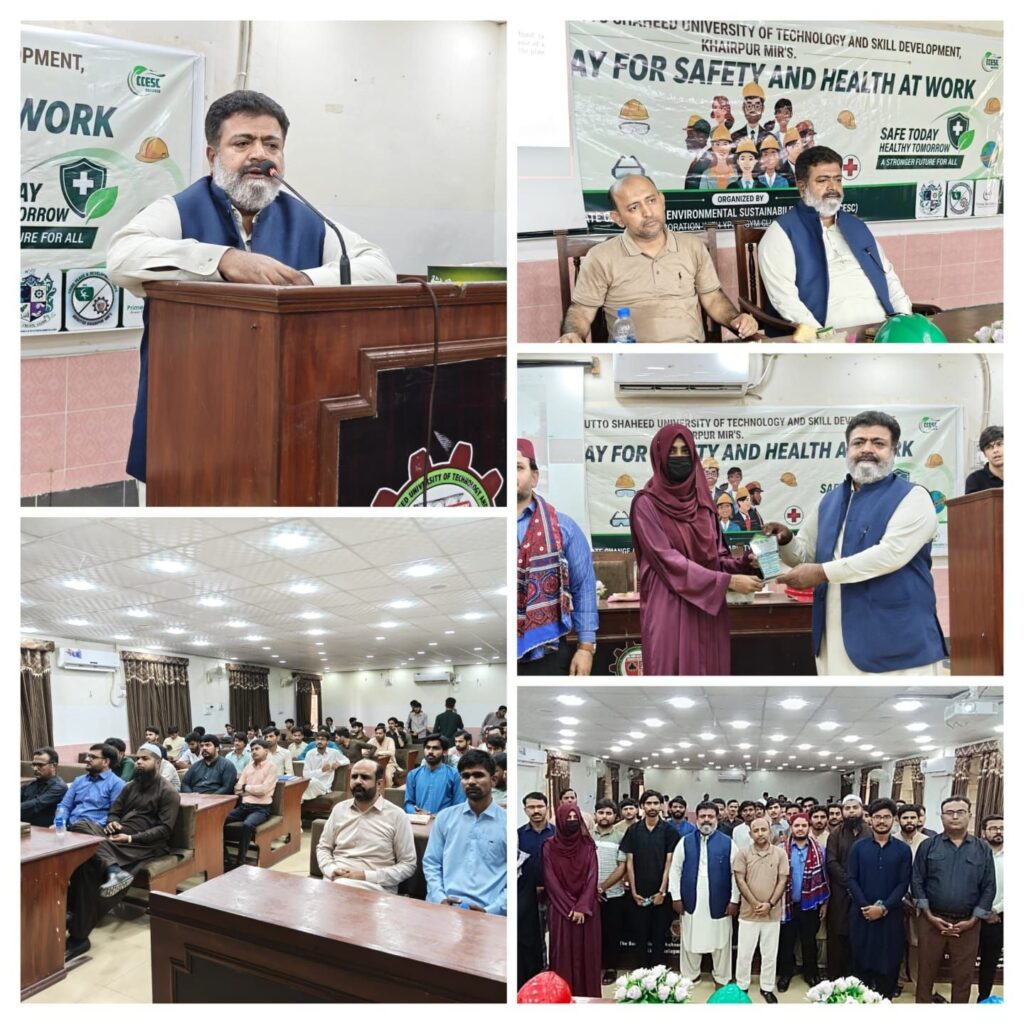
KHAIRPUR: An awareness session marking World Day for Health and Safety at Work was held at Benazir Bhutto Shaheed University of Technology and Skill Development (BBS-UTECH), Khairpur on Tuesday, as educators and environmental advocates called for stronger attention to workplace safety standards and sustainable practices in Pakistan’s emerging technical sectors.
The event had been organized by the Climate Change and Environmental Sustainability Centre (CCESC) in collaboration with several student-led and civic organizations, including the Young Peace & Development Corps (YPDC), Green Youth Movement (GYM) Club and the Society of Women in Technologists and Entrepreneurs (SWTE).
Students from the 2022 and 2023 academic batches formed the core audience, reflecting what organizers described as a growing interest among younger cohorts in environmental responsibility and occupational health. The session brought together three guest speakers who delivered technical discussions focused on psychological wellbeing in professional environments, global waste management initiatives, and the risks associated with digital waste in modern workplaces.
Speakers stressed that occupational safety was no longer limited to physical hazards alone, but increasingly extended to mental health pressures and environmental exposures linked to rapid technological expansion. Among the speakers were Engr Zulfiqar Dakhan, a master trainer and certified management system consultant based at Zad Tech International in Canada, who discussed structured workplace safety frameworks and international compliance standards.
Abdul Haque Banglani, country lead of Let’s Do It Pakistan and chief executive of Concern Waste Sindh & Recycling, highlighted community-driven waste reduction models. Engr Asad Ahmed Memon, a lecturer in the Department of Petroleum and Natural Gas at the SZAB Campus Khairpur, spoke on industrial safety challenges within energy-related fields.
University officials said the session was intended to bridge academic learning with real-world safety concerns, particularly in sectors where students are expected to enter technical and industrial roles. Prof Dr Rasool Bux Mahar appreciated the efforts of both organizers and participants, including lead organizer Engr Abdul Shakoor Sheikh, noting that such initiatives helped embed a culture of safety awareness at an early stage in professional development.
