





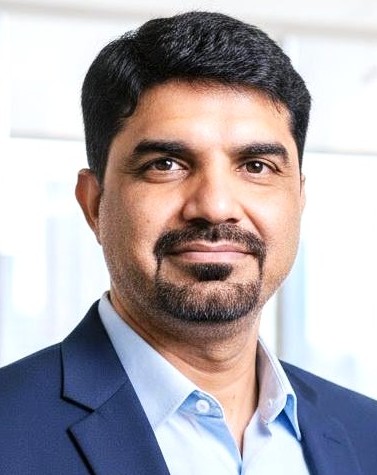
By Amjad Qaimkhani
The Muttahida Qaumi Movement Pakistan finds itself at another defining moment in its political journey. For a party that has repeatedly survived splits, leadership changes and electoral setbacks, the latest internal dispute is more than a disagreement between senior figures. It is becoming a test of whether the party can uphold its own constitution, preserve its political identity and convince supporters that it remains capable of representing their interests. As the deadline for intra-party elections approaches, the growing rivalry between the Bahadurabad leadership and the group aligned with Mustafa Kamal is raising serious questions about the party’s future.
Political parties inevitably experience differences of opinion. Healthy debate is, in fact, an essential feature of democratic politics. However, when disagreements evolve into parallel camps, competing public narratives and open accusations against one another, they begin to weaken the institutions that keep a party together. This appears to be the challenge confronting MQM-P today. Instead of projecting unity, the party is increasingly consumed by internal conflict that risks overshadowing its political agenda.
The party’s constitution leaves little room for ambiguity. It clearly requires that party office-bearers be elected through a structured democratic process every four years. Provincial, divisional and district committees are meant to emerge through secret ballots, while the Central Coordination Committee elects the senior leadership through a majority vote. These provisions were designed to ensure accountability, transparency and legitimacy within the organization rather than allowing leadership positions to depend on political convenience or personal influence.
The current controversy stems largely from the failure to follow that timetable. The last intra-party elections took place in October 2021, meaning fresh elections should have been conducted in October 2025. Although the existing leadership extended its tenure through an internal resolution, the Election Commission of Pakistan did not recognize that extension and instead insisted that the constitutional process be completed before October 2026. This has transformed what may once have been an internal organizational matter into an issue carrying legal and political consequences.
The dispute has also exposed deeper questions about authority within the party. The elevation of Dr Khalid Maqbool Siddiqui as chairman in 2024 generated criticism from sections of the party that argued the move did not fully align with constitutional procedures. Whether those objections are ultimately justified or not, they have contributed to an atmosphere of mistrust that has continued to grow. When party members begin questioning the legitimacy of leadership appointments, confidence in the organization inevitably suffers.
At the same time, Mustafa Kamal and his supporters have presented themselves as advocates of organizational renewal. Their repeated calls for new leadership and stronger opposition to the Pakistan Peoples Party’s government in Sindh have resonated with some party workers who believe MQM-P has lost much of its political energy. Mustafa Kamal’s assertion that the party does not belong to any individual reflects a wider frustration among those seeking greater participation in decision-making rather than authority concentrated within a limited circle.
The Election Commission’s position further raises the stakes. Pakistan has already witnessed how failure to comply with legal requirements governing intra-party elections can produce significant consequences. The commission has repeatedly reminded MQM-P of its obligations, declined requests for further delays and summoned party leadership to explain its position. Should the party fail to complete the required process within the prescribed timeframe, questions surrounding its election symbol and legal standing could become unavoidable. Regardless of political sympathies, no party can afford prolonged uncertainty over its constitutional status.
The timing could hardly be worse. Karachi and urban Sindh continue to face pressing challenges, from deteriorating municipal services and infrastructure to unemployment, public transport, housing shortages and law and order concerns. MQM-P has traditionally positioned itself as the principal political voice of the urban middle class and Muhajir community. Yet prolonged internal conflict leaves little space for addressing these issues. Political energy that should be directed towards governance and public advocacy instead becomes consumed by organizational survival.
The wider political landscape is also changing. Rival parties are watching closely, hoping to capitalize on MQM-P’s internal difficulties. Every public disagreement creates opportunities for opponents to attract disappointed voters and weaken the party’s organizational structure. Electoral politics rewards discipline and coherence. Persistent division rarely produces either. The solution does not require extraordinary political innovation. It simply requires respect for the party’s own constitutional framework.
Transparent, credible and timely intra-party elections would provide every faction with an opportunity to present its case before party members rather than through public confrontation. A democratic mandate would strengthen whichever leadership emerges while restoring confidence among workers and supporters. MQM-P has experienced painful divisions throughout its history, and each split has reduced its political influence. The present leadership still has an opportunity to avoid repeating that pattern. Upholding internal democracy is not merely a legal obligation. It is the foundation upon which the party’s credibility, unity and future political relevance now depend.
(The writer is a senior US-based Pakistani journalist who writes on political and social issues and can be reached at editorial@metro-morning.com)
#MQMP #MQMPakistan #MustafaKamal #KhalidMaqboolSiddiqui #Karachi #Sindh #PakistanPolitics #PoliticalParties #IntraPartyElections #ElectionCommission #ECP #Democracy #PoliticalReforms #Governance #UrbanSindh #Muhajir #Leadership #PoliticalAnalysis #CurrentAffairs #Pakistan #Constitution #RuleOfLaw #PoliticalStability #Opinion #MetroMorning #PakistanNews #SouthAsia #WorldPolitics #PoliticalCommentary #WorldNews
