




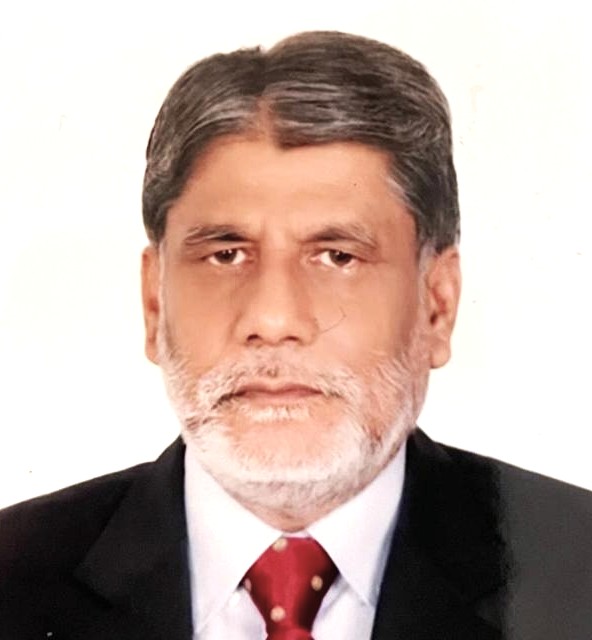
Dr Sheikh Akram Ali
National solidarity cannot be achieved through political power alone. It requires dialogue, mutual trust and a shared commitment to the country’s future. At a time of political uncertainty and security challenges, Bangladesh needs inclusive discussions that bring together the government, opposition parties, civil society, religious groups, workers, minorities and regional representatives. No major political or social group should feel excluded from decisions affecting the nation’s future.
Dialogue must go beyond political statements and focus on practical issues, including constitutional and electoral reforms, justice, national security and sovereignty. It can only succeed when all participants approach the process with sincerity, a willingness to compromise and confidence in those facilitating discussions. Agreements must also include clear timelines, effective oversight and legal mechanisms to ensure implementation. Otherwise, political dialogue risks becoming another exercise in unfulfilled promises.
The government’s belated recognition of the importance of dialogue in addressing the political crisis left behind by the fallen fascist regime of Sheikh Hasina is therefore a welcome development. The crisis could deepen if political differences remain unresolved. Bangladesh must place its trust in the country’s largest nationalist political force, the BNP, which has no record of acting against the fundamental interests of the country and its people.
Prime Minister Tarique Rahman has recently taken the initiative to engage political parties that participated in the anti-fascist movement. Discussions have begun with prominent opposition leaders, including the Ameer of Jamaat-e-Islami and the convener of the National Citizen Party (NCP), both of whom played important roles in the July Revolution of 2024.
The participating parties have stressed the need to establish common ground on independence, democracy and national security. They have also raised important demands, including implementation of the July Charter and referendum, justice for those killed during the July mass uprising and constitutional reforms. These are significant issues that deserve serious consideration rather than political confrontation.
However, dialogue involving only a few political leaders will not be enough. Sustainable national unity requires wider participation, open exchanges of views and a positive approach from every political force. All parties must recognise that there is no alternative to engagement and cooperation with the present government if the aspirations of the people are to be fulfilled. The government, for its part, must demonstrate generosity and political maturity in creating an environment conducive to national reconciliation.
Bangladesh’s political history offers important examples. During his brief tenure, Ziaur Rahman made efforts to promote national unity through political engagement. Begum Khaleda Zia also demonstrated the value of alliances by bringing together mainstream political parties opposed to what she regarded as India’s hegemonic influence, particularly Jamaat-e-Islami. Such political cooperation contributed to her coming to power twice.
Jamaat-e-Islami has remained an important political force and has consistently opposed Indian hegemony since the early years of independent Bangladesh. The party suffered severe persecution under the Awami League government, yet maintained its political position on national interests. Its role in the present political landscape cannot be overlooked, and its participation in national dialogue is essential.
The National Citizen Party also deserves recognition. It emerged from the political movement led by young people who challenged authoritarian rule in July 2024. At a time when established political forces appeared to have little hope of bringing about immediate change, these young people took enormous risks and played a decisive role in ending the fascist order. Their contribution should not be forgotten. The nation must provide them with the political space to develop into a responsible and effective democratic force. At the same time, the NCP leadership needs to demonstrate greater political maturity when discussing senior political leaders and strengthen its organisation at the grassroots level.
Prime Minister and BNP Chairman Tarique Rahman is scheduled to hold dialogue with Jamaat-e-Islami and the NCP on November 27, 2026. Although the initiative has come later than necessary, it is nevertheless a welcome and timely decision. Bangladesh faces serious political and security challenges, including attempts by Sheikh Hasina and India to undermine the present nationalist government. While Hasina’s return to Bangladesh appears unlikely, her efforts to create instability should not be underestimated.
The government should also extend dialogue to the other parties associated with the eleven-party alliance led by Jamaat-e-Islami. These include Dr Col Oli Ahmed’s Liberal Democratic Party, Maulana Mamunul Haque’s Bangladesh Khelafat Majlis, Dr Abdul Quader’s Khelafat Majlis, Mujibur Rahman Monju’s AB Party and Dr Mostafizur Rahman Iran’s Bangladesh Labour Party. Islami Andolan Bangladesh, Jamiat Ulema-e-Islam and Hefazat-e-Islam Bangladesh also deserve engagement. The emerging political presence of BG Shamim Kamal’s Janata Dal and BG Hasinur Rahman’s Azad Party should likewise be acknowledged. National solidarity cannot be built by excluding political groups that command public support or have a role in the country’s political future.
(The author served as a history instructor and Faculty Head at the Bangladesh Military Academy (BMA). He has also been working as a Professor of Law at a private university for the past 20 years. He can be reached at metromorning78@gmail.com.)
