





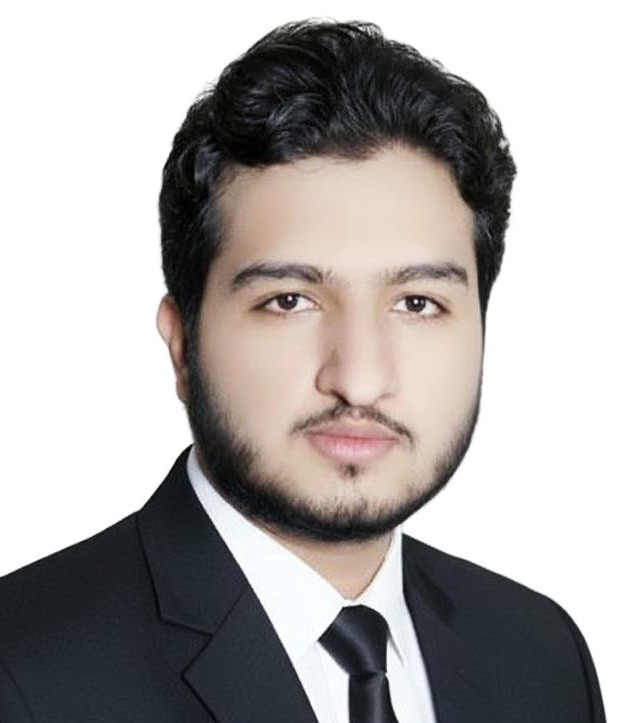
By Faizan Monib Tufail
In politics, public visibility often overshadows the quieter work that keeps political parties functioning. While speeches, rallies and media appearances attract headlines, it is frequently the organisational leadership behind the scenes that determines whether a party can endure periods of crisis and remain electorally competitive. In Pakistan’s political landscape, Hamza Shehbaz Sharif has largely built his career around this less visible but equally significant aspect of politics. Over the years, he has earned recognition within the Pakistan Muslim League-Nawaz (PML-N) as an organiser who has focused on strengthening party structures, maintaining contact with workers and ensuring organisational continuity during politically turbulent times.
Born into the influential Sharif family, Hamza Shehbaz Sharif grew up in an environment where politics, public service and business were closely intertwined. His early education in Lahore, followed by undergraduate studies at Government College Lahore and a degree in law, provided the academic foundation for his later political career. Equally influential was his close relationship with his grandfather, Mian Muhammad Sharif, whose guidance and emphasis on discipline, commitment and public responsibility helped shape Hamza’s political outlook from an early age. Those formative experiences introduced him not only to politics as a profession but also to the importance of organisational leadership and long-term political planning.
Hamza first came into public political view during the PML-N’s Tehreek-e-Nijat (Movement for Deliverance) against the government of former Prime Minister Benazir Bhutto in 1994 and 1995. Although he was not yet among the party’s senior leadership, he actively participated in organisational activities and worked to mobilise young supporters across Punjab. His brief detention alongside other party activists during the movement reflected the confrontational political environment of the period. His subsequent release and legal success became defining moments in his early political experience and strengthened his standing among party workers who viewed perseverance during difficult circumstances as an important political credential.
The military takeover led by General Pervez Musharraf in 1999 marked one of the most challenging periods in the history of the PML-N. As senior members of the Sharif family entered exile, Hamza Shehbaz remained in Pakistan and assumed responsibility for managing both family affairs and important aspects of the party’s organisational network. This was a period when many political observers questioned the future of the party, yet its internal structure remained largely intact. Hamza’s role in maintaining communication with party workers, coordinating local leadership and preserving organisational cohesion is frequently cited as one of the factors that helped the PML-N survive an extended period outside power. While these efforts received relatively little public attention at the time, they strengthened his reputation as a dependable organiser capable of managing political challenges away from the spotlight.
His formal entry into parliamentary politics came in 2008 when he was elected unopposed as a Member of the National Assembly from the then NA-119 Lahore constituency. The victory marked the beginning of a sustained electoral career that continued through subsequent general elections. His repeated electoral successes in 2013, 2018 and 2024 reflected not only the enduring support enjoyed by the PML-N in parts of Lahore but also his ability to maintain close relationships with constituents and local political representatives. Electoral success over successive terms often depends as much on constituency management as on party popularity, and Hamza developed a reputation for paying close attention to local political dynamics.
The 2018 general elections represented another important turning point in his political journey. After winning seats in both the National Assembly and the Punjab Assembly, he chose to retain his provincial seat and assumed the position of Leader of the Opposition in the Punjab Assembly. The role placed him at the centre of provincial politics during a period marked by political competition and institutional challenges. Following the political realignments of 2022, he was elected Chief Minister of Punjab, leading the province during a politically sensitive transitional period. His influence today extends well beyond his own constituency, particularly across Central and South Punjab, where he commands significant support among party workers and elected representatives.
As the PML-N prepares for future political contests, including local government elections and subsequent general elections, many within the party regard Hamza Shehbaz as an important organisational figure whose experience will continue to shape political strategy. His journey from a young activist during the Tehreek-e-Nijat movement to Member of the National Assembly, Leader of the Opposition and Chief Minister of Punjab reflects persistence, organisational discipline and long-term political engagement. Whether viewed through the lens of electoral politics or party organisation, Hamza Shehbaz Sharif remains a significant figure whose influence continues to play an important role in the evolving political landscape of Punjab and Pakistan.
(The writer is a final-year LLB student at Pakistan College of Law. He is an author at Leap Pakistan and regularly writes on legal, political, and social issues. He also plays an active contributory role in national and provincial politics and serves as a researcher on diverse areas of law. He can be reached at editorial@metro-morning.com)
