





By Aziz Khatri
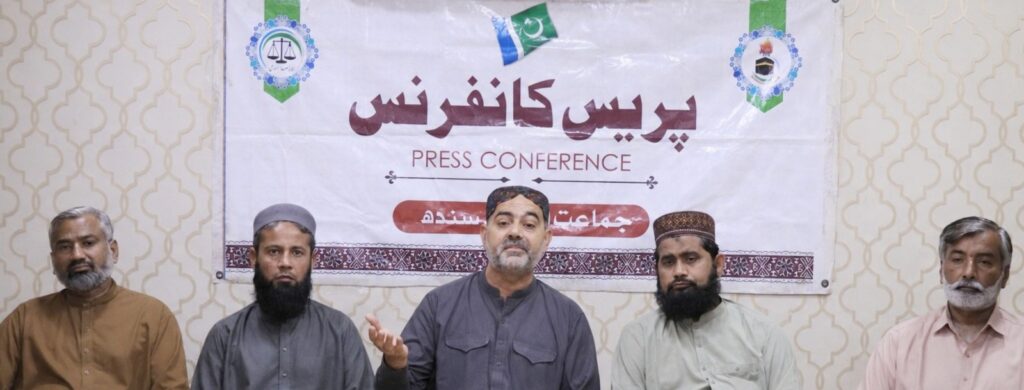
KARACHI: Jamaat-e-Islami Sindh has announced province-wide protests on July 3 against prolonged power outages, high electricity tariffs and overbilling, warning that it will expand its campaign if the government fails to provide relief to consumers.
Speaking at a press conference in Karachi, the party’s Sindh chief, Kashif Saeed Sheikh, said demonstrations would be held at around 400 locations across the province. He called on the government to terminate what he described as expensive agreements with independent power producers (IPPs), end prolonged load-shedding and ensure affordable electricity for consumers.
He alleged that residents across Sindh, from Karachi to Kashmore, were facing rising inflation, corruption, water shortages, law and order problems, prolonged electricity and gas outages and inadequate public services.
Kashif said Sindh contributed a significant share of the country’s revenue, gas, oil and coal resources, yet many parts of the province continued to lack basic facilities. He claimed millions of children remained out of school and said power cuts lasting between 18 and 20 hours a day had become routine in several areas despite electricity generation from Thar coal.
He also criticised electricity distribution companies, including K-Electric, HESCO and SEPCO, accusing them of overbilling consumers and issuing what he described as unjustified detection bills. He said the burden of line losses and electricity theft should not be passed on to consumers through higher bills and prolonged outages.
The Jamaat-e-Islami leader called for reforms in the power sector, including the cancellation of costly IPP agreements, an end to overbilling, stronger measures to curb electricity theft and line losses, the withdrawal of free electricity facilities for bureaucrats and government institutions, and increased investment in electricity generation through Thar coal and wind energy.
He said party leaders at the provincial, district and local levels would address the July 3 protests and press the government to respond to the demands.
Kashif also condemned what he described as the enforced disappearance and subsequent arrest of a Jamaat-e-Islami social activist from Khoski in Badin in what he alleged were fabricated narcotics cases. He accused the Sindh government of using the police for political purposes and called for law enforcement agencies to remain free from political influence.
