





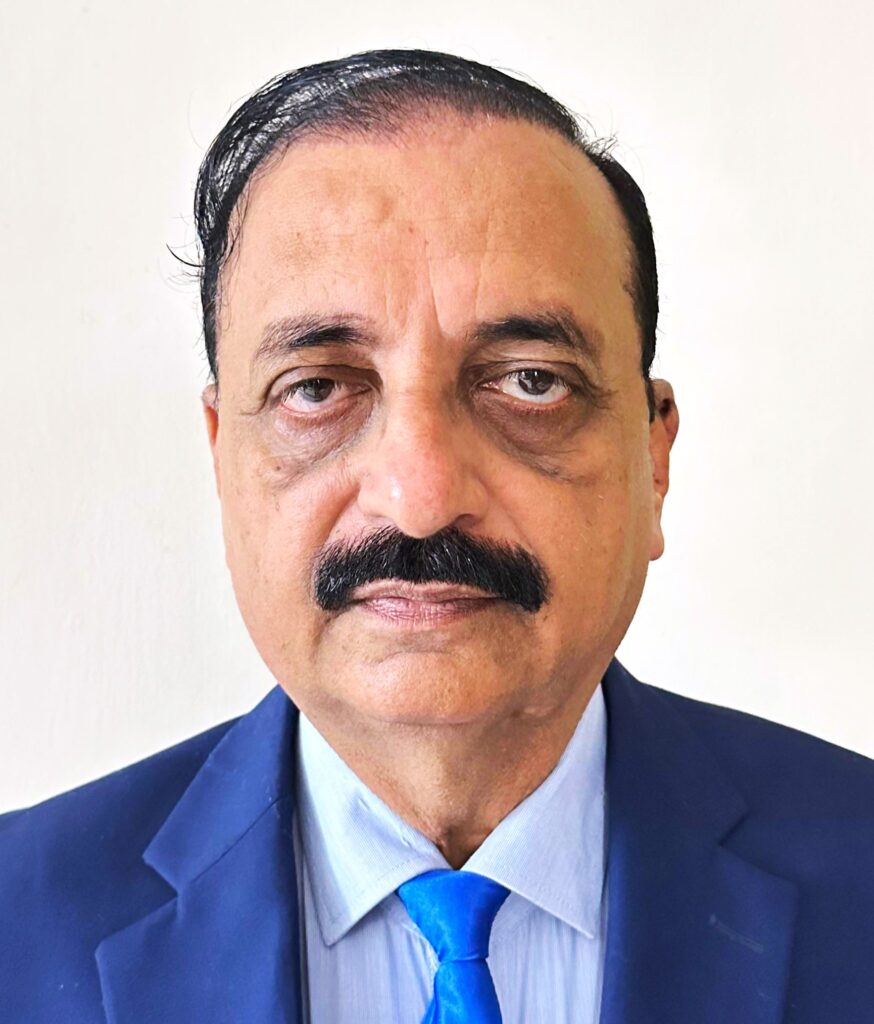
By Pir Ghulam Nabi Shah Jillani
Every year, the observance of Accession to Pakistan Day returns attention to one of the longest unresolved political disputes in modern history. Marked on 19 July, the anniversary recalls the 1947 resolution adopted by the All Jammu and Kashmir Muslim Conference expressing support for accession to Pakistan. For many people in Jammu and Kashmir, the day is not merely a historical remembrance but a symbol of an enduring political question that has remained unresolved for generations. Nearly eight decades after the partition of British India, the issue continues to shape regional politics, define relations between Pakistan and India and influence the lives of millions who have inherited a conflict they did not create.
Pakistan’s leadership once again used the occasion to reiterate its long-held position that the people of Jammu and Kashmir possess an inalienable right to determine their own political future. President Asif Ali Zardari and Prime Minister Shehbaz Sharif reaffirmed that a durable settlement can only emerge through the implementation of relevant United Nations Security Council resolutions and in accordance with the wishes of the Kashmiri people. This has remained Islamabad’s diplomatic position since the earliest years of the dispute and continues to form the basis of its engagement with the international community.
The persistence of Kashmir on Pakistan’s political calendar reflects more than diplomatic consistency. It also highlights the extraordinary longevity of a dispute that has resisted every attempt at a comprehensive settlement. Few international conflicts have remained unresolved for so long while continuing to carry such profound implications for regional peace and security. Decade after decade, political leaders have changed, governments have come and gone, and global priorities have shifted. Yet Kashmir remains unfinished business.
The dispute has survived wars, ceasefires, peace initiatives and countless diplomatic exchanges. It has outlived the Cold War, witnessed changing regional alliances and adapted to new geopolitical realities. Despite these transformations, the central question has remained remarkably constant. Competing legal, political and historical narratives continue to shape opposing positions, leaving little room for meaningful compromise. The passage of time has not reduced the significance of the issue. If anything, it has made the search for a peaceful solution more urgent.
For the people living in Jammu and Kashmir, the dispute has never existed solely in diplomatic communiqués or international resolutions. It has been experienced in everyday life through prolonged uncertainty, political instability and recurring cycles of tension. Entire generations have grown up knowing no lasting political settlement. Young people born decades after partition continue to inherit the consequences of decisions taken long before they were born. That reality alone should remind policymakers that unresolved conflicts do not remain frozen in time. They evolve, affecting new generations while becoming increasingly difficult to resolve.
Events over recent decades have further complicated an already difficult situation. The insurgency that gathered momentum in the late 1980s transformed the conflict into one involving not only competing territorial claims but also questions of governance, security, representation and civil liberties. India’s constitutional changes of August 2019 marked another major turning point, generating renewed international attention and provoking debate over the future political status of the territory. Human rights organizations have continued to express concerns regarding restrictions on civil liberties, political participation, freedom of expression and the broader humanitarian impact of prolonged tensions. These concerns cannot simply be dismissed as temporary political disagreements. They deserve sustained international attention because they directly affect the lives and dignity of ordinary people.
Supporters of Pakistan’s position continue to argue that Kashmir is fundamentally a matter of self-determination rather than territorial expansion. They maintain that the dispute cannot be understood solely through maps, borders or strategic calculations. Historical ties, cultural connections and the aspirations expressed by many Kashmiris remain central to their understanding of the conflict. From this perspective, Accession to Pakistan Day serves not simply as a commemoration of a historical resolution but as a reminder that the political aspirations associated with that resolution have not disappeared with time.
At the same time, history offers an equally important lesson. No conflict sustained over generations can ultimately be settled through military means alone. Security measures may alter realities on the ground. Political restrictions may shape immediate outcomes. Diplomatic rhetoric may strengthen domestic narratives. Yet none of these measures addresses the deeper political questions that continue to fuel disagreement. Durable peace cannot be imposed by force, nor can it emerge from prolonged stalemate. It requires political courage, patient diplomacy and a willingness to engage with difficult realities rather than postpone them indefinitely.
Dialogue remains the only credible path towards reducing tensions and building confidence. That dialogue will inevitably be complex and politically sensitive. It will demand restraint from all parties and an acceptance that lasting peace cannot be achieved through unilateral actions or maximalist positions. Successful diplomacy often begins not with sweeping breakthroughs but with small measures that rebuild trust, reduce hostility and create space for more substantive engagement. South Asia has repeatedly demonstrated the costs of allowing communication to collapse. It has shown far fewer examples of sustained diplomatic persistence.
The international community also bears a responsibility not to regard Kashmir as a conflict that can simply be managed indefinitely. Global attention often shifts towards more immediate crises, leaving long-running disputes to drift further into diplomatic inertia. Yet unresolved conflicts rarely remain static. They continue to shape regional security, influence international relations and affect the lives of civilians long after they disappear from international headlines.
(The writer is a senior retired government health official and served more than 30 years in the Public Sector on various executive, managerial and administrative positions with large administrative and clinical experience. He has keen interest in national, international affairs, and geopolitics. He can be reached at editorial@metro-morning.com)
Kashmir #JammuAndKashmir #KashmirIssue #AccessionToPakistanDay #Pakistan #India #SouthAsia #Geopolitics #Diplomacy #Peace #Dialogue #SelfDetermination #HumanRights #RegionalSecurity #UNSC #InternationalRelations #PoliticalAnalysis #CurrentAffairs #WorldNews #MetroMorning
