





By Amjad Qaimkhani
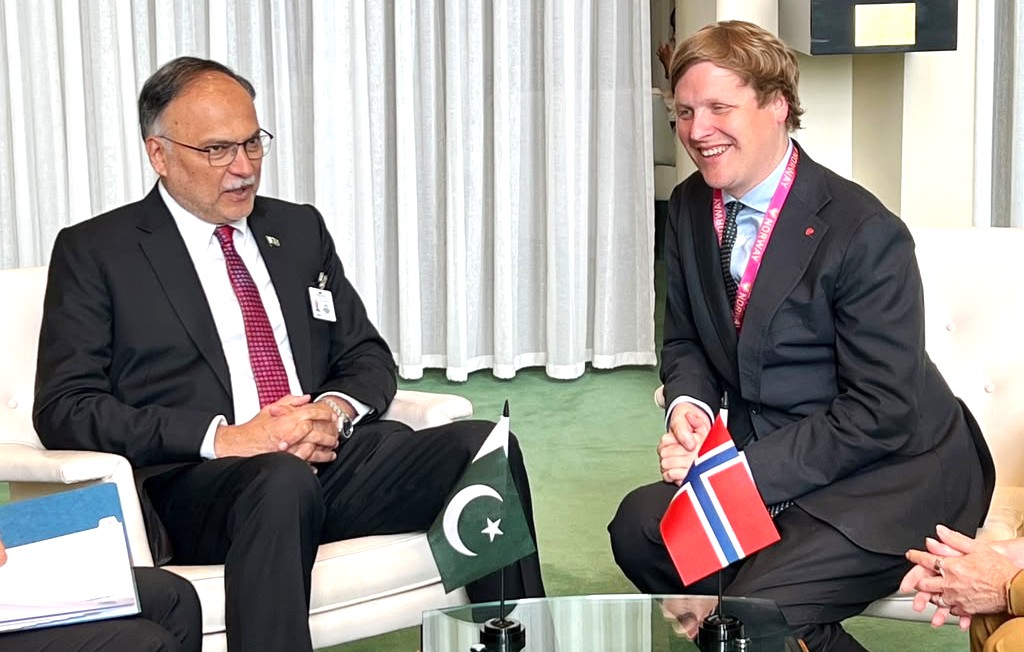
NEW YORK: Federal Minister for Planning, Development and Special Initiatives Prof. Ahsan Iqbal held talks with Norway’s Minister for International Development Åsmund Grøver Aukrust in New York, focusing on ways to expand bilateral cooperation in climate resilience, sustainable development and human capital development.
During the meeting, Prof. Ahsan Iqbal highlighted Pakistan’s growing vulnerability to climate change despite its contribution of less than one per cent to global greenhouse gas emissions. He said the country continued to face serious climate-related challenges, with devastating floods causing widespread damage and affecting progress towards achieving the Sustainable Development Goals (SDGs).
The minister stressed the need for stronger international support and dedicated financing mechanisms for countries suffering the impacts of climate change. He said global cooperation was essential to help vulnerable nations build resilience and protect development gains from future climate shocks.
The two sides also discussed potential collaboration in the blue economy, with Prof. Ahsan Iqbal seeking to benefit from Norway’s experience and expertise in the sector. He said sharing knowledge and adopting successful models could help Pakistan unlock opportunities linked to marine resources and sustainable economic growth.
The meeting also covered cooperation in education and human development. The planning minister highlighted the importance of exchanging best practices to strengthen Pakistan’s education system and promote early childhood development initiatives.
Prof. Ahsan Iqbal welcomed Norway’s interest in deepening bilateral cooperation and appreciated the Norwegian minister’s intention to visit Pakistan. He said stronger partnerships between the two countries could contribute to addressing shared challenges and advancing sustainable development goals.
The discussions reflected Pakistan’s efforts to build international partnerships on climate action, economic development and social progress while seeking greater support from global partners to tackle emerging challenges.
