





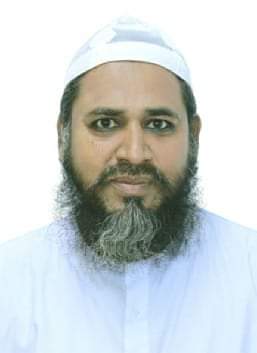
By Dr Aasi Khurram Jhangiri
The history of Islam in the Indian subcontinent is closely linked to the efforts of Sufi saints and spiritual scholars, whose devotion, teachings and personal example played a significant role in spreading the faith. Among the distinguished spiritual centres that emerged from this tradition is the Khanqah of Kichhauchha Sharif, associated with the great saint Hazrat Makhdoom Ashraf Jahangir Simnani. One of the most eminent personalities of this spiritual lineage was Hazrat Sarkar Kalan, Syed Shah Muhammad Mukhtar Ashraf Ashrafi al-Jilani, whose life reflected an extraordinary combination of religious knowledge, spiritual discipline and practical service.
Belonging to the family of the Prophet Muhammad , the descendants of Hazrat Ali and the spiritual lineage of Sheikh Abdul Qadir Jilani, he was born on 26 Jumada al-Thani 1333 AH to Sultan al-Waizeen, Qibla-e-Alam Syed Ahmad Ashraf Ashrafi al-Jilani. His family background was deeply rooted in religious scholarship and Sufism, traditions that shaped his intellectual and spiritual development from an early age.
He began his religious education at Jamia Ashrafia, Kichhauchha Sharif, where he studied under Mufti Abdur Rasheed Nagpuri and Maulana Imaduddin Sambhali. His studies covered a range of classical Islamic texts, from Mizan to Sharh Wiqaya, alongside Arabic and Persian literature up to Sharh Jami. He subsequently completed his Dawra-e-Hadith and further religious studies at Jamia Naeemia, Muradabad, under Sadrul Afazil Mufti Naeemuddin Muradabadi Ashrafi, a khalifa of Huzoor Ala Hazrat. He also received spiritual allegiance and khilafat from his illustrious grandfather, Sayyidna Shah Ali Hussain Ashrafi Miyan, a prominent spiritual figure of his time.
In 1355 AH, he was formally appointed sajjada nashin, or hereditary spiritual successor, of the Khanqah of Kichhauchha Sharif. Alongside his spiritual responsibilities, he issued religious rulings and fatwas until 1381 AH, when he decided to devote himself more fully to the duties of the shrine and the spiritual guidance of its followers. His commitment to religious service also took him beyond the subcontinent. He performed Hajj for the first time in 1952 and completed his fourth pilgrimage in 1992. He also travelled extensively, visiting many countries and engaging with different communities.
What distinguished Sarkar Kalan was not merely his religious scholarship or spiritual standing but also the manner in which he practised the values he taught. His son, Sayyidna Izhar Ashraf Ashrafi al-Jilani, described him as an ideal, affectionate and considerate father. He believed that parenthood involved responsibilities as well as rights, and that a father must treat his children with kindness, fairness and respect.
One incident from his life offers a remarkable illustration of this character. During an illness, he stayed at his son’s home in Lucknow, where relatives and visitors came to attend to him. After recovering, he calculated the expenses incurred in hosting those who had visited and cared for him and attempted to reimburse his son. When his son politely refused, Sarkar Kalan gave the money to his daughter-in-law as a gift before returning to Kichhauchha Sharif. The incident reflected his sense of responsibility, humility and concern that even close family relationships should not become an excuse for disregarding another person’s rights.
Such conduct was consistent with the teachings of the Prophet Muhammad , who emphasised compassion towards younger people and respect for elders. The Prophet also instructed believers to honour their children and teach them good manners. These teachings were not simply religious references for Sarkar Kalan; they were principles he sought to embody in everyday life.
Islam places considerable emphasis on a parent’s responsibility to provide children with sound upbringing, good manners, religious education and moral guidance. A father’s duty extends beyond financial provision to shaping the character and conduct of the next generation. Sarkar Kalan understood this responsibility and devoted much of his life to the welfare of his children, family members and even distant relatives. He was guided by the Prophetic teaching that expenditure on oneself, one’s family and dependants is also an act of charity.
His influence was evident in the character and spiritual development of his children and students. He understood that people are shaped not only by instructions but, more importantly, by the behaviour and example of those they follow. His life demonstrated that religious authority carries little meaning unless it is accompanied by personal integrity, kindness and a consistent commitment to the values being preached.
His reputation also extended well beyond Kichhauchha Sharif. He was held in high regard by religious scholars and intellectuals in both India and Pakistan. Professor Dr Jalaluddin Noori, former dean of a faculty at the University of Karachi, recalled meeting him during his student years at Darul Uloom Amjadia, where he presented him with an address on behalf of the students’ society. Sarkar Kalan also led the funeral prayers of Grand Mufti of India Hazrat Mustafa Noori and Maulana Abdul Hamid Badayuni, a prominent figure in the Pakistan Movement and an associate of Quaid-e-Azam Muhammad Ali Jinnah. These associations reflected the respect he commanded across religious and scholarly circles.
Hazrat Sarkar Kalan, Syed Shah Muhammad Mukhtar Ashraf Ashrafi al-Jilani, passed away on 9 Rajab al-Murajjab 1417 AH, corresponding to 21 November 1996. His funeral prayers were offered on Friday between Maghrib and Isha, led by his son, Sahibzada Sayyidna Shah Muhammad Izhar Ashraf Ashrafi al-Jilani Kichhauchhvi, who succeeded him as sajjada nashin of the Khanqah. His shrine at Kichhauchha Sharif in India continues to attract large numbers of devotees and visitors.
(The writer is a religious scholar, poet and author who holds a PhD. He can be reached at metromorning78@gmail.com)
