





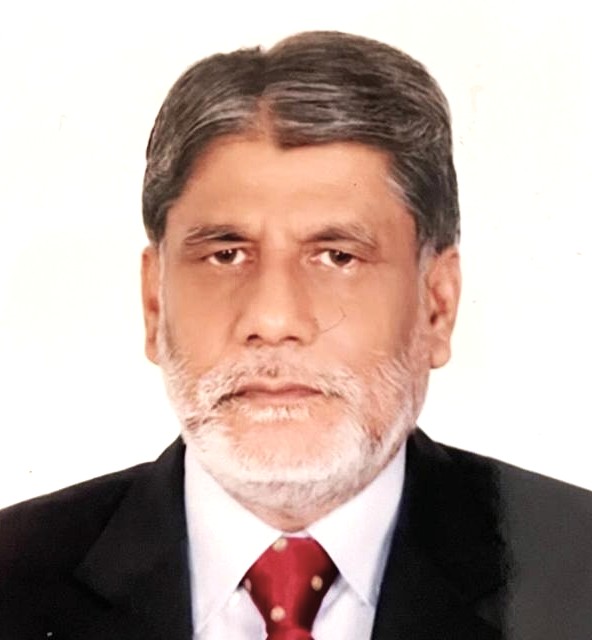
By Dr. Sheikh Akram Ali
Rather than reforming or restructuring universities that have already lost their standards, starting afresh is always preferable. When a university loses the quality of its education, it simultaneously loses the nation’s trust and reputation. Restoring the standards lost over the past five decades since the creation of Bangladesh now appears extremely difficult.
During the 1940s, 1950s and 1960s, the University of Dhaka earned a reputation as the “Oxford of the East”. However, after the fall of Pakistan, the quality of education at Dhaka University declined rapidly. The standard of education has fallen so low that the university no longer secures a place among Asia’s leading institutions. The condition of other public universities across the country is no better than that of Dhaka University.
Recently, Education Minister Ehsanul Haque Milon attended the orientation ceremony for 546 newly enrolled students for the 2026 Summer Term at Gazipur Agricultural University as the chief guest. In his address, he said the government was working actively to prevent brain drain and aimed to raise domestic universities to the standards of global institutions such as Harvard and MIT.
If the current government succeeds in elevating existing universities to global standards, it will be a commendable achievement. However, accomplishing this task is by no means easy. It requires highly qualified teachers and sufficient time to reach the desired level. In a country facing a severe shortage of quality teachers, such a transformation cannot happen overnight.
Yet, within just three decades, Dhaka University had achieved international recognition by any academic measure. The then Pakistan government was committed to developing the university into a centre of academic excellence. This success was undoubtedly the result of the vision and tireless efforts of distinguished teachers who had earned international recognition for their scholarship.
Teachers such as Professor of Physics Satyen Bose and Dr Mohammad Innas Ali; Dr R.C. Majumdar and Dr Ahmed Hasan Dani in History; Dr A.B.M. Habibullah in Islamic History; Syed Sajjad Husain in English; Dr Muhammad Shahidullah in Bengali; Dr Serajul Haque in Arabic; Kazi Motahar Hossain in Statistics; Dr Azizul Haq in Mathematics; Dr Abdullah Farouk in Commerce; Dr G.W. Chowdhury and Dr Mozaffor Ahmed Chowdhury in Political Science; Dr M.N. Huda in Economics; and Dr G.C. Dev in Philosophy worked selflessly to improve the quality of education at Dhaka University. The eminent soil scientist Dr M.O. Ghani served as one of the university’s most dynamic vice-chancellors, leading the institution in a way it had never experienced before.
Harvard and MIT are the products of decades of dedicated work by talented teachers and scholars who devoted their lives to building world-class institutions. Over the years, generations of researchers and academics worked tirelessly to achieve the standards that these universities now represent.
Let us consider the current state of university teachers. Are today’s academics capable of achieving the government’s ambitious goals? The answer would likely be no. This is because many teachers have abandoned core academic activities such as research, publication and professional development, choosing instead to associate themselves, directly or indirectly, with party politics for career advancement. Even exceptionally talented individuals with outstanding academic qualifications often cannot hope to become university teachers unless they are aligned with the ruling party.
As long as this political culture remains entrenched on university campuses, meaningful progress will remain elusive, regardless of the government’s good intentions. Before attempting to upgrade the country’s universities, effective measures must first be taken to end teacher and student involvement in party politics on campus. Otherwise, it will be a case of putting the cart before the horse.
If the current government is genuinely committed to improving the quality of higher education, starting afresh rather than attempting to reform existing universities may be the better option. One practical solution could be the establishment of one or two fully residential specialised universities in Dhaka. The proposed institution would be a comprehensive university offering the subjects and disciplines most essential for the intellectual development of society. To ensure quality from the outset, appointing a British vice-chancellor and distinguished Non-Resident Bangladeshi (NRB) professors currently teaching abroad could be a practical alternative.
Initially, outstanding local graduates could be recruited as research assistants to work under the expatriate faculty members. A respected local academic with an established national reputation could serve as the pro-vice-chancellor. All other faculty members should hold advanced degrees from North American universities. The registrar could be a foreign national, while deputy registrars could be recruited locally.
It is expected that such a system would produce highly capable graduates and, over time, enable the university to achieve international standards. Its graduates would be able to compete successfully in the global job market while also meeting the country’s domestic needs. Eventually, they would take responsibility for running the institution in the same way as other leading universities around the world. One day, it may even reach the standard of Harvard, although such excellence can never be achieved overnight.
This is undoubtedly a major challenge for both the nation and the government. However, it must be pursued with sincerity and without regard for party interests or narrow political considerations. Lasting progress cannot be achieved unless institutions free from political interference are built in the broader interest of society. If Bangladesh is to become a modern and secure nation in the near future, educational institutions, the judiciary, the police and the civil administration must all remain above partisan politics. The destiny of a nation ultimately depends on competent and honest people.
The ideology and model left behind by the late President Ziaur Rahman can, in the author’s view, provide valuable guidance in this regard. This, the author argues, would be strengthened by establishing a dedicated institution to research his life and work. A specialised university could also be established in Dhaka, and the sooner it is done, the better it will be for the nation. The country must strive to nurture high-calibre nationalist leaders. It is hoped that graduates emerging from such a specialised institution will become among the nation’s finest citizens, committed to serving Bangladesh with integrity, dedication and pride.
(The writer is an academic and political commentator in Bangladesh and can be reached at news@metro-morning.com)
Education #HigherEducation #Bangladesh #University #DhakaUniversity #AcademicExcellence #EducationReform #Research #Innovation #Leadership #QualityEducation #Harvard #MIT #BrainDrain #PublicUniversities #EducationPolicy #Students #Teachers #AcademicFreedom #InstitutionBuilding #FutureLeaders #NationalDevelopment #Governance #Opinion #SouthAsia #Learning #HigherLearning #MetroMorning #WorldEducation #EducationMatters
