





Part-I
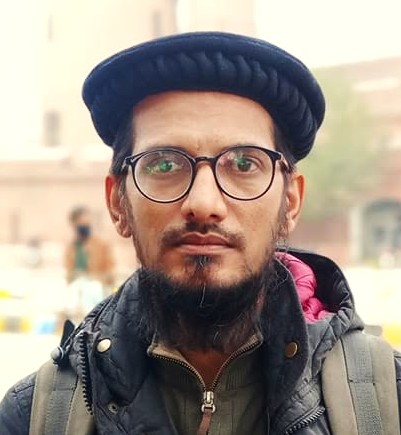
By Arsalan Ahmad Siddiqui
On the morning the funeral ceremonies began in Tehran, Iran was still living under the shadow of war. The smoke had not entirely cleared from the battlefields. Military tensions with the United States and Israel remained unresolved. Air defence systems stayed on high alert. Diplomatic channels remained active but fragile. Across the Middle East, governments were calculating their next moves while financial markets watched every new development with growing unease.
Against this backdrop, millions of Iranians did not gather merely to mourn a leader. They gathered to demonstrate continuity. Whether one admired Ayatollah Ali Khamenei or opposed his political legacy, one reality became difficult to ignore: the funeral quickly evolved into something far greater than a religious ceremony. It became a national ritual, a diplomatic stage and a geopolitical message directed simultaneously at Iran’s citizens, regional rivals and the wider international community. For Online Journalism Pakistan, however, this report begins with a different question. Not who won the war. Not who lost. But rather: How did a funeral become one of the most politically consequential events in the Middle East in 2026?
Modern history shows that state funerals often reveal as much about the future as they do about the past. The funerals of Winston Churchill, Jamal Abdul Nasser, Ayatollah Ruhollah Khomeini, Nelson Mandela and Queen Elizabeth II each became defining moments in which governments projected legitimacy, alliances and national identity. Iran’s week-long ceremonies sought to achieve something similar. Beginning in Tehran, continuing through the holy city of Qom, extending symbolically to the Shi’a centres of Najaf and Karbala, and concluding in Mashhad near the shrine of Imam Raza, the procession was carefully structured as both a religious farewell and a statement of institutional continuity. The sequence itself carried meaning. Tehran represented political authority. Qom represented religious scholarship. Najaf and Karbala connected Iran’s narrative to the wider Shi’a world. Mashhad represented both spirituality and national memory. Regardless of political interpretation, the route reflected deliberate symbolism rather than simple administrative planning.
According to Iranian authorities, Ayatollah Ali Khamenei was killed during the opening phase of the US-Israeli military campaign against Iran earlier in 2026. Washington and Tel Aviv presented the broader campaign as part of efforts to counter Iranian military capabilities and address regional security concerns, while Tehran described the attack as an act of aggression against its sovereignty and leadership. These competing narratives remain central to any understanding of the conflict. What is less disputed is the consequence. The death of a leader who had shaped Iranian politics for decades fundamentally transformed the strategic landscape of the Middle East and intensified questions surrounding succession, deterrence and regional stability.
Military historians often draw a distinction between victory and strategic resilience. Victory usually refers to the achievement of declared military objectives. Strategic resilience, however, describes a state’s ability to absorb severe shocks without political collapse. Many analysts argue that Iran sought to frame the funeral within this second concept. Rather than focusing on military achievements, the ceremonies projected continuity, endurance and institutional survival. Whether this approach ultimately strengthens Iran’s long-term position remains a matter of debate. Yet the message conveyed during the funeral was unmistakable: the Islamic Republic intended to demonstrate that its governing structure had endured despite facing one of the most serious challenges in its history.
For Pakistan, developments in Iran cannot be viewed solely through the lens of Middle Eastern politics. The two countries share a long border, economic interests and significant security considerations. Islamabad officially condemned attacks on Iranian territory, reaffirmed support for Iran’s sovereignty and called for adherence to international law through diplomatic channels. Within Pakistan’s Parliament and across sections of the political spectrum, many voices also urged restraint, regional stability and the protection of civilian lives while expressing solidarity with the Iranian people. For Pakistan, therefore, the funeral was not merely a foreign event. It was closely connected to national security, regional diplomacy and the future balance of power in South and West Asia. (To be continued)(The writer is a journalist and a prolific commentator on national and international affairs. He can be reached at editorial@metro-morning.com)
