





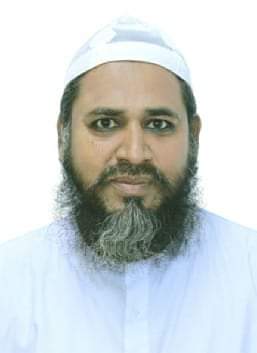
By Dr Mehmood Alam Aasi Khurram Jahangiri
Some spiritual leaders are remembered for what they preached, scholars for what they wrote, and social leaders for the institutions they built. Rarer are those whose lives bring all three traditions together. Hazrat Shah Jahangir Tajul Arefin Saiyed Moulana Muhammad Areful Hai Quddisa Sirruhu belonged to that tradition. His life raises a fundamental question about the purpose of spirituality: what should faith ultimately produce in a human being? His answer was expressed less through slogans than through a lifetime of conduct. Faith, in this understanding, should refine character. Knowledge should deepen responsibility. Spiritual closeness to Allah should make a person more useful to humanity.
Born at Mirzakhil Darbar Sharif in Satkania, Chattogram, Hazrat Tajul Arefin grew up within a long-established environment of Islamic scholarship, spiritual discipline and community service. The Silsilah-I-Aliyah Jahangiriyah had been carried forward through successive spiritual leaders, including Hazrat Shah Jahangir Sheikhul Arefin, Hazrat Shah Jahangir Fakhrul Arefin and Hazrat Shah Jahangir Shamsul Arefin. From them he inherited not simply a spiritual position, but a demanding responsibility to preserve learning, sincerity, discipline and service. His own intellectual journey reflected that responsibility. He studied the Quran, Arabic and Persian before progressing through the traditional madrasa system, completing Dakhil, Alim and Fazil.
He later specialized in Hadith and completed Kamil, while also pursuing mainstream education through matriculation, higher secondary studies, a bachelor’s degree and a master’s degree. He subsequently undertook further advanced study in Islamic jurisprudence. This combination of religious and general education was more than an impressive list of qualifications. It represented a belief that knowledge should not be divided into isolated worlds. Religious learning could shape moral judgement, while broader education could strengthen a person’s capacity to contribute to society. For him, knowledge was not an ornament of status. It was a trust. That distinction matters today.
Modern societies often measure education through degrees, employment and economic advancement. Those things have their place, but education without character can leave society intellectually capable yet morally uncertain. Knowledge that produces pride rather than humility, information without wisdom, or professional success without responsibility fails to fulfil its highest purpose. The same principle shaped Hazrat Tajul Arefin’s understanding of spirituality. It was not an invitation to withdraw from society. It was preparation to engage with society more responsibly. Purifying the heart from arrogance, greed, envy and hatred was meant to make a person more compassionate, disciplined and conscious of the dignity of others.
In that sense, worship and social responsibility were not separate concerns. The closer a person came to Allah, the greater should become his concern for Allah’s creation. Religion could not be confined to the prayer mat or religious gathering. It had to enter homes, schools, farms and communities. This is perhaps one of the most relevant aspects of his legacy. The modern world often separates the spiritual from the social. Religion is treated as a private matter while development and welfare are assigned to governments, charities or professional organizations. Yet a more integrated understanding of faith sees service to people as an expression of religious responsibility.
If a family was struggling, that mattered. If young people needed education and direction, that mattered. If farmers faced difficulties or communities lacked basic facilities and opportunities, those concerns could not simply be dismissed as matters outside the spiritual sphere. But there was an important distinction between temporary charity and lasting service. Charity can ease an immediate hardship. Sustainable service asks how future hardship can be reduced. It requires institutions, education, capable people and community participation. It seeks to leave behind not dependency but capacity. Accounts of Hazrat Tajul Arefin’s work connect his philosophy with education, agriculture, community welfare, infrastructure and wider social development.
The significance of such efforts lies not only in what was achieved, but in the principle behind them: development should serve human dignity rather than reduce people to statistics. That lesson extends beyond religious institutions. Development without ethics can create prosperity without justice. Knowledge without integrity can become a tool of manipulation. Authority without humility can become detached from ordinary people. Even religion, when separated from compassion and accountability, can lose its transformative power. Hazrat Tajul Arefin’s legacy sought to hold these elements together: knowledge with humility, spirituality with responsibility, and progress with service. His approach to leadership was equally important.
A spiritual tradition cannot survive merely through remembrance of its leaders. Its principles must be translated into the lives of succeeding generations. That responsibility now rests with Hazrat Shah Jahangir Imamul Arefin Dr Moulana Saiyed Muhammad Maksudur Rahman Quddisa Sirruhu, the present spiritual successor and head of Darbar-I-Aliyah Jahangiriyah. His task is not simply to inherit a title, but to carry forward a tradition of religious education, spiritual development, youth guidance, humanitarian concern, social harmony and community responsibility in circumstances that are constantly changing. Preserving a spiritual heritage does not mean preserving only its memories. It means preserving its values. To honor a teacher is not merely to speak about him with reverence.
If the lesson was humility, remembrance should make people humbler. If the lesson was education, it should encourage learning. If the lesson was service, it should strengthen concern for those in need. If the lesson was harmony, it should bring communities closer rather than deepen divisions. The contemporary world does not suffer from a shortage of information. It suffers from a shortage of wisdom. It does not lack institutions, but often lacks trust. It does not lack religious speech, but frequently lacks the moral transformation that gives such speech credibility. Hazrat Tajul Arefin’s life offers a simple response. Spirituality must change the person before it can change society. Knowledge must produce responsibility. Faith must produce mercy. Leadership must become service.
(The writer is a religious scholar, poet and writer, has done PhD, can be reached at news@metro-morning.com)
