





Islamabad pledged unwavering commitment to regional and global stability, with the foreign minister emphasizing persistent diplomatic and strategic efforts
By S.M. Inam/Asghar Ali Mubarak
ISLAMABAD: Pakistan has emerged as a central intermediary in the efforts to defuse the escalating conflict between the United States, Israel, and Iran, with Deputy Prime Minister and Foreign Minister Ishaq Dar confirming that indirect talks between Washington and Tehran are underway through messages relayed by Islamabad.
Turkiye and Egypt have also played supporting roles in these back-channel efforts. In a post on X on Thursday, Dar addressed what he described as “unnecessary speculation” in the media over peace negotiations. He confirmed that Iran is considering a 15-point framework shared by the United States and reiterated Pakistan’s commitment to fostering dialogue and diplomacy as the only viable path to stability.
The conflict, which erupted on February 28, has left the broader Middle East on edge, prompting Islamabad to take an active role in preventing further escalation. Pakistan’s interventions have included direct communication between Chief of Defence Forces and Chief of Army Staff Field Marshal Syed Asim Munir and US President Donald Trump, confirmed by the White House on Sunday.
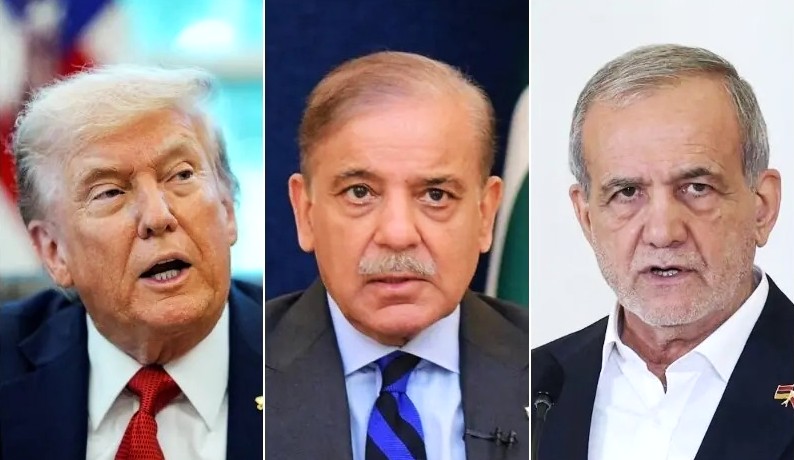
Prime Minister Shehbaz Sharif also offered Pakistan as a venue for negotiations, a proposal acknowledged by Trump on his Truth Social account. Following these diplomatic overtures, Pakistan delivered a US proposal to Tehran, according to a senior Iranian source. Iran, however, has rejected the proposal, insisting that it will end what it terms an “imposed war” on its own terms.
Officials in Tehran outlined five conditions for an end to hostilities, including a halt to aggression, mechanisms to prevent renewed conflict, guaranteed reparations, resolution across all fronts and resistance groups, and international recognition of Iranian control over the Strait of Hormuz.
Speaking at a weekly press briefing, Foreign Office spokesperson Tahir Andrabi emphasized Pakistan’s ongoing contacts with regional and global partners, including Turkiye, Jordan, Kuwait, Azerbaijan, Malaysia, Egypt, Bangladesh, Lebanon, Bahrain, and Indonesia. He said Prime Minister Shehbaz Sharif is personally leading these diplomatic efforts, while Deputy Prime Minister Dar maintains continuous engagement with counterparts worldwide.
“Pakistan is pushing for an immediate reduction in tensions, a ceasefire, and a peaceful resolution,” Andrabi said, highlighting Islamabad’s role in coordinating a complex web of regional diplomacy as the war enters its fourth week.
