





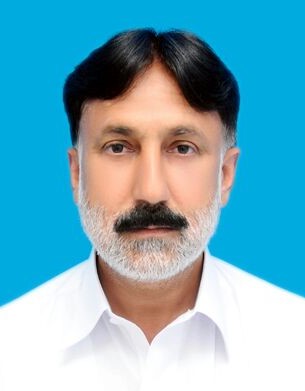
By Sudhir Ahmad Afridi
The PTI provincial government, and particularly Khyber Pakhtunkhwa chief minister Suhail Afridi, appeared increasingly frustrated with the media in recent days. Speaking yesterday, he directed officials to file court cases against journalists accused of making baseless allegations, warning that failure to act within three days would result in action against the concerned officers themselves.
Making allegations or taking action without evidence is unquestionably wrong, whether done by a journalist, a ruler, an official or an ordinary citizen. But if Chief Minister Afridi, who is both young and emotional, does not mind the question, can he explain why Pakistan Tehreek-e-Insaf recruited hundreds of social media activists during its previous government to promote one-sided narratives? And has PTI’s social media machinery allowed any opponent to live in peace on digital platforms?
The chief minister should avoid making decisions in anger and instead try to engage with reality. I do not claim that he or his provincial government are entirely wrong, but this is a world of consequences where every crop that is sown must eventually be harvested. This is the age of narratives. Narratives must be strengthened through positive and constructive engagement, while patience, restraint and tolerance are equally necessary.
The first step should be the moral training of PTI’s social media activists so they refrain from publicly humiliating others online and instead promote a culture of respect, dignity and political tolerance. If PTI members themselves do not respect others or use social media in a civilized and constructive manner, they should not expect better behavior from their opponents. Everyone should learn to tolerate criticism when it is reasonable and constructive, and should also be willing to reform themselves.
In my view, no political party misuses social and digital media in a more negative way than PTI workers and leaders. That is why most people within PTI, from top to bottom, need to reform themselves before expecting goodness or constructive behavior from others. As a Pashto saying goes: “If you do not speak ill of my father, I will not speak ill of yours.” There is also no doubt that across Khyber Pakhtunkhwa, some well-known media platforms and journalists seem either committed or assigned to highlighting only the negative and weak aspects of every project, policy and action of the PTI government. That too should not happen.
If the PTI provincial government or Chief Minister Suhail Afridi does something good, it should also be acknowledged. It is not the case that every action or statement made by the chief minister is negative. Journalistic ethics and principles should also be respected. Only recently, journalists in Peshawar were reportedly given Rs100,000 each as an Eid al-Adha gift by the provincial government, yet there was little public appreciation from the city’s journalists. At the same time, journalists from other districts, especially tribal areas, may reasonably question why they were excluded despite spending the past two decades working amid terrorism, fear and violence, often without compensation.
Similarly, the provincial government recently organized a historic jirga in the provincial assembly, bringing together political and religious leaders as well as representatives from all sections of society to discuss law and order, terrorism and the province’s rights. Yet very few people appeared willing to acknowledge it. Weaknesses undoubtedly exist, but there have also been positive steps. News reports, commentary and analysis should therefore observe journalistic ethics, accurate information, fairness, transparency, neutrality and balance. As chief minister, Suhail Afridi currently represents 45 million Pashtuns, which makes it the responsibility of all of us to guide him and offer sincere advice for the sake of the province’s rights.
The provincial government is facing enormous challenges. Chief Minister Suhail Afridi is young and inexperienced, and pushing him into a corner would not serve the province’s interests. Khyber Pakhtunkhwa is already dealing with immense pressure caused by the federal government’s treatment of the province, political opposition and the continuing wave of terrorism in tribal districts. This is not the right time for confrontation between the media and the provincial government. Both sides need to work together to pull the province out of crisis, and that is the need of the hour.
Suhail Afridi should also avoid creating unnecessary confrontations or opening new fronts against critics. Instead, he should focus on good governance, close loopholes for corruption in every department, end nepotism and protocol culture, and promote transparency and accountability at both governmental and administrative levels. Good performance speaks for itself. If governance improves, there will be no need to reward people, issue explanations, lose temper or mobilize against opponents. Finally, I would say that Chief Minister Suhail Afridi should concentrate on improving governance, administration and public welfare because if he fails, the province’s 45 million Pashtuns will not accept excuses or justifications from him.
(The writer is a senior journalist at tribal region, covers various beats, can be reached at news@metro-morning.com)
