





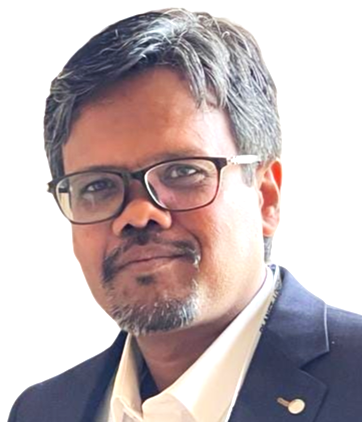
By S.M. Inam
There are moments when political dissent crosses a line, shedding the garb of legitimate opposition and revealing itself as something far more damaging: a wilful assault on the national interest. The recent intervention by Qasim Khan, son of the imprisoned former prime minister Imran Khan, belongs squarely in that category. By demanding that the European Union revoke Pakistan’s GSP Plus status, and by choosing to do so alongside a representative of a Baloch separatist group, Khan has not only ventured into profoundly irresponsible territory but has also laid bare a troubling willingness to weaponise Pakistan’s economic vulnerabilities for narrow political ends.
Let us be clear about what is at stake. The GSP Plus scheme is not a matter of abstract diplomatic prestige. It is a tangible, hard-won arrangement that grants Pakistani textile exports preferential access to European markets. For an economy still navigating the treacherous waters of external debt, inflationary pressures and precarious foreign exchange reserves, this preferential status is a lifeline. The textile sector alone employs millions of Pakistanis, many of them in small and medium-sized enterprises that lack the capacity to absorb the shock of suddenly losing such a privileged position. To jeopardize this arrangement is to gamble with the livelihoods of ordinary citizens, and to do so in the name of a political grievance is an act of staggering self-indulgence.
The specific grievance Khan cites—his father’s imprisonment—is one that can and should be debated within Pakistan’s legal and political frameworks. Whatever one’s view of the circumstances surrounding Khan’s detention, the pursuit of justice or the redress of grievances is not advanced by appealing to foreign capitals to punish one’s own country. There is a word for such behavior, and it is not dissent; it is sabotage. To dress it in the language of human rights does not render it any less damaging. If anything, it compounds the offence by cynically appropriating a noble principle to mask a political vendetta.
The reaction from political and civic circles has been swift and appropriately condemnatory. It is not merely that Khan’s demand threatens to widen Pakistan’s trade deficit and deplete foreign exchange reserves; it is that it does so at a moment when the country is beginning, tentatively, to stabilize its economy after years of turbulence. The textile sector, which has been a rare success story in Pakistan’s export performance, would face a crisis that would inevitably translate into job losses on a significant scale. The millions of workers who depend on this industry are not abstract statistics; they are families, communities, and aspirations that would be shattered by a decision made in Brussels, nudged by a Pakistani citizen appealing against his own nation.
None of this is to suggest that Pakistan’s human rights record is beyond scrutiny, or that legitimate criticism should be silenced. Every country, Pakistan included, has room for improvement, and civil society plays an essential role in holding power to account. Nevertheless, there is a world of difference between constructive engagement aimed at reform and a campaign designed to inflict economic damage in the hope of political gain. The former is the work of patriots; the latter is something else entirely.
Khan is young, and youth is often impatient with the complexities of politics. However, impatience is not an excuse for recklessness. If he wishes to honor his father’s political legacy, he would do well to learn from those who have understood that love of country does not require agreement with its government, but does require a basic fidelity to its interests. There is no future in which Pakistan’s prosperity is advanced by a campaign to strip it of its hard-earned economic standing. There is no justice in a politics that sacrifices the livelihoods of millions on the altar of a single grievance.
The country has seen enough of such destructive politics in recent years. What it needs now is a politics that builds, that takes responsibility, that understands that the nation is larger than any individual, any party, any grievance. Khan would serve his father’s memory, and his country, far better by recognizing that distinction before he does further damage.
(The writer is a former government officer and a senior analyst on national and international affairs, can be reached at inam@metro-morning.com)
