





By Zahid Karani
KARACHI: The School Education and Literacy Department (SELD), Government of Sindh, in collaboration with UNICEF, launched the Enrolment and Retention Drive 2026–27 at Church Mission School, following established standard operating procedures.
The launch event was attended by key dignitaries, including the SELD secretary, Zahid Ali Abbasi; Dr Junaid Hameed Samo, chief programme manager of the Reform Support Unit (RSU); Prem Bahadur Chand, chief field officer of UNICEF Sindh; and Muhammad Iqbal Qureshi from the Pakistan Rotary Literacy Mission, along with M Ali Haider, deputy governor of Rotary. Representatives from Muslim Hands and the National Commission for Human Development (NCHD), as well as development partners, academia, civil society and senior officials from various SELD wings, including directors and district education officers, also took part.
Elnur Aliyev joined the session virtually and presented a detailed briefing titled “Accelerating Enrolment and Retention Outcomes: SBC Evidence, Insights, and Strategic Priorities (2026–27)”, highlighting strategies to improve enrolment and retention outcomes across Sindh.
A representative from NCHD outlined ongoing initiatives focused on strengthening the capacity of education officials and School Management Committees, with particular emphasis on gender-sensitive social and behavioural change approaches to support out-of-school children and adolescents, especially in Sujawal district.
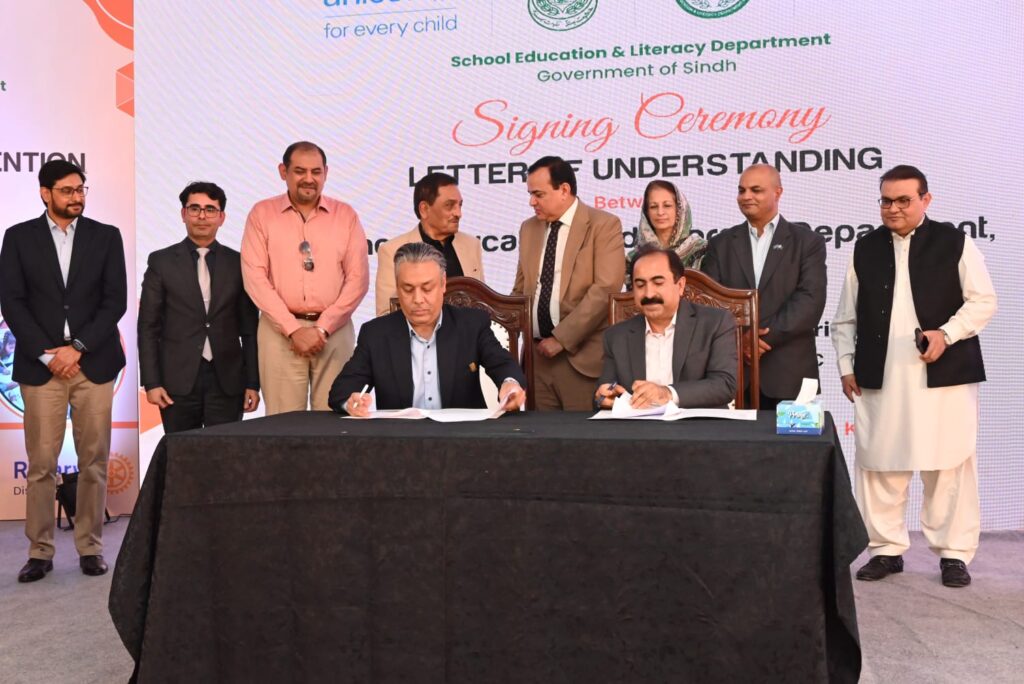
On the occasion, SELD, through the Reform Support Unit and with support from Rotary International, formalised a letter of understanding to establish two model education clusters, one in Umerkot and another in Karachi’s Keamari district. The clusters are intended to achieve zero out-of-school children in the targeted areas.
The initiative underscored the Sindh government’s commitment to inclusive and equitable education, aimed at ensuring that every child was enrolled, retained and provided with quality learning opportunities across the province.
