





News Desk
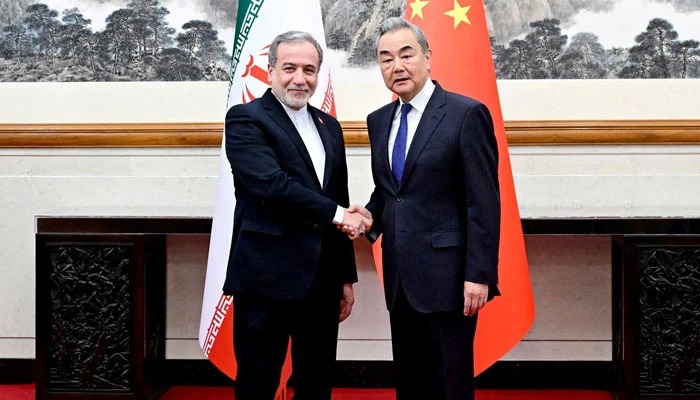
BEIJING: China’s Foreign Minister Wang Yi said Beijing would play a “greater role” in efforts to end hostilities in the Middle East during talks with his Iranian counterpart on Wednesday, a week before US President Donald Trump is due to meet Xi Jinping.
China is a key customer for Iranian oil, defying US sanctions, and is also directly affected by disruptions to the Strait of Hormuz, a vital energy shipping route bordered by Iran. Beijing has quietly engaged in efforts to resolve the weeks-long crisis, with its diplomacy credited with contributing to a fragile ceasefire agreed between Washington and Tehran.
China “will work harder to ease tensions and end the fighting, continue to support the launch of peace talks, and play a greater role in restoring peace and tranquillity to the Middle East,” Wang told Iran’s Abbas Araghchi in Beijing.
“China considers that a complete cessation of fighting must be achieved without delay, that it is even more unacceptable to restart hostilities, and that continuing to negotiate remains essential,” Wang said, according to a statement from his ministry after the talks.
China, a major manufacturing economy, has so far been relatively sheltered from fuel shortages due to oil reserves and expanding renewable energy capacity, although costs of oil-derived materials such as plastics and fabrics have risen significantly. More than half of the crude oil imported by sea into China comes from the Middle East and is transported mainly through the Strait of Hormuz, according to maritime analytics firm Kpler.
