





By Pervaiz Mughal
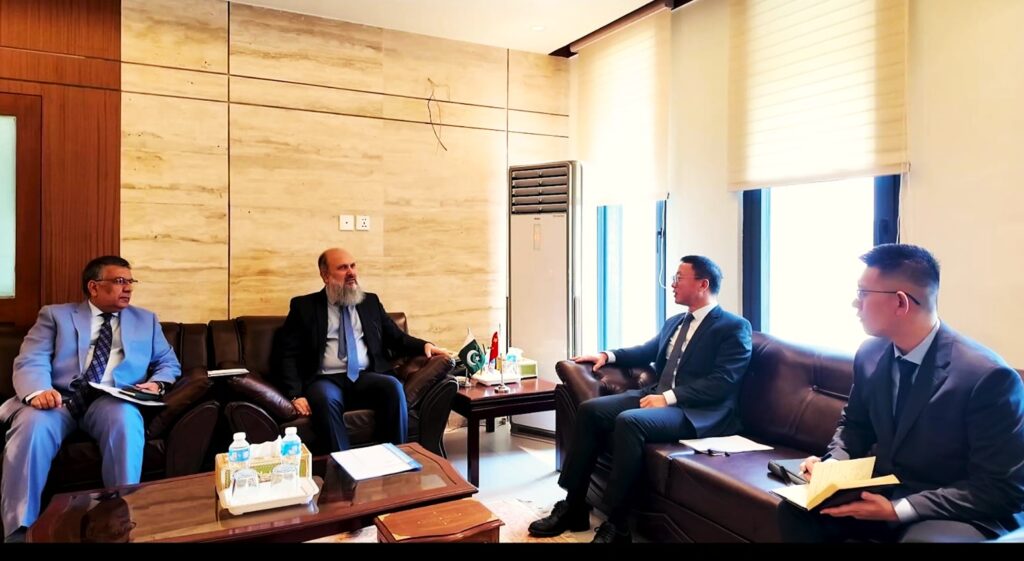
ISLAMABAD: Federal Minister for Commerce Jam Kamal Khan held a detailed meeting with Chinese Minister Counsellor Yang Guangyuan to discuss strengthening bilateral trade, industrial cooperation, agriculture modernization, logistics connectivity, supply chain resilience and emerging investment opportunities under the broader framework of the Pakistan–China strategic economic partnership.
The meeting underscored the longstanding friendship between the two countries, with both sides reaffirming their commitment to expanding practical economic cooperation across multiple sectors.
During the talks, Jam Kamal Khan highlighted the evolving global trade environment, noting that recent geopolitical shifts, supply chain disruptions and changing logistics dynamics have reinforced the importance of resilient regional trade corridors and diversified industrial cooperation. He observed that disruptions in global shipping routes have prompted businesses worldwide to reassess production and logistics strategies, creating fresh opportunities for countries with strategic geographic advantages.
He said Pakistan’s location positions it as a natural gateway connecting China, Central Asia, the Middle East and emerging markets, making it a key partner for regional trade and manufacturing collaboration. A major focus of the discussion was industrial cooperation, particularly in electric vehicles, renewable energy, battery manufacturing and advanced industrial technologies.
The minister noted that Chinese automotive brands already have a growing presence in Pakistan through assembly operations, adding that the next phase should focus on deeper industrial collaboration, localization, technology transfer and joint ventures in EV manufacturing and components.
He said Pakistan’s auto sector has developed a domestic vendor ecosystem over time, while EV technology presents an opportunity to build new industrial capabilities, including batteries, electric motors, electronics and advanced components. He added that Pakistan offers not only a growing domestic market but also export potential for regional and African markets.
The Chinese side appreciated Pakistan’s interest in expanding industrial cooperation and acknowledged strong participation by Pakistani companies in emerging sectors including IT, EVs, energy technologies and manufacturing.
Agriculture cooperation also featured prominently in the meeting. Jam Kamal Khan said changing weather patterns, fertilizer supply disruptions, food security concerns and population growth have made agricultural modernization an urgent global priority. He said Pakistan and China could benefit from closer cooperation in mechanized farming, climate-smart agriculture, agricultural technology transfer and value-added food processing.
He particularly highlighted the agricultural potential of Balochistan, noting that drought-resistant crops such as olives, pistachios, almonds, dates and pine nuts offer sustainable economic opportunities suited to the region’s climate. He stressed the need to shift towards climate-resilient agriculture rather than water-intensive cultivation models in vulnerable areas.
Referring to value addition, he pointed to the growing potential of processed agricultural products, particularly date-based goods such as syrups, oils, sweets and specialty foods, which could support export growth and rural livelihoods.
The meeting also discussed community-focused development cooperation, including water security solutions, renewable energy applications, solar-powered infrastructure, women’s vocational empowerment and rural welfare initiatives. Jam Kamal Khan stressed that sustainable development projects must include strong maintenance mechanisms, institutional ownership and community participation.
Talks further covered Pakistan’s logistics infrastructure and strategic connectivity, particularly the emerging role of Gwadar as a regional trade hub. The minister said Gwadar’s commercial viability would strengthen through industrial development, two-way cargo movement, regional connectivity and export-oriented activity.
Both sides agreed that shifting global economic conditions have created new opportunities for cooperation in trade, manufacturing, supply chain resilience, clean energy, agriculture and regional logistics.
They also acknowledged the importance of Pakistan–China people-to-people ties and sustained institutional dialogue in advancing shared economic goals. Jam Kamal Khan reaffirmed Pakistan’s commitment to strengthening its all-weather strategic cooperative partnership with China through practical, investment-oriented and forward-looking engagement.
