





By Imtiaz Hussain
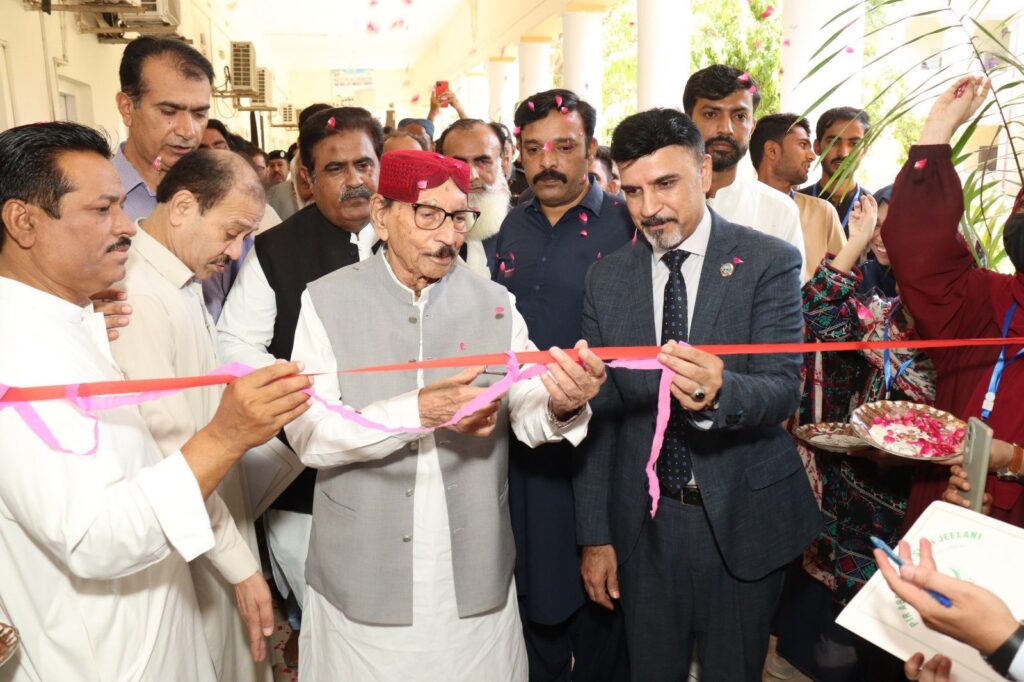
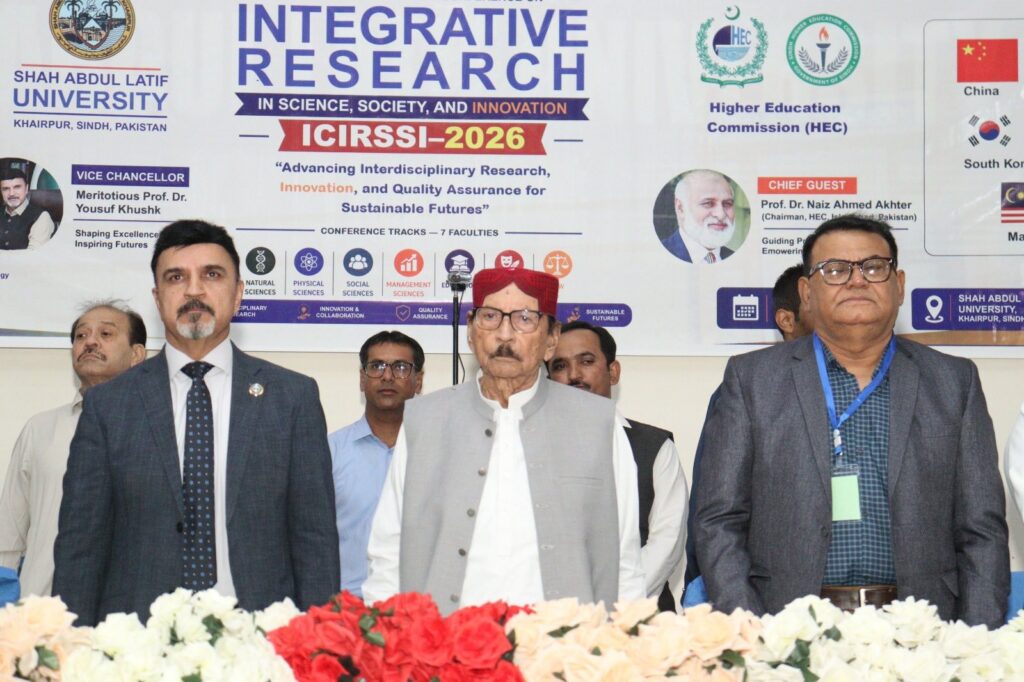
KHAIRPUR: The first International Conference on Integrative Research in Science, Society, and Innovation (ICIRSSI-2026) was held at Allama I. I. Qazi Hall and other venues at Shah Abdul Latif University Khairpur on 15 May 2026.
The one-day conference brought together researchers, dignitaries and scholars from more than ten countries, marking what organisers described as a major step towards promoting interdisciplinary dialogue at a global level.
The inaugural session was addressed by former chief minister of Sindh Syed Qaim Ali Shah, Chairman of the Higher Education Commission Pakistan Prof Dr Niaz Ahmad Akhtar, Deputy Commissioner Khairpur Altaf Ahmad Chachar and Vice Chancellor SALU Prof Dr Yousuf Khushk.
Scholars and researchers from Pakistan, Malaysia, Germany, China, Sweden, South Korea, Nigeria, Bangladesh, Brazil, Iran and Hong Kong participated, reflecting the international scope of the event.
The ceremony opened with a welcome from the university administration, which said the aim was to bridge scientific inquiry, societal needs and innovation. Syed Qaim Ali Shah attended as chief guest, while the HEC chairman joined virtually as guest of eminence.
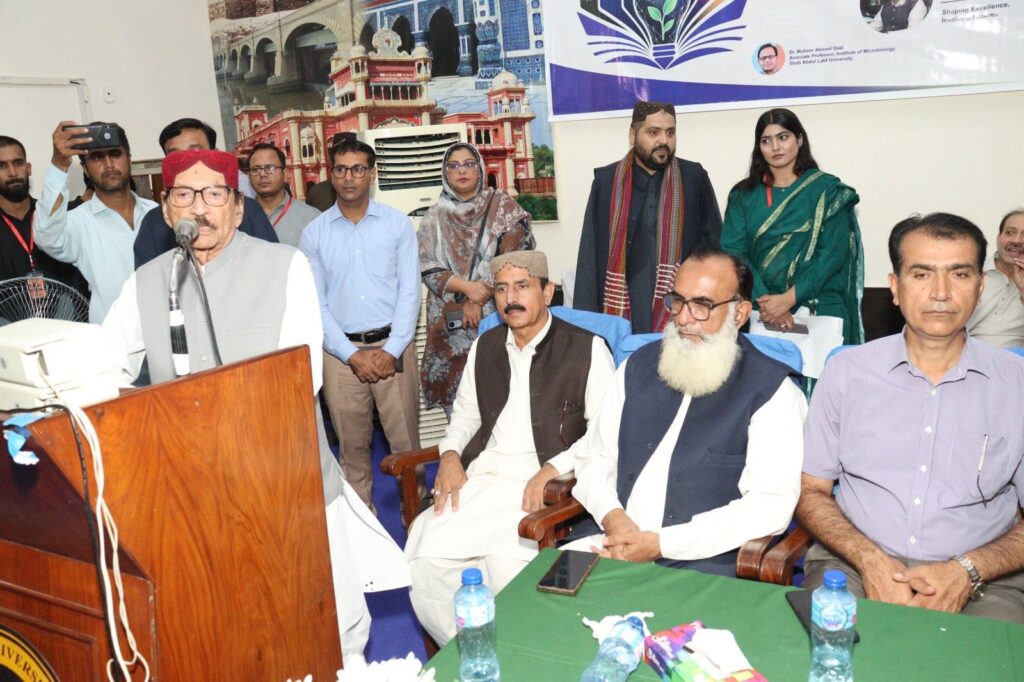
In his address, Syed Qaim Ali Shah praised the range and quality of research presented and recalled his government’s role in establishing universities across Sindh. He said Shah Abdul Latif University was a special gift secured for the people of Khairpur from Shaheed Zulfiqar Ali Bhutto for the educational uplift of the region. He stressed that education must remain a national priority, highlighted Pakistan’s geopolitical importance in regional peace and pledged support for a solar energy scheme for the university.
Prof Dr Niaz Ahmad Akhtar said universities must lead national transformation through research, innovation and knowledge creation. He appreciated SALU for organising an international conference of global significance in a remote region and praised its research environment, student discipline, active societies and committed faculty following a recent visit.
He said universities must produce not only graduates but also skilled and ethical problem solvers capable of addressing national and global challenges. He added that interdisciplinary research and innovation were essential for Pakistan’s socio-economic development and said the conference recommendations would be shared with relevant stakeholders.
Prof Dr Nanik Ram of the University of Sindh presented an analysis of Pakistan’s development challenges, noting that low-income, densely populated countries like Pakistan continued to struggle with human development indicators due to weak infrastructure, climate change, pandemics, geopolitical uncertainty and extremism-linked terrorism.
A professor from Hong Kong presented research on cross-border innovation and technology transfer, highlighting how Global South countries could use digital transformation for economic resilience. Researchers from Germany, Brazil and Nigeria also presented papers on AI ethics, public health systems and water scarcity.
Deputy Commissioner Khairpur Altaf Ahmad Chachar said Shah Abdul Latif University had positively transformed the lives of more than three million people through education, research and social development. He described such conferences as vital for regional intellectual and socio-economic progress.
Vice Chancellor Prof Dr Yousuf Khushk said universities must produce problem solvers rather than degree holders, adding that research should move beyond libraries into industry, policy and everyday life. He said inspiration from Shah Abdul Latif Bhittai’s philosophy pointed towards harmony between humanity, knowledge and nature.
He appreciated the organising committee, particularly Dr Muneer Ahmed Qazi, for turning the event into a global platform for academic collaboration.
After the inaugural session, parallel academic sessions began across university faculties under the chairmanship of respective deans, where national and international scholars presented research on science, society, innovation, technology, education and sustainable development.
