





By Imtiaz Hussain
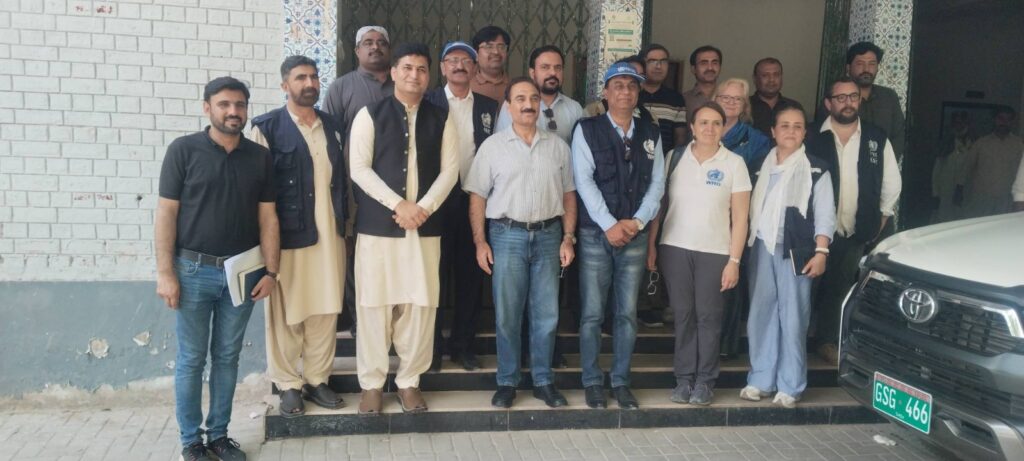
SUKKUR: A World Health Organization Eastern Mediterranean Regional Office expert delegation visited District Khairpur to review the ongoing mpox and HIV situation, officials said.
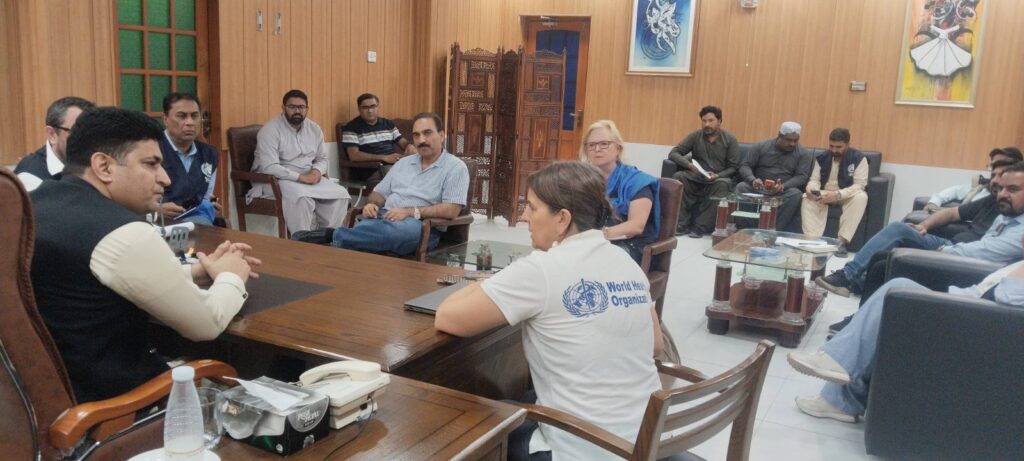
The delegation included WHO EMRO experts Dr Thoms Mullet, Dr Benedetta, Dr Rosamund Lewis, Dr Iman Haweidy, Dr Amal Barakat and Safa Ahmed Mousa, along with members of the national WHO core team, provincial WHO lead, NIH technical team, divisional EPI coordinator, NSTOP officer Khairpur, WHO DPO, CCO, mpox focal person and the district EPI focal person. They arrived at the Deputy Commissioner’s office in Khairpur for the review.
The Deputy Commissioner welcomed the delegation and briefed them on the mpox outbreak in the district, outlining the role of the district administration and the key containment measures taken so far.
Technical teams presented updates on surveillance, case detection and reporting systems, and data quality. They also reviewed infection prevention and control practices at KMC and GIMS, noting that the NICU should not be sealed. Other areas reviewed included specimen collection, transport and testing capacity, as well as risk communication and community engagement activities and identified gaps.
The global experts described the mpox outbreak response in Khairpur as a success story, while also identifying gaps in surveillance and infection prevention and control, particularly at KMC and GIMS, and called for immediate strengthening of these systems.
NSTOP Khairpur presented a detailed briefing from the index case onwards, covering prevention, detection and response measures, strengthening of surveillance systems and rapid response mechanisms, and capacity building of health staff on infection prevention protocols.
They also highlighted operational arrangements including the establishment of a control room, rapid response teams at taluka level, isolation wards and screening desks. Community engagement activities included awareness campaigns, distribution of information materials in local languages and outreach to high-risk groups including MSM communities, transgender persons, truck drivers and STI risk groups. Efforts to address stigma and discrimination were also presented.
Officials further briefed the delegation on laboratory and logistics systems, including streamlined testing and sample transport, and the integration of a One Health approach involving human and animal health stakeholders.
The experts appreciated the governance, coordination and administrative efforts of the Commissioner Sukkur and Deputy Commissioner Khairpur in containing the outbreak. They recommended focused action to address the identified gaps and to maintain the current response momentum.
