





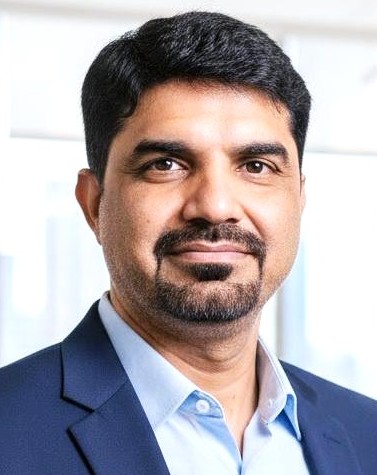
By Amjad Qaimkhani
In politics, symbolism often matters more than speeches. And in Houston, at the “Marka-e-Haq” ceremony jointly organised by the Pakistan Association of Greater Houston and the Consulate General of Pakistan in Houston, symbolism was everywhere. The participation of MQM-London’s Houston chapter was not merely another diaspora appearance at a patriotic gathering. It represented something far deeper: a calculated political repositioning by a movement historically defined by confrontation with Pakistan’s establishment, now publicly embracing the very institutions it once fiercely criticised. For decades, the relationship between the Muttahida Qaumi Movement and Pakistan’s security establishment has been among the country’s most turbulent political sagas.
From Karachi’s violent urban politics in the 1990s to military operations, exile politics, factional fragmentation and the post-2016 collapse of Altaf Hussain’s mainstream influence inside Pakistan, MQM’s political trajectory has largely been a story of estrangement from state power. Yet history has a peculiar way of forcing adversaries into reinvention. The Houston ceremony may ultimately be remembered not because of its size, but because of its message. Former Sindh Assembly member Imamuddin Shehzad’s remarks were unusually direct. His repeated emphasis on patriotism, solidarity with Pakistan’s armed forces and praise for Field Marshal Asim Munir signalled an unmistakable attempt to reshape MQM-London’s public image, particularly among overseas Pakistanis. That shift is politically significant.
MQM’s political identity has traditionally rested on representing Urdu-speaking urban migrants, especially in Karachi and Hyderabad. Over time, however, MQM’s relationship with the state evolved from tactical cooperation to open hostility. Military crackdowns, allegations of militancy, internal fragmentation and Altaf Hussain’s controversial speeches pushed the movement towards political isolation. The post-2016 period proved devastating for MQM-London. Inside Pakistan, the state-backed fragmentation of the party dramatically weakened Altaf Hussain’s direct influence. MQM-Pakistan attempted to reinvent itself as a more institutionally acceptable political force, while MQM-London retained emotional loyalty among sections of the diaspora but struggled to remain politically relevant within Pakistan’s mainstream discourse.
This is why the Houston appearance matters. It suggests that MQM-London may now recognise a new political reality: survival in modern Pakistan requires alignment with national stability narratives rather than perpetual institutional confrontation. The “Marka-e-Haq” platform itself carries powerful symbolism. Across Pakistan and among overseas Pakistani communities, ceremonies commemorating “Marka-e-Haq” have increasingly become vehicles for projecting national unity, military resilience and post-conflict patriotism. To Pakistan’s establishment, it is signalling: “We are no longer enemies of the state.” To overseas Pakistanis: “We remain relevant in national discourse.” To Muhajir supporters: “Patriotism and Muhajir identity are not contradictory.” And to political rivals: “MQM-London can still adapt.”
That is not accidental messaging. It is strategic political theatre. Perhaps the most striking aspect of the Houston speech was the centrality of Altaf Hussain himself. Yet Imamuddin Shehzad repeatedly invoked Altaf Hussain as a supporter of Pakistan’s military and national defence. This reframing is politically fascinating. Rather than distancing itself from Altaf Hussain, MQM-London appears to be attempting to reshape the political memory surrounding him. The narrative now being projected emphasises Altaf Hussain’s historical pro-Pakistan positioning, MQM’s alleged support for national defence, past pro-army rallies and a willingness to stand beside the military during periods of external conflict.
Whether this narrative succeeds is another question entirely. Critics will undoubtedly view it as political opportunism or an attempt to regain legitimacy after years of marginalisation. Politically, however, the move is understandable. No diaspora political movement can sustain long-term relevance if it appears permanently disconnected from national sentiment back home. And in Pakistan today, overt patriotism and support for the armed forces remain among the most politically resonant themes across large sections of society. The location itself is also significant. Houston has emerged as one of the most politically active Pakistani diaspora hubs in North America. Organisations connected to Pakistani civic engagement, philanthropy, business networking and diplomatic outreach have expanded considerably in recent years.
The Pakistani-American community in Houston is no longer merely social or cultural; it is increasingly political. Diaspora politics now shapes lobbying efforts, remittance influence, image-building for Pakistan abroad and political narratives amplified through digital media ecosystems. By participating in high-profile patriotic events organised alongside official diplomatic institutions, MQM-London gains something it has lacked for years: institutional proximity. That proximity matters. The optics of standing alongside consular officials and community leaders under the banner of national unity creates legitimacy, especially for younger overseas Pakistanis who may know MQM more through historical controversy than through its original political movement.
Still, this strategic pivot carries risks for MQM-London. The party’s historic support base was built partly upon resistance narratives against state excesses, military operations and institutional marginalisation. A dramatic shift towards overt pro-establishment rhetoric may alienate sections of older supporters who view such reconciliation as ideological surrender. There is also a credibility challenge. Political reinvention succeeds only when accompanied by organisational renewal, disciplined leadership and a coherent vision for the future. Symbolic participation in patriotic ceremonies alone cannot erase decades of political conflict.
Moreover, Pakistan’s political landscape remains deeply volatile. Aligning too closely with any dominant power centre in Pakistan has historically proved dangerous for political parties once national dynamics shift. MQM itself understands this better than most. Yet beyond MQM, the Houston ceremony reflects a broader transformation unfolding within Pakistani politics itself. Increasingly, overseas Pakistani events are becoming arenas for projecting state cohesion and national resilience. From London to Washington to Houston, “Marka-e-Haq” commemorations have emphasised unity between civilians, diaspora communities and the military establishment.
(The writer is a senior US-based Pakistani journalist who writes on political and social issues and can be reached at editorial@metro-morning.com.)
