





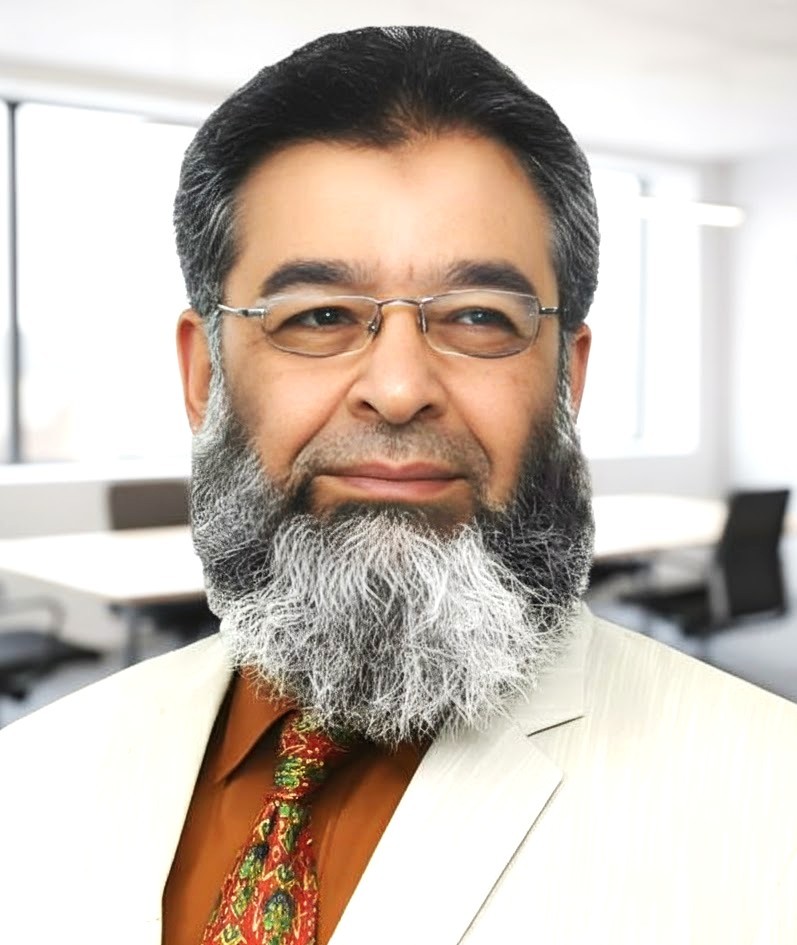
By Muhammad Mohsin Iqbal
The memory arrives with an almost cinematic persistence, as if time has refused to dim its edges. I still recall sitting in a packed cinema hall in the 1970s, watching Ben Hur unfold on the screen in all its sweeping grandeur. It was not merely a film in that moment but an experience of scale and movement, of human ambition rendered through spectacle. The chariot race, in particular, has stayed lodged in the imagination ever since. Charlton Heston’s character, steady and focused, guiding a team of powerful horses locked into a single harness, became an image of controlled force under pressure. Dust rises, hooves strike the ground in relentless rhythm, and the arena becomes a theatre of speed and danger where coordination matters more than individual strength.
What lingers most is not just the spectacle but the underlying lesson it seemed to whisper even then: that success in moments of high stakes rarely belongs to the solitary actor. It belongs instead to those who can align their energies, however different, into a shared direction. The chariot moves not because one horse dominates, but because each submits its strength to a common pull. In that sense, it is less a story of power than of synchronisation.
That image has resurfaced in recent reflections on the fragile and complex terrain of international mediation, particularly the ongoing attempts to manage tensions between the United States and Iran. Diplomacy in such contexts rarely advances in straight lines. It is more akin to a set of reins pulled gently from different directions, where misjudgement or impatience can send the entire effort veering off course. The analogy of the chariot, imperfect as all analogies are, nevertheless captures something essential: the need for coordination among actors who may not fully share each other’s instincts, but who recognise the consequences of failure.
There was a time when even simpler forms of collective labour carried this same logic. The old bullock cart, once a common sight, tells its own quiet story of shared burden. A single animal might falter under strain, but a pair, working in uneven yet complementary rhythm, could sustain the journey. When one tired, the other compensated. Progress was not about speed but endurance, not about dominance but balance. It is a reminder that cooperation is not a modern invention of diplomacy, but an ancient survival strategy refined across generations.
Within this frame, Pakistan’s diplomatic engagement has been presented as a mediatory effort aimed at easing tensions and encouraging dialogue between rival parties. The process, by its nature, has unfolded away from public spectacle, in corridors rather than open arenas. It has involved sustained contact, careful signalling, and a consistent emphasis on negotiation over escalation. Those involved have sought to keep communication channels open at moments when they risked closure, attempting to prevent misunderstandings from hardening into irreversible positions.
Such efforts, as described by those close to the process, have drawn on multiple strands of statecraft. Political leadership has provided direction, while diplomatic channels have worked to maintain engagement with a range of international interlocutors. Security institutions, too, have played a role in ensuring that domestic considerations remain aligned with external messaging. The complexity of such coordination should not be underestimated; even within a single state, aligning perspectives across institutions requires patience and persistence.
Yet it would be misleading to suggest that the path has been smooth. Deep mistrust between the principal parties has shaped every stage of the process. Historical grievances continue to cast long shadows, while contemporary geopolitical rivalries add further tension. Each gesture of dialogue has had to contend with domestic political pressures, regional uncertainties, and the ever-present risk that events elsewhere could disrupt carefully constructed understandings. In such an environment, even small advances carry weight, while setbacks can quickly erase months of effort.
The significance of these efforts extends beyond the immediate actors involved. At a time when global systems are increasingly sensitive to disruption, even limited conflict between major regional and international players carries wider consequences. Energy markets react swiftly to uncertainty, trade routes adjust to perceived risks, and financial systems absorb shocks that ripple far beyond their point of origin. Preventing escalation is therefore not only a regional concern but a global one, tied to the stability of an already strained international order.
As these efforts continue, the underlying lesson remains consistent with that long-remembered cinematic image: coordinated movement achieves what isolated strength cannot. Whether in ancient arenas, rural roads, or modern diplomatic corridors, progress depends on the ability to move together, even when the path is uneven and the outcome uncertain. The hope, fragile but persistent, is that such coordination will hold long enough to turn precarious balance into durable peace.
(The writer is a parliamentary expert with decades of experience in legislative research and media affairs, leading policy support initiatives for lawmakers on complex national and international issues, and can be reached at editorial@metro-Morning.com)
