





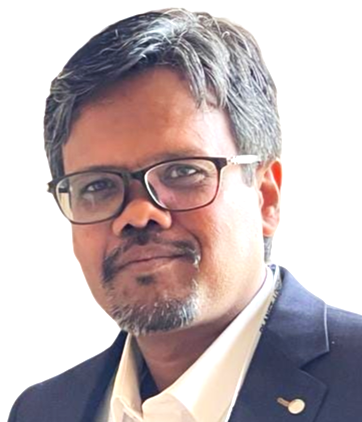
By S.M Inam
The meeting between Prime Minister Muhammad Shehbaz Sharif and leading members of the business community arrived at a moment when Pakistan’s economic landscape remains fragile, uneven and under constant pressure from inflation, debt and slow growth. Against that backdrop, the prime minister’s expression of gratitude towards industrialists who have continued to support the government carried both political meaning and economic urgency. It reflected a recognition that the state alone cannot steer recovery without the participation of those who generate investment, jobs and exports.
Muhammad Shehbaz Sharif emphasized that a durable partnership between the state and private sector was essential for long term stability. He described business leaders as ambassadors of Pakistan’s economic identity, a framing that highlights how closely national reputation is now tied to commercial performance. The government’s current consultations on the 2026 to 27 budget signal an attempt to involve the private sector earlier in policy design rather than treating it as a reactive stakeholder once decisions are made.
At the heart of the discussion lies a familiar challenge. Pakistan continues to rely heavily on a narrow export base while imports remain structurally high. The prime minister’s focus on export led growth is not new, but its urgency has deepened. Without expanding foreign earnings, fiscal space remains constrained and external financing pressures persist. Efforts to bring the informal economy into the tax net also reflect a long standing gap in governance, where large segments of economic activity remain outside formal regulation and contribution.
The government has argued that business friendly policies are beginning to stabilize confidence among investors. Yet confidence is a fragile currency. It depends not only on incentives but on predictability, consistent regulation and trust in institutions. Investors are unlikely to commit long term capital in environments where policy shifts are abrupt or administrative hurdles remain unresolved. For Pakistan, this means reforms must extend beyond announcements and into the slower work of institutional consistency.
Pakistan’s export structure remains concentrated in textiles, leather, sports goods, surgical instruments and agricultural commodities. These sectors have carried the economy for decades but now face rising global competition and limited value addition. The growing potential of information technology and digital services offers a possible shift, yet it remains underdeveloped relative to regional peers. Unlocking this sector would require investment in skills, infrastructure and regulatory clarity that supports startups and service exports.
Agriculture remains another critical pillar of any sustainable strategy. It continues to employ a large share of the population and contributes significantly to export earnings. However, productivity is held back by outdated farming methods, water inefficiencies, poor storage systems and weak supply chains. Crops such as rice, cotton, mangoes and wheat already have global demand, but losses after harvest and inconsistent quality reduce their international competitiveness. Without targeted investment in modernisation, the sector risks underperforming its potential.
Foreign investment, meanwhile, is closely tied to perceptions of governance. Simplifying procedures, reducing bureaucratic delays and strengthening transparency are not abstract reforms but practical requirements for economic momentum. A one window facilitation system, if effectively implemented, could reduce friction and improve investor experience. However, the credibility of such initiatives depends on execution rather than design alone.
The broader question is whether economic reform can translate into social relief. Persistent inflation and unemployment have placed significant strain on households, particularly among lower and middle income groups. Any growth strategy that does not address living costs risks deepening inequality and weakening public support for reform. Export growth and investment inflows must therefore be connected to job creation and price stability if they are to be politically and socially sustainable.
Pakistan’s economic debate often oscillates between immediate stabilisation and long term restructuring. The challenge for the current leadership is to bridge that divide without losing momentum on either front. The engagement with the business community suggests an awareness of this balance. Whether it leads to meaningful structural change will depend on how consistently these discussions are translated into policy that is both credible and enduring.
(The writer is a former government officer and a senior analyst on national and international affairs, can be reached at inam@metro-morning.com)
