





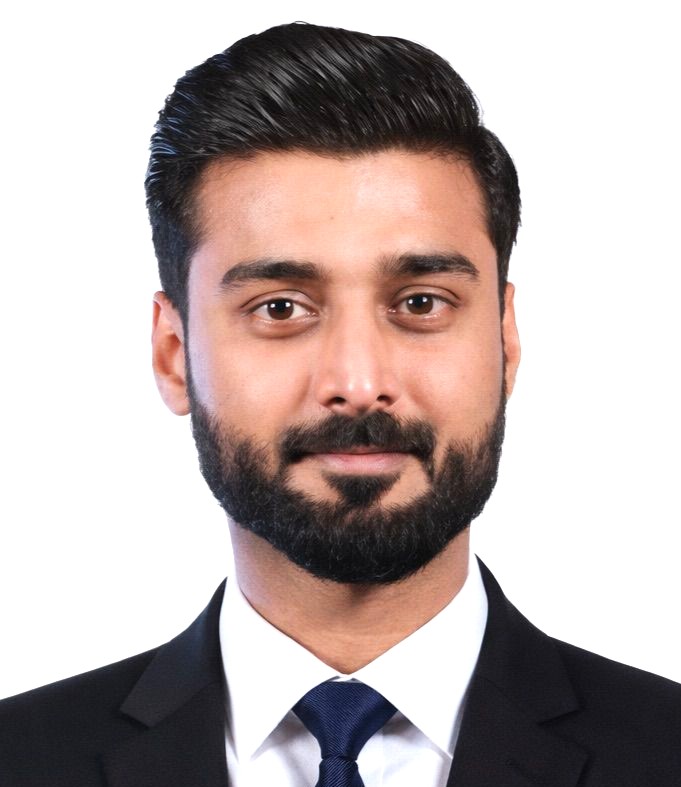
By Umer F. Pirzada
Nearly a decade after Altaf Hussain’s exclusion from mainstream politics, Karachi’s persistent challenges continue to raise difficult questions about representation, reconciliation and democracy. Karachi is a city of contradictions. It generates a substantial share of Pakistan’s economic activity, yet its residents often struggle with basic municipal services. It is home to millions of ambitious Pakistanis, yet many feel politically unheard. Having closely followed Karachi’s political evolution for years, I find it difficult to ignore a question that continues to surface in conversations across the city: after nearly a decade of Altaf Hussain’s exclusion from mainstream politics, has Karachi actually become better governed?
For many residents of urban Sindh, the answer is far from obvious. One does not have to agree with Altaf Hussain on every issue, or even support him politically, to recognise the impact he had on Pakistan’s urban politics. Under his leadership, the Muttahida Qaumi Movement (MQM) transformed from a student movement into one of the country’s most influential political forces. Before the emergence of the MQM, many Urdu-speaking residents of Karachi and Hyderabad felt politically marginalised despite their significant contribution to Pakistan’s economy and public institutions. The MQM’s rise fundamentally changed that dynamic.
That legacy is impossible to discuss without addressing the controversy that followed. Altaf Hussain’s remarks against Pakistan in 2016 were wrong. Yet he later expressed regret and publicly apologised for those remarks. The debate today is not whether those statements occurred. The debate is whether a democratic system should leave any room for reconciliation after an apology has been made. History suggests that political reconciliation is neither unusual nor incompatible with democracy. Around the world, countries have often found ways to reintegrate controversial political figures into constitutional politics after periods of conflict and confrontation.
Supporters of Altaf Hussain often argue that the period during which the MQM operated under his leadership coincided with stronger political representation for urban Sindh and a more visible focus on urban development. They point to infrastructure projects, road networks, flyovers, underpasses, improvements in municipal administration and local government empowerment during periods when the MQM exercised considerable political influence.
Many former MQM supporters believe that MQM-Pakistan has struggled to maintain the political influence, unity and negotiating strength that once characterised the movement founded by Altaf Hussain. Similarly, critics of the Pakistan Peoples Party argue that, despite governing Sindh for much of the past two decades, many urban challenges remain unresolved, particularly in Karachi. The result is a political reality that neither side can ignore: a significant number of people in Karachi continue to feel that their concerns are not being adequately addressed.
Ultimately, democracy is not about ensuring that everyone agrees. It is about allowing citizens to make their own choices. Those who oppose Altaf Hussain should have every opportunity to campaign against him. They should be free to criticise his record, challenge his ideas and persuade voters that he does not deserve another chance. As a citizen who believes in democratic inclusion, I respectfully appeal to Pakistan’s establishment and state institutions to consider a path towards reconciliation. This is not an appeal to forget the past, nor is it an attempt to excuse mistakes. Altaf Hussain made mistakes, and those mistakes were serious.
But he has acknowledged them, apologised for them and expressed regret. My request is simple. Give Altaf Hussain an opportunity to participate in Pakistan’s political process within the framework of the Constitution and the law. Let him present his case to the public. Let his opponents present theirs. And, most importantly, let the people decide. Karachi’s future should not be determined by exclusion. It should be determined by democracy. In the end, confidence in democracy means confidence in the judgment of ordinary citizens.
(The writer is a social media activist, IT expert and a journalist with English media. He can be reached at editorial@metro-morning.com)
