





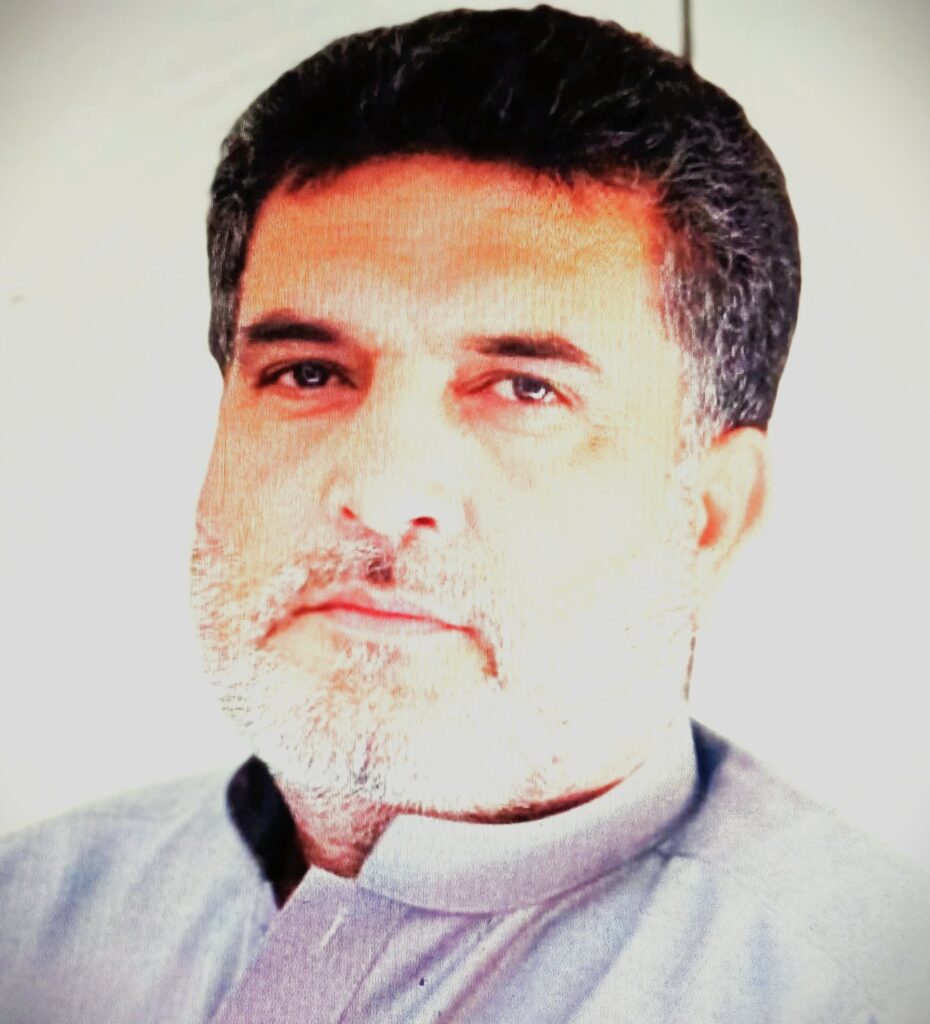
By Khpalwak Mohmand
The recent demand by the All Tribes Jirga to accord formal legal status to jirgas in the tribal areas is more than a procedural request. It reflects a deeper anxiety about identity, governance and access to justice in regions where the state’s formal institutions remain distant, slow, or often mistrusted. For many in the tribal districts, the jirga is not an alternative to justice but its most immediate and culturally legitimate form. It is both a memory of continuity and a living mechanism of dispute resolution that has shaped Pakhtun society for centuries.
At its core, the jirga is not a fixed institution with rigid rules but a social practice rooted in consultation, consensus and collective wisdom. In Pakhtun areas across Afghanistan and Pakistan, it has long functioned as a mechanism through which disputes are not only settled but socially absorbed. Land conflicts, family disputes, questions of honour, and even inter-tribal tensions have traditionally been brought before assemblies of elders whose authority rests less on formal power and more on moral standing within the community. The legitimacy of the jirga lies in its perceived fairness, speed and ability to restore social balance rather than simply assign blame.
In Afghanistan, the “Loya Jirga” occupies an even more prominent position in the political imagination. It has historically been convened to take decisions of national significance, from the formation of governments to the endorsement of constitutional frameworks. At various moments in the country’s history, it has functioned as a parallel source of authority, sometimes reinforcing and at other times challenging formal state structures. This broader tradition underscores how deeply embedded the idea of collective decision-making is within the region’s political culture.
The relevance of jirgas has also been visible in periods of acute crisis. During the years of militancy and counterinsurgency in Pakistan’s former Federally Administered Tribal Areas, jirgas often played a quiet but crucial role in mediation. Tribal elders acted as intermediaries between communities and the state, and at times between the state and non-state armed actors. In places such as Bajaur, North and South Waziristan and Mohmand, jirgas helped defuse tensions, negotiate local truces and restore fragile forms of order where formal governance structures had limited reach. In this sense, they operated as informal stabilisers in highly volatile environments.
Yet the position of jirgas has become more complicated in recent years, particularly after the merger of the tribal districts into Khyber Pakhtunkhwa. The extension of constitutional jurisdiction and formal judicial structures has altered the legal landscape, but not necessarily the social expectations of justice. While the modern court system offers legal safeguards and procedural protections, it is often perceived as distant, costly and slow. In contrast, jirgas continue to offer speed, accessibility and decisions that are immediately enforceable within local social frameworks. This tension between formal legality and social legitimacy remains unresolved.
Critics of the jirga system point to its potential for reinforcing patriarchal norms, uneven power relations and outcomes that may not always align with constitutional rights or international human rights standards. These concerns are neither new nor without merit. However, the persistence of jirgas suggests that any sustainable approach to justice in these regions must engage with, rather than ignore, existing social structures. The challenge, therefore, is not simply to replace jirgas with courts, but to consider how informal and formal systems might coexist within a broader framework of legal pluralism.
There is also a growing recognition in comparative legal studies that community-based dispute resolution mechanisms can complement formal justice systems, particularly in societies where state capacity is uneven. In many parts of the world, from restorative justice models in New Zealand to local mediation systems in parts of Africa, hybrid approaches have been developed to bridge the gap between law and lived reality. The jirga, in its own historical context, represents a similar attempt to localise justice.
What is required now is not romanticisation of tradition, nor its wholesale rejection, but careful institutional engagement. If jirgas are to be granted any form of legal recognition, they must operate within clear constitutional boundaries that safeguard fundamental rights and ensure accountability. This would require structured training for elders, defined scopes of authority, and mechanisms for appeal or review within the formal judicial system. Without such safeguards, there is a risk that parallel systems of justice could deepen existing inequalities.
At the same time, the state must acknowledge that justice delayed is often justice denied, and that for many residents of remote districts, accessibility matters as much as legal precision. The question, therefore, is not whether jirgas should exist, but how they can be integrated into a broader ecosystem of dispute resolution that is both culturally resonant and legally sound.
Ultimately, the jirga endures because it reflects something fundamental about Pakhtun society: a preference for collective judgement over individual authority, and for negotiated settlement over adversarial confrontation. As Pakistan continues to navigate the challenges of governance in its former tribal regions, the future of jirgas will depend on whether the state can transform this traditional institution into a structured partner in justice rather than leaving it to operate in the margins.
(The writer is senior journalist at tribal district Mohmand, has in-depth knowledge of national and international issues, can be reached at editorial@metro-morning.com)
