





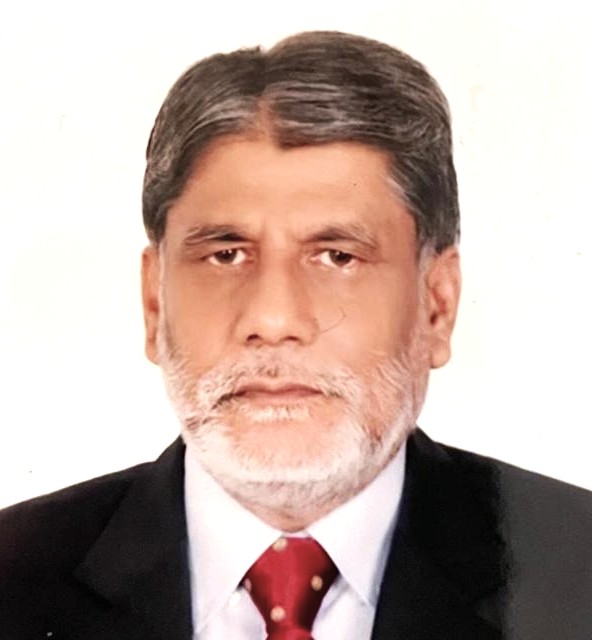
By Prof Dr. S K Akram Ali
My student years began in the disciplined corridors of Khulna Zilla School, an institution that, in those days under the Jessore Board, carried a quiet but formidable reputation for academic rigour. It was not merely a school; it was a formative environment where authority was not imposed but earned, and where teachers were treated as custodians of knowledge rather than functionaries of instruction. The headmaster, N. A. Talukdar, stood at the centre of that ethos. He represented a form of educational leadership that combined administrative clarity with moral seriousness, and in retrospect he remains a benchmark against which later encounters with institutional leadership have often fallen short.
The classroom itself was an archive of intellectual variety. Anis Siddiqui, known widely for his work as a biographer, brought literary sensitivity into the teaching of Bengali, while Zoha Sir’s English classes were marked by an uncompromising linguistic discipline that insisted on English as a complete world in itself. Jayanta Sir’s mathematics instruction demanded precision of thought, and Pandit Sir’s Bengali teaching carried the cadence of classical instruction. Together, they formed an ecosystem of mentorship that shaped not only academic performance but intellectual temperament.
From Khulna, my academic journey continued to B. L. College in Daulatpur, after Dhaka College remained an unfulfilled aspiration. The principal, M. B. Chowdhury, presided over an institution that functioned with a seriousness often associated with older collegiate traditions. I studied in the Humanities stream, taking Islamic History as a major subject under scholars such as Dr. Syed Mustafizur Rahman and Sohrabuddin Ahmed, both of whom would later occupy professorial positions at major public universities in Bangladesh. My residence at N. M. Hostel, under the supervision of Alhaj Gani Sir, further deepened the sense that education extended beyond the classroom into structured communal living.
The real transformation, however, came with admission to the University of Dhaka. My student life there unfolded across two political epochs, first under Pakistan and later in an independent Bangladesh, beginning in 1969 and concluding with my MA examinations in 1975. Iqbal Hall, later renamed Sergeant Zahurul Haq Hall, became the centre of that lived history. It was not merely accommodation; it was a political and emotional microcosm of a country in transition.
The March of 1971 remains etched in memory not as abstraction but as lived tension. Fear coexisted with political awakening, and the hall environment became increasingly charged with the anticipation of violence. The night of 25 March marked a rupture, as lives were lost within the broader violence that engulfed the country. The war that followed disrupted academic continuity and erased nearly two years of structured learning. Yet even amid uncertainty, student politics, intellectual debate and informal networks of solidarity continued to shape daily life.
Within this environment, figures such as Tofail Ahmed, A. S. M. Abdur Rab, Nure Alam Siddiqui and Shahjahan Siraj were not distant names but active presences within the hall. The political intensity of the period was matched by the fragility of survival. Later, the famine of 1974 added another layer of hardship, altering everyday life and reducing even basic institutional provisions. Students adapted by sharing resources, cooking in cramped rooms and relying on informal support systems that replaced formal welfare structures.
The intellectual world of Dhaka University was equally formative. Teachers such as Professor Abdul Halim, Dr. Tarek Samsur Rahman and Professor Anisuzzaman were not only academics but interlocutors in a wider intellectual conversation that extended beyond the university. Cultural figures like Samina Yasmin also formed part of this overlapping social space, where academic, political and artistic lives intersected in unpredictable ways.
Hall life, often dismissed as peripheral, functioned as a parallel institution of governance and mentorship. Leaders such as Advocate Jinnat Ali and others associated with student organisations shaped student welfare, distribution of relief and informal governance structures within the hall. Over time, successive provosts and house tutors, many from the mathematics and science disciplines, introduced a different administrative culture marked by discipline and procedural order.
The broader academic environment of the University of Dhaka was defined by a generation of scholars whose work gave the institution its reputation as the “Oxford of the East”. Figures in physics, chemistry, economics, political science, philosophy and history collectively shaped an intellectual tradition that extended far beyond national boundaries. Their scholarship established benchmarks that remain difficult to replicate in later decades.
Yet, alongside pride, there is also reflection. The contrast between past intellectual vibrancy and present institutional challenges is difficult to ignore. Concerns about research standards, language proficiency and global competitiveness have increasingly shaped discussions about the university’s trajectory. The issue is not nostalgia but continuity: whether the intellectual standards once established can be sustained and renewed under changing academic and political conditions.
Even my own academic path reflected institutional limitations and adaptations. A planned doctoral trajectory in one department had to be redirected due to supervisory constraints, eventually leading to completion of research under the History Department. Such experiences were not isolated but indicative of structural conditions within higher education at the time.
Looking back, the years spent across schools, colleges and especially at the University of Dhaka form a continuous intellectual biography. They represent a period when education was not only a means of professional preparation but a deeply embedded cultural and political experience. Despite institutional shortcomings that emerged later, the foundational years remain a source of intellectual identity and personal formation. The memory of those days continues to stand as both a personal archive and a reflection on what higher education once represented in the region.
(The writer is an academic and political commentator in Bangladesh and can be reached at news@metro-morning.com)
