





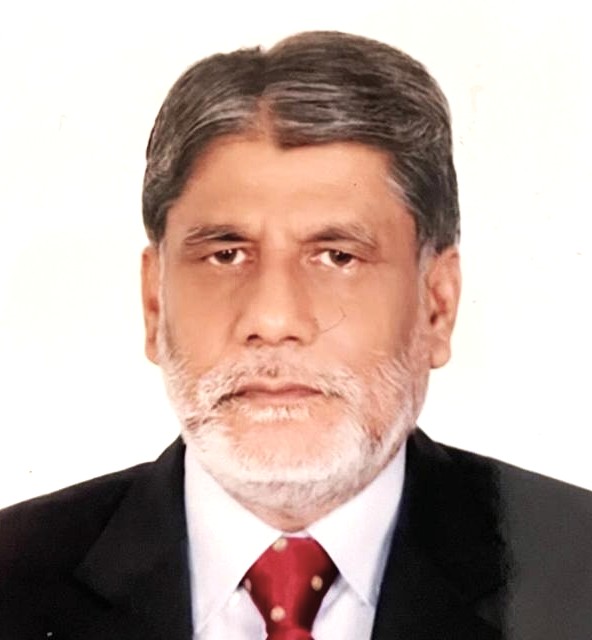
By Prof Dr. Lt. Col. (retd) Sheikh Akram Ali
The Bangladesh Military Academy (BMA) was established in 1973 at Cumilla Cantonment, adopting the line “Chiro Unnoto Momo Shir” (Ever High is My Head) from the poem of Kazi Nazrul Islam as its motto, with the vision of grooming leadership for the Bangladesh Army. The instructor officers who have served there have long regarded themselves as custodians of an institution entrusted with shaping not only military officers but also future leaders of the nation. Colonel Khondkar Nazmul Huda, Bir Bikrom, served as the first Commandant (ex-officio), while Lt. Col. Abdul Mannaaf joined as the Chief Instructor. However, the academy truly began to establish its identity when Colonel Abdul Mannaaf assumed the role of Commandant and the founder of PRAN-RFL Group, Major Amjad Ahmed Khan Chowdhury, joined as a Company Commander.
Major Anwar Hossain, Bir Protik, became the first Adjutant, while Major Mohammad Rafiqul Islam served as the first Physical Training Staff Officer. Major Kazi Shahed Ahmed, who would later establish ULAB and Meena Bazar, served as a Platoon Commander. The cadets of the 1st and 2nd Short Courses received their training at Cumilla before the academy permanently shifted to its present home at Bhatiari, Chattogram, in January 1976, laying the foundations for what would become the country’s premier military training institution. The relocation to Bhatiari marked a defining chapter in BMA’s history. It was here that the Long Course formally began, leading to the creation of the 1st Bangladesh Battalion. Five companies were established, each proudly named after one of the Bir Sreshthas—Jahangir Company, Nur Mohammad Company, Hamid Company, Mostafa Company and Rouf Company.
Brigadier General Mohammad Abdur Rahman assumed the historic responsibility of Commandant, while Lt. Col. Mohammad Rafiqul Islam became Battalion Commander and Chief Instructor. Together they played a central role in developing the academy’s early traditions, discipline and standards. During this formative period, I had the privilege of joining BMA as an Instructor of History in the rank of Lieutenant, an appointment that marked the beginning of my academic career. Dr. Hafiz Ahmed, former Principal of Dhaka College, also made history as the academy’s first civilian Director of Studies, demonstrating that intellectual development was considered as important as military training. My close professional relationship with Brigadier General Mohammad Abdur Rahman, who had previously been my Brigade Commander at Cumilla Cantonment, allowed me to approach him freely with new ideas.
Recognising the need for a publication that would reflect the thoughts, achievements and aspirations of the cadets, I proposed the launch of a cadet magazine. The Commandant welcomed the initiative, although Lt. Col. Rafiqul Islam initially questioned whether I possessed the experience necessary to undertake such a task. With his eventual encouragement and support, the magazine Chiro Unnoto Momo Shir was published in June 1979 before the Passing Out Parade of the 7th Short Course. Looking back, I remain deeply proud to have served as the founder editor of what became one of BMA’s enduring publications, contributing to the intellectual and cultural life of the academy alongside its rigorous military education. December 1979 represented another milestone in BMA’s evolution.
President Ziaur Rahman, himself a graduate of Pakistan’s Kakul Military Academy, reviewed the historic Passing Out Parade of the 1st BMA Long Course after two demanding years of military preparation. During the same ceremony, he presented the National Standard to the academy, symbolising the confidence and trust that the state placed in its future officers. Begum Khaleda Zia and their sons, Tarique Rahman and Arafat Rahman, also attended the ceremony, making it one of the most memorable occasions in the academy’s history. The success of the experimental Long Course demonstrated that Bangladesh possessed both the vision and institutional capacity to train its own professional military leadership. President Zia again reviewed the Passing Out Parade of the 3rd Long Course in December 1980, an occasion that would become the final BMA parade he attended before his assassination at Chattogram Circuit House in May 1981.
For many years, while command remained with officers repatriated from the Pakistan Army, institutional continuity was largely maintained. However, serious challenges emerged after leadership increasingly passed to officers commissioned directly through BMA. According to this perspective, the decline accelerated during the tenure of General Moeen U Ahmed, whose political ambitions drew the military into a period of uncertainty. The tragic BDR massacre of February 2009 dealt another severe blow, inflicting deep psychological and institutional damage upon the Bangladesh Army. Following Sheikh Hasina’s return to power later that year, the army’s professionalism, in this view, deteriorated further as political considerations increasingly overshadowed merit, independence and institutional integrity.
Recent developments, however, are presented as offering cautious optimism. During the July Revolution and the period that followed, the Bangladesh Army under the current Chief of Army Staff has received considerable praise both domestically and internationally. While some initially questioned his intentions, his supporters argue that his conduct, commitment to professionalism and management of recent national responsibilities have strengthened confidence in the institution. The establishment of the 2nd Bangladesh Battalion at BMA, with companies named after the four Caliphs of Islam, is portrayed as one of his most significant and enduring initiatives.
Yet names and symbols alone cannot transform an institution. The real challenge lies in instilling the principles of integrity, courage, justice, discipline and selfless service that those historical figures represent. Only by embedding these values within the character of every cadet can BMA truly fulfil its founding mission of producing principled military leaders. If these ideals are consistently nurtured through leadership, education and institutional culture, the Bangladesh Army may yet restore the professionalism and honour upon which its future depends, enabling the nation to move forward with renewed confidence and purpose.
(The writer is an academic and political commentator in Bangladesh and can be reached at news@metro-morning.com)
BangladeshArmy #BangladeshMilitaryAcademy #BMA #Bangladesh #MilitaryHistory #Leadership
