





He emphasised that negotiations remained centred on regional stability, de-escalation and economic cooperation rather than military or defence capabilities, signalling a diplomatic emphasis on restraint
By Pervaiz Mughal
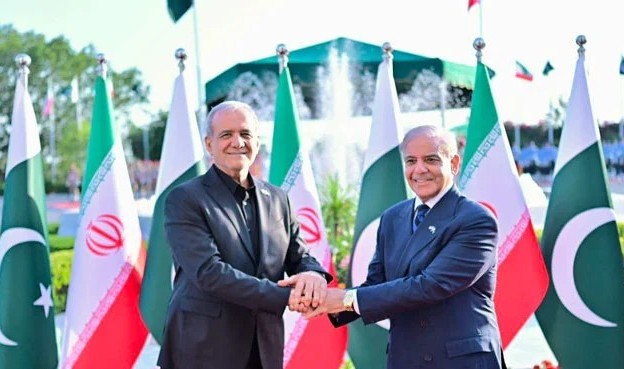
ISLAMABAD: Prime Minister Shehbaz Sharif has said that the issue of ballistic missiles was never part of any negotiating agenda, firmly pushing back against speculation during a joint press conference in Islamabad with Iranian President Masoud Pezeshkian, where both leaders sought to project unity on regional diplomacy and expanding bilateral cooperation.
Speaking alongside the visiting Iranian president, Sharif said he could state “without hesitation” that discussions on ballistic missiles were not included in any formal talks held under the diplomatic framework associated with the Islamabad understandings. He stressed that the focus of the negotiations had remained on broader regional stability, de-escalation, and economic cooperation, rather than defence capabilities.
The prime minister argued that Iran, like any other sovereign state, had the right to maintain defensive systems and questioned what he described as selective scrutiny of Tehran’s security posture. He maintained that attempts to mischaracterise the scope of the talks risked undermining a fragile but important diplomatic process.
Sharif described the recent memorandums and understandings signed in Islamabad as a significant step forward, saying they reflected cautious optimism for de-escalation in a region long shaped by volatility. He said Pakistan had played a mediating role in facilitating dialogue and expressed hope that continued engagement could open the door to a more stable phase in regional relations.
He also acknowledged the support of regional partners, including Qatar, Saudi Arabia and Türkiye, in sustaining diplomatic momentum. During the press conference, the prime minister praised what he described as the resilience of the Iranian people during periods of heightened tension and expressed solidarity over past losses.
He said Pakistan and Iran shared a longstanding relationship rooted in history, culture and geography, and would continue to deepen cooperation across sectors including trade, energy and connectivity.
Sharif also referred to the role of Field Marshal Syed Asim Munir, crediting behind-the-scenes coordination as part of broader efforts to support diplomacy and regional stabilisation. He said Pakistan would continue to resist what he called attempts by “spoilers” to derail progress.
In response, President Masoud Pezeshkian described Pakistan and Iran as nations bound by a shared destiny, saying Tehran regarded Islamabad as more than a neighbour and instead as a brotherly and trusted partner.
