





By our correspondent
KARACHI: Trade unions and civil society representatives on Wednesday called on the court to vacate a stay order that had effectively blocked the participation of workers’ representatives on the Workers Welfare Fund (WWF) board, warning that the move had begun to undermine efforts aimed at safeguarding labor rights and ensuring institutional accountability.
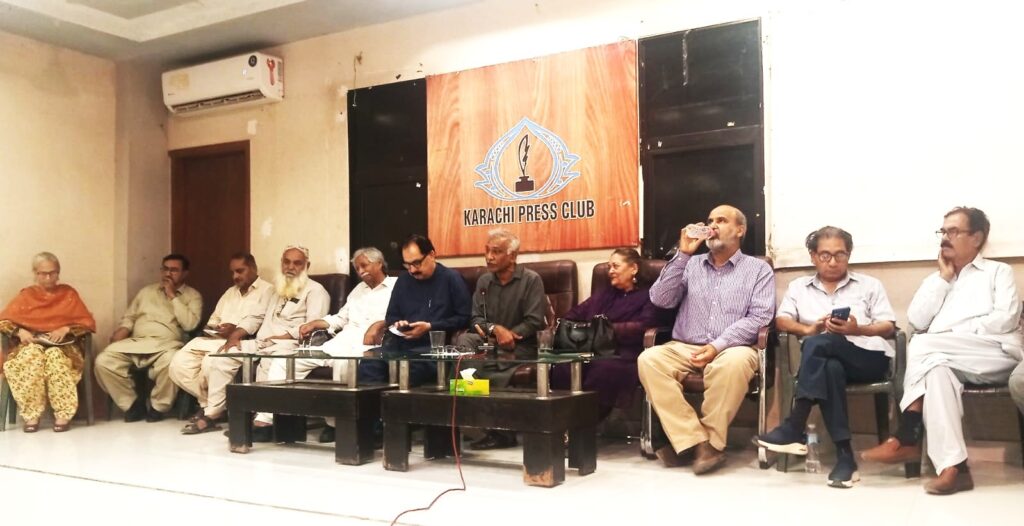
Addressing a press conference at the Karachi Press Club, labor leaders said a series of legal petitions had been filed in recent weeks with the apparent intent of paralyzing the functioning of the newly constituted board. The body, they noted, had only recently been notified on February 4, 2026, following formal approval by the Sindh cabinet, raising questions about the timing and motivation behind the challenges.
Nasir Mansoor, a member of the governing body of the Worker Welfare Board, said the stay order had come in the wake of a key decision taken at the board’s March 3 meeting, which was chaired by Sindh Labor Minister Saeed Ghani. At that meeting, the board had resolved to initiate an inquiry into, and seek recovery of, approximately Rs25 billion that it alleged had been misused during the tenure of the previous administration.
Mansoor suggested that the decision to pursue recoveries had triggered a backlash in the form of legal challenges designed to stall the board’s work. He outlined what he described as a pattern of irregularities under the former management, pointing to multi-billion rupee repair contracts awarded without due process, as well as an Rs8 billion health and accidental insurance scheme that he said fell outside the WWF’s legal mandate.
Nasir Mansoor also questioned the transparency of an Rs3 billion e-bike scheme, alongside other expenditures including the distribution of sewing machines, the purchase of an office in Clifton, and a digitalization project.
Speakers at the press conference maintained that the current board had already moved to cancel a number of contentious contracts and had begun preliminary steps towards recovering misused funds. They argued that continued judicial restraint would only embolden those seeking to evade scrutiny, and urged the courts to allow the board to operate independently and without obstruction.
Concerns were also raised about members of the governing body who, according to union representatives, had acted as little more than passive observers in the face of alleged misconduct. The participants closed by reiterating their demand for accountability, insisting that the protection of workers’ interests must remain central to the board’s mandate.
