





By Imtiaz Hussain
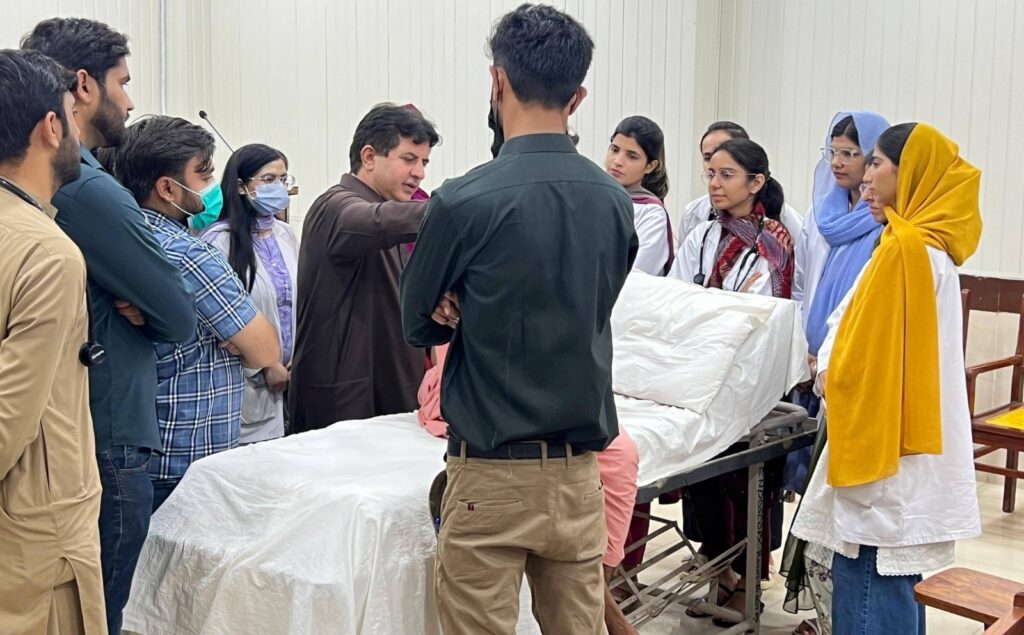
SUKKUR: A clinical academic session held at a Khairpur Teaching Hospital highlighted the importance of careful bedside examination and clinical reasoning, as house officers engaged in a routine weekly exercise where theory meets patient care.
The lecture hall remained quiet except for the movement of white coats and the sound of stethoscopes as Dr Saeed Ahmad stepped forward during the session.
He examined the posterior chest of a patient admitted with unexplained breathlessness, working methodically with observation, palpation and percussion. During the examination, he noted reduced chest movement on the left side and a stony dull percussion note instead of the expected resonance.
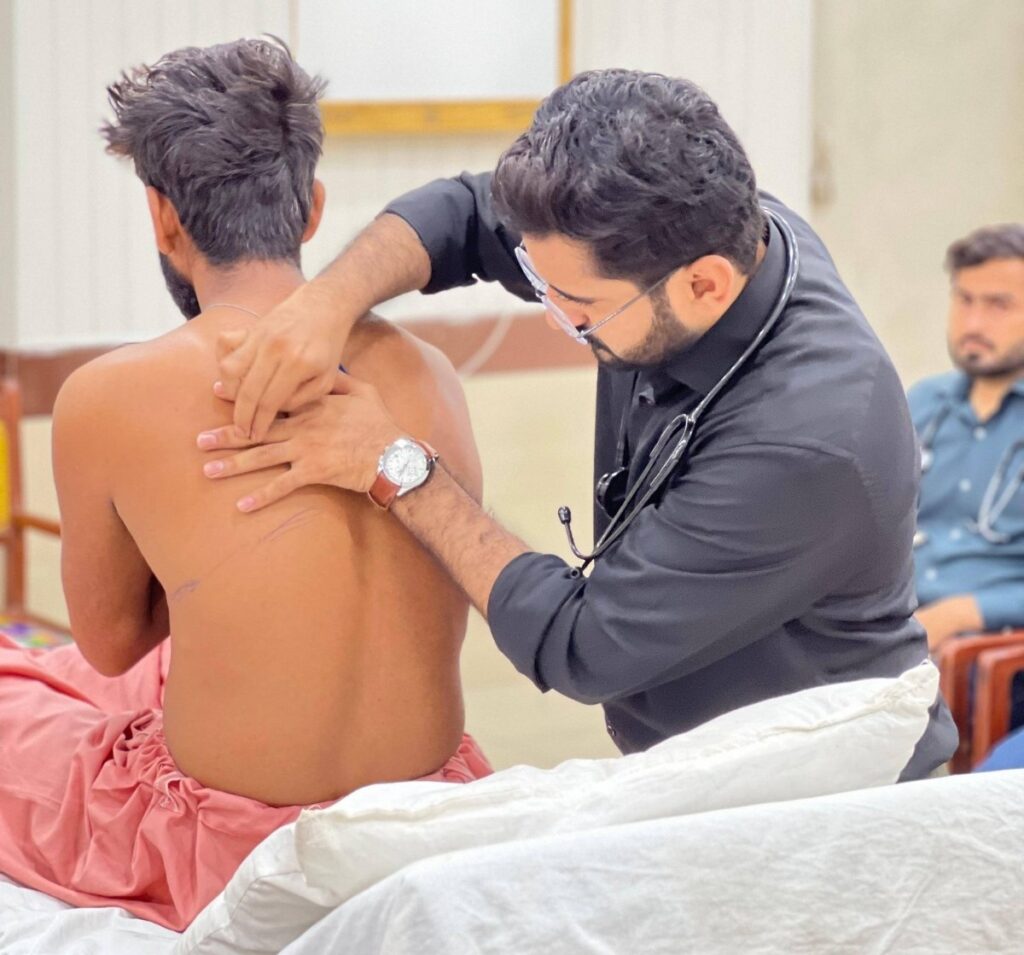
On auscultation, air entry was significantly reduced on the left side. When the patient was asked to speak, vocal resonance also appeared diminished.
After pausing to analyse the findings, Dr Saeed identified possible differentials including left-sided pleural effusion, a lung mass or pleural thickening, each consistent with the clinical signs observed.
The next stage of the session was conducted by Associate Professor of Medicine Dr Abdul Hayee Phulpoto, who led a viva voce with focused questions on diagnosis and clinical reasoning. He asked why pneumonia was less likely, what could cause tracheal shift and how the diagnosis would be confirmed.
Dr Saeed defended his findings by linking clinical signs with underlying pathophysiology and explaining his reasoning for including and excluding different conditions.
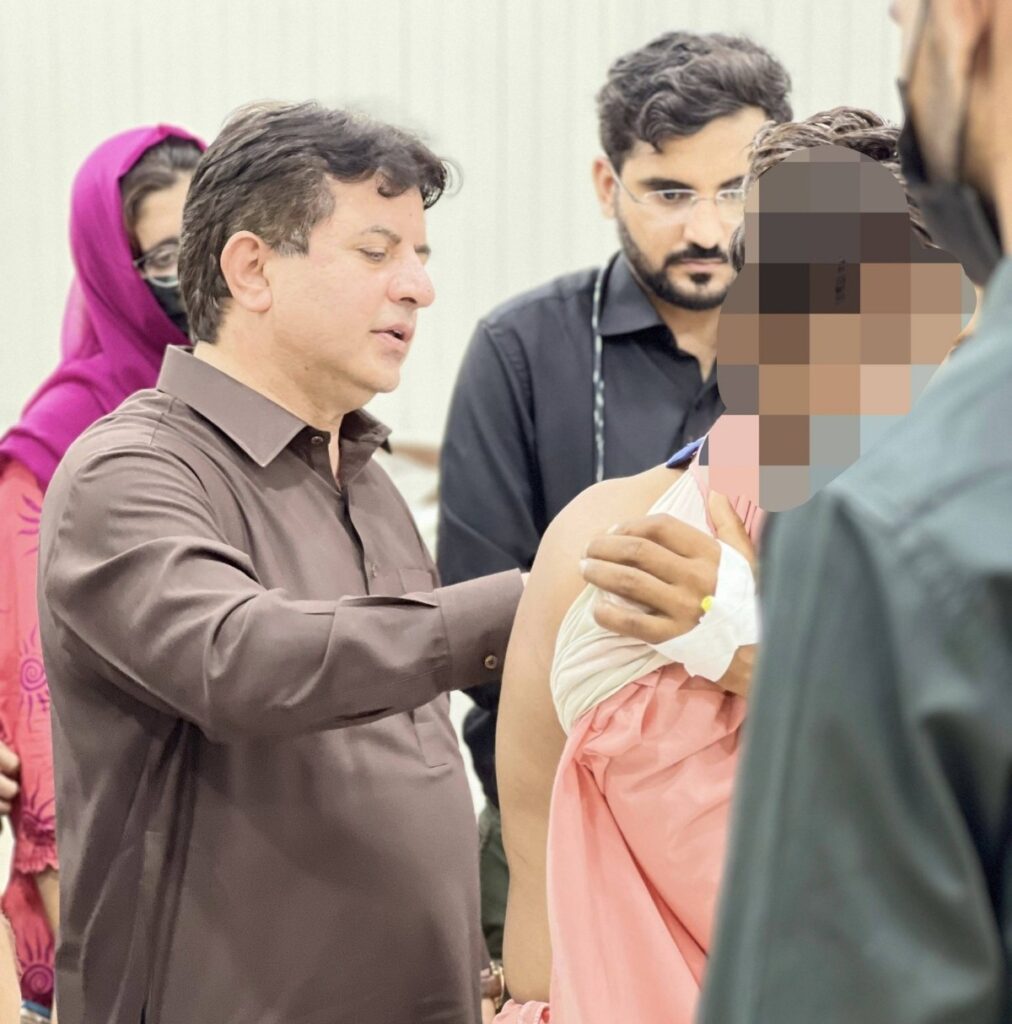
Following the exercise, Dr Phulpoto engaged postgraduate residents and house officers in a feedback discussion, highlighting strengths and identifying gaps in examination technique and clinical presentation. He also demonstrated corrections, showing how small adjustments in examination and careful listening could improve diagnostic accuracy.
For participants, the session reinforced the importance of detail in clinical medicine, where careful observation and reasoning are essential for accurate diagnosis.
As the session concluded, one house officer remarked that true learning comes from understanding what the chest does not immediately reveal, capturing the essence of the training exercise.
