





News Desk
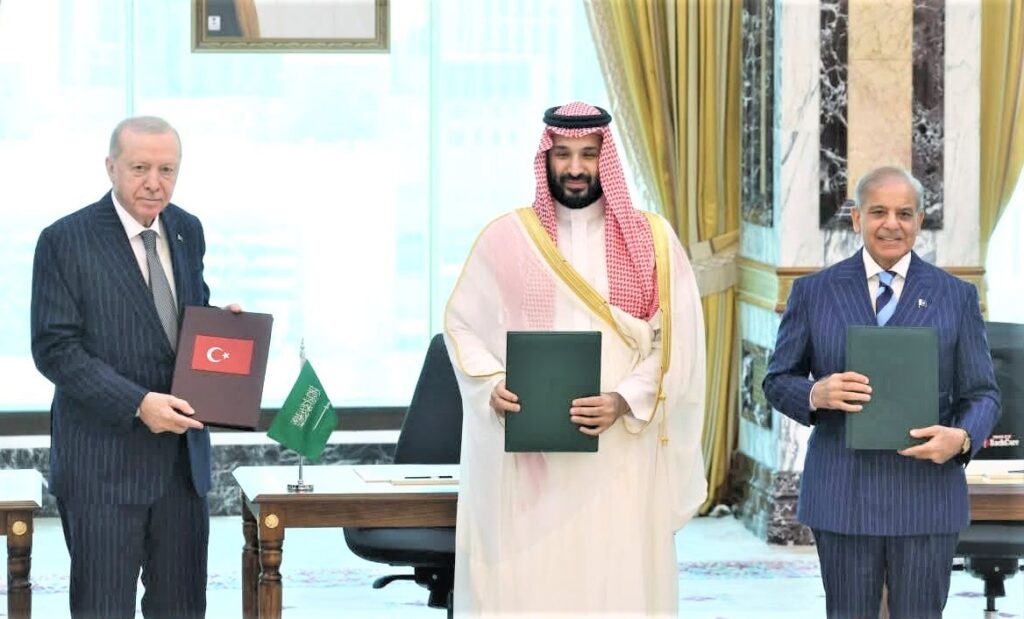
LONDON: The defence agreement signed by Pakistan, Saudi Arabia and Türkiye has gained renewed international attention following the recent Iran-US war and continuing instability in the Middle East, according to British media.
Read More: https://metro-morning.com/bilawal-hails-mecca-pact-as-boost-to-regional-security/
The Guardian reported that the three countries had signed a Nato-style defence agreement amid continuing attacks by Houthi rebels in Yemen. Under the pact, an armed attack on one member would be treated as an attack on all three.
The agreement brought together three of the Muslim world’s most influential states in a new security arrangement and marked a significant development in regional defence cooperation. Its collective-defence provision was expected to draw particular attention as tensions continued to affect several parts of the region. Read More: https://metro-morning.com/the-makkah-agreement/
The pact’s first major test could potentially emerge in Yemen, where fighting and attacks have continued to pose risks to regional security. The conflict has also raised concerns over the safety of neighbouring countries and the wider movement of trade and shipping through the region.
In the latest violence, at least 58 Yemeni government troops were reportedly killed in missile and drone attacks carried out by the Houthis. The attacks added to concerns over the continuing military confrontation in Yemen and its potential to draw in wider regional actors.
Read More: https://metro-morning.com/erdogan-moves-to-ease-concerns-over-new-defence-pact/
In a separate incident near Saudi Arabia’s border with Yemen, 11 civilians were reportedly injured in an attack in the country’s southern region.
The developments highlighted the security challenges facing the region as Pakistan, Saudi Arabia and Türkiye moved to deepen strategic coordination. The three countries have maintained close political and diplomatic ties while also seeking greater cooperation on regional security issues.
Turkish President Recep Tayyip Erdoğan said the alliance would remain open to other countries. His remarks suggested that the arrangement was not intended to remain limited to its three founding members.
The agreement has therefore emerged as a potentially important element in the changing regional security landscape, particularly as Middle Eastern states reassess their defence and diplomatic arrangements following the Iran-US conflict and continuing instability in Yemen.
