





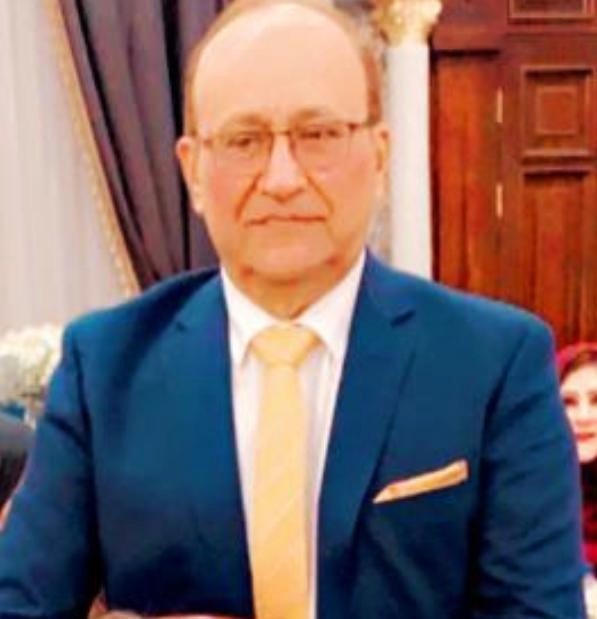
By Amir Muhammad Khan
The recent peace talks in Islamabad have once again drawn the world’s attention to Pakistan’s diplomatic and peacemaking efforts in the region. Pakistan has once again presented itself as a country that can become a mediator and a bridge of communication in complex global conflicts. However, the question is whether these efforts are really moving towards a lasting peace or will be limited to temporary diplomatic activities. The idea of getting its way under the shadow of America’s stubbornness and threats has made the talks frivolous. Be it any talks, on any issue, they are based on some twos and some fives. During the talks, threats and humiliation of the opponent lead the negotiations into frivolity. In terms of war, Iran has shown its iron fist, which has become a symbol of fear for America’s sidekick Israel, so strict conditions are being put forward, along with threats from America.
Opinion leaders around the world are in a state of flux, and my previous column further reinforces that this state of flux is causing global speculators, especially the alleged nominees, to increase their wealth. On the other hand, the rising and falling of oil prices have severely damaged the world economy. The current effects on the economy will be detrimental to everyone, be they developing countries or wealthy countries, for years to come. The biggest problem in the current negotiations is that a lack of trust remains the main obstacle. The parties are suspicious of each other’s positions, and political and security concerns at every step slow down the negotiations. The result is that talks are ongoing, but progress is limited. In the negotiating environment, Israel’s role is that of a party which uses war as a policy weapon.
Netanyahu’s politics have always revolved around internal pressure, security fears, and the narrative of military superiority. In the case of Iran, its leaders also emphasize that pressure should not be reduced, because for them, softness means weakness. The very narrative of terrorism that Israel considers a success becomes a burden for the United States, and creates an opportunity for Iran to negotiate. This contradiction complicates this crisis. Iran’s internal and regional position is also complicated at the moment. On the one hand, its leadership maintains a tough stance; on the other hand, it knows that a full-scale war could be dangerous for it. Therefore, Tehran is adopting a dual strategy: toughening up in negotiations and advancing its resistance capabilities on the ground. This dual policy gives it the opportunity to make the enemy realize that if its demands are not met, the price will increase.
The result is that neither side seems likely to be completely victorious, and Iran is also reluctant to accept Israel’s terms. This is what makes this crisis all the more dangerous: because when all sides consider themselves partially strong, the scope for compromise decreases. It would be more appropriate to say that the real test in this new tension in the Middle East will not be a test of weapons, but a test of nerve. If Islamabad makes some partial progress from the negotiations, it may provide temporary relief, but it will not resolve the fundamental conflict. If the negotiations fail, the region could once again enter a state of tension in which any accident could change the entire map at any moment.
On the one hand, Islamabad’s hosting is giving it an important place in global diplomacy; on the other hand, if these negotiations do not reach any conclusion, there may also be an impression of disappointment. The world has already seen many such negotiations that began with noise but ended in silence. The real problem is that in today’s global politics, there are many peace speeches but weak practical decisions. From the war in Ukraine to the tensions in the Middle East, it is seen everywhere that power on the ground, economic advantage at the negotiating table, and assurances of border security seem to be the first conditions of the game. If the parties show flexibility in the Islamabad talks, the process can reach an initial agreement. The real challenge for Pakistan is that it is not just a host but an effective facilitator.
In conclusion, it can be said that the Islamabad peace talks are at a delicate but important juncture. Hope and fear are both going hand in hand. International organizations and personalities are recognizing Pakistan’s role in the Islamabad talks, while the hypocritical democracy and hypocritical diplomacy of the neighborhood have been dealt a blow – something the people of Pakistan are expressing happiness over, and praying for the development of Pakistan. They consider this successful diplomacy to be beneficial for the future freedom of Kashmir.
(The writer is a veteran journalist having 45 years of experience across print and broadcast media in Pakistan and the United States, can reached at editorial@metro-morning.com)
