





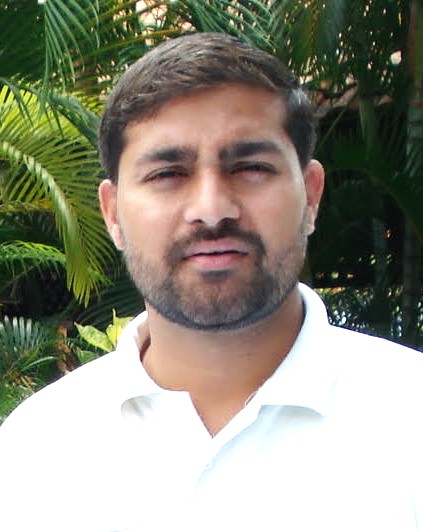
By Dr Zawwar Hussain
Balochistan occupies a unique place in Pakistan’s national landscape. Stretching across almost 44 per cent of the country’s landmass, it is a province of extraordinary contrasts. Snow-capped mountains, vast deserts, long coastal highways and sparsely populated plains make it one of South Asia’s most striking regions. Rich in minerals, energy resources and strategic trade routes, it holds immense promise for Pakistan’s economic future. Yet the same geography that gives Balochistan its importance also creates challenges that are impossible to ignore, particularly for those travelling through its remote districts.
For many visitors, the greatest misconception is that modern technology can solve every problem encountered on the road. In most urban centres, navigation has become almost effortless thanks to smartphones and satellite-based applications. Drivers have grown accustomed to following digital maps without a second thought. In Balochistan, however, that confidence can quickly prove misplaced. Large stretches of the province experience weak or unavailable mobile signals, while internet services are occasionally disrupted because of operational or security requirements. When connectivity disappears, navigation applications lose much of their usefulness, leaving travellers without reliable directions or the ability to communicate during an emergency.
This reality is not unique to Pakistan. Across the world, digital tools remain dependent on physical infrastructure. Even the most sophisticated navigation system cannot function properly where communication networks are absent. Technology should therefore be viewed as an aid rather than a substitute for preparation, local knowledge and common sense. Anyone planning to travel across Balochistan should understand that a successful journey begins long before the vehicle leaves home. Offline maps, sufficient fuel, drinking water, emergency supplies and a clearly shared travel itinerary are not signs of excessive caution. They are practical measures that can make the difference between inconvenience and disaster.
The province’s highways present another challenge. Distances between towns are often considerable, while petrol stations, repair facilities and medical services may be separated by many kilometres. A mechanical failure that would be little more than an inconvenience in a city can become a serious emergency on an isolated mountain road. The importance of vehicle maintenance, defensive driving and careful planning cannot therefore be overstated. Every journey demands patience and attention, particularly on routes where difficult terrain and limited emergency response increase the consequences of even minor accidents.
Road safety deserves greater attention in Pakistan as a whole. Every year, traffic accidents claim well over a million lives worldwide and injure many millions more. While Balochistan experiences less traffic than more densely populated provinces, the risks are shaped by different realities. Long travel distances, isolated highways and delayed access to emergency care mean that drivers must adopt a mindset based on prevention rather than reaction. Responsible driving is not simply about obeying speed limits. It requires constant awareness, adequate rest, sound judgement and the willingness to adapt to changing road conditions.
Alongside geographical challenges, security concerns continue to shape public perceptions of travel in parts of the province. Tragic attacks on civilians have understandably heightened anxiety and left families grieving unimaginable losses. The killing of Karachi businessman Ali Murtaza Jameel while travelling with his family in Mastung was one such incident that shocked the country. Beyond the immediate tragedy, such attacks leave deep emotional scars on surviving relatives, especially children who witness violence at close quarters. These incidents reinforce the state’s responsibility to provide safe roads and effective protection for ordinary citizens.
Yet it is equally important to resist the temptation to define an entire province by the actions of a violent minority. Millions of people in Balochistan are themselves victims of insecurity and economic hardship. They aspire to the same things as citizens elsewhere in Pakistan: peace, education, employment and a better future for their families. The province has long been known for its hospitality, resilience and rich cultural traditions. To portray it solely through the lens of conflict is neither fair nor accurate.
Improving safety requires more than stronger security measures alone. Reliable telecommunications, better transport infrastructure and faster emergency services are equally essential. Mobile connectivity is no longer a luxury reserved for convenience. It has become a critical public service that enables emergency response, supports disaster management and allows families to remain connected when circumstances become uncertain. Expanding communication networks across remote areas should therefore be treated as an investment in public safety and national development.
Ultimately, no application can replace informed human judgement. Maps may indicate the shortest route, but only preparation, awareness and respect for local advice can ensure a safe journey. Travellers should remain informed about road conditions, heed official security advisories and avoid unnecessary risks. In a province as vast and demanding as Balochistan, caution is not an obstacle to travel but the foundation of it.
The future of Balochistan is inseparable from the future of Pakistan. As security improves, communication networks expand and infrastructure continues to develop, the province’s enormous economic and social potential will become increasingly evident. Unlocking that promise requires sustained investment, effective governance and above all a commitment to protecting the lives of those who travel its roads. Every safe journey strengthens confidence in the province, and every improvement in public safety brings Pakistan one step closer to a more connected, prosperous and united future.
(The writer is a PhD scholar with a strong research and analytical background and can be reached at news@metro-Morning.com)
