





Field Marshal Asim Munir praised training standards, emphasising continuous adaptation to modern warfare as essential for maintaining operational readiness and effectiveness
By ISPR
ISLAMABAD: Field Marshal Asim Munir said Pakistan’s armed forces, working alongside what he described as unwavering public support, remained fully committed to eliminating all forms of terrorism from the country, as he delivered a message that blended operational reassurance with institutional resolve during a visit to Quetta.
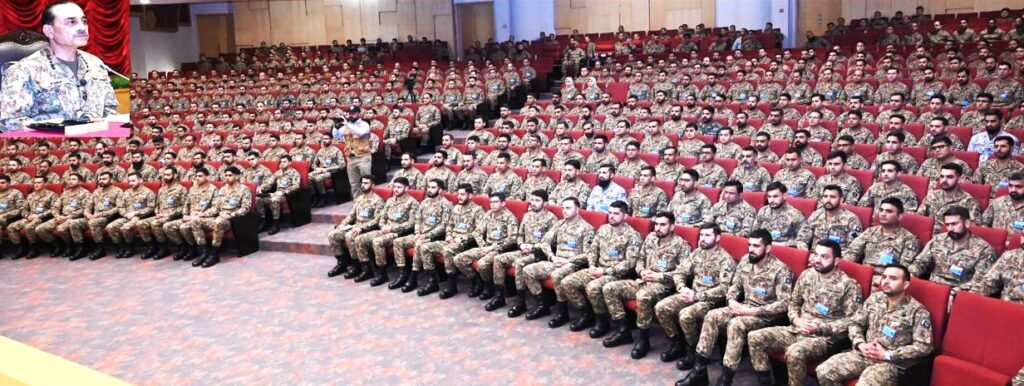
According to a statement issued by the Inter-Services Public Relations, the Chief of Defence Forces made the remarks while visiting Quetta Garrison, where he also reviewed training and professional standards at the Command and Staff College Quetta.
The visit, officials said, was intended to assess preparedness and reinforce the military’s emphasis on professional development amid what he characterized as rapidly evolving security challenges. During his interaction with officers and faculty members, he praised the institution’s training environment and underscored the need for continued adaptation to modern warfare.
Asim Munir pointed in particular to the growing significance of emerging technologies and multi-domain operations, saying the nature of conflict had shifted and demanded a more agile, better trained officer corps. Maintaining operational readiness and institutional discipline, he added, remained central to responding effectively to shifting threats.
The Field Marshal also reiterated that Pakistan’s progress could not be derailed by propaganda, misinformation or what he described as externally supported militancy. Such efforts by hostile actors, he suggested, would ultimately fail in the face of national unity and institutional resilience.
His remarks reflected an ongoing narrative within the security establishment that internal cohesion and public backing were essential to countering destabilizing forces. He further stressed that sustainable development was closely tied to effective governance, people-centered policymaking and robust security arrangements, arguing that no long-term economic or social progress could be achieved without coordinated national effort.
As part of his visit, he also met officers and troops deployed in Balochistan, where he highlighted the importance of achieving lasting peace and stability in the region. He acknowledged the provincial government’s efforts to promote socio-economic development and to strengthen ties between the state and local communities, describing these measures as critical foundations for durable stability in an area long shaped by complex security and developmental challenges.
