





By Aslam Shah
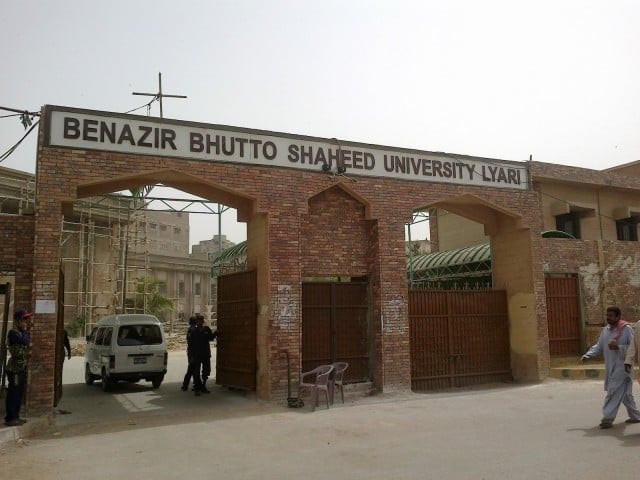
KARACHI: Despite explicit directives issued by the Chief Minister of Sindh, an inquiry into the controversial appointment of the Registrar at Benazir Bhutto Shaheed University Lyari (BBSUL) has yet to begin, raising concerns over governance, transparency, and adherence to merit in public-sector higher education institutions.
According to official correspondence, Sindh Chief Minister Syed Murad Ali Shah had directed the Vice Chancellor to submit an inquiry report within three days following complaints lodged by Members of the Provincial Assembly Muhammad Asif Khan and Yousuf Baloch regarding the direct appointment of a Grade-20 Registrar.
However, more than a month after the directive was issued, neither has an investigation been initiated nor has any administrative action been taken against the incumbent official. The directive was conveyed through a letter bearing No. SO(IV)CMS/CMD/U&B/2025-26/131 dated May 5, 2026, issued by the Chief Minister’s Secretariat and signed by Section Officer Muhammad Moazzam Soomro.
The appointment of Dr Raza Haider Nadeem as Registrar has attracted criticism from legislators, academics, and civil society representatives, who allege that the recruitment process deviated from established norms and merit-based procedures.
According to available records, Dr Nadeem was appointed as Director Admissions/Registrar through an order dated February 4, 2025 (No. BBSUL/ADMIN/2025/8349). Critics claim that he reportedly assumed charge before the formal issuance of his appointment notification, which was subsequently signed on March 4, 2025.
Legal and academic experts have questioned the legality of a direct appointment to a Grade-20 administrative post, arguing that such positions ordinarily require a transparent and competitive recruitment process in accordance with higher education regulations.
Sources within the university and several elected representatives from Lyari have alleged that the appointment was made to accommodate a favoured candidate, though these allegations have not been independently verified. The controversy has intensified amid claims that qualification and experience requirements were modified to suit a particular applicant. Critics contend that the post traditionally requires a combination of advanced academic credentials, extensive administrative experience, familiarity with higher education regulations, and appointment through open merit.
The matter was reportedly discussed in the 17th and 19th meetings of the university’s Syndicate, where the direct appointment was ultimately endorsed. During the 19th Syndicate meeting, held on January 19, 2026, under the chairmanship of Vice Chancellor Prof Dr Syed Hussain Mehdi, the appointment reportedly came under discussion. Sources familiar with the proceedings claim that a representative of the Higher Education Commission raised objections regarding the direct appointment, but these objections were not accepted by the majority of members present. It was also reportedly argued during the meeting that only one candidate had applied for the position and that the appointment should therefore be confirmed.
Further concerns have been raised regarding the advertisement issued for the Registrar’s post. Critics allege that several eligibility conditions appeared unusually tailored and deviated from conventional recruitment standards for senior university administrators. The advertised criteria reportedly included a three-year contract appointment, a maximum age limit of 57 years, 15 years’ experience in educational institutions, and 10 years’ administrative experience in Grade-17 or above in government, semi-government, autonomous, or public-sector organisations, along with submission of application documents including CNIC, domicile, PRC, photographs, and a pay order of Rs5,000.
Observers argue that the criteria omitted qualifications generally associated with senior university administrative appointments and may have significantly narrowed the field of potential applicants.
The delay in implementing the Chief Minister’s directive has prompted renewed calls for an independent inquiry into the appointment process. Education sector stakeholders maintain that public universities must uphold transparency, merit, and institutional integrity in all senior-level recruitments. As of the filing of this report, neither the university administration nor the Sindh government has publicly disclosed the findings of any inquiry into the matter.
