





By Pervaiz Mughal
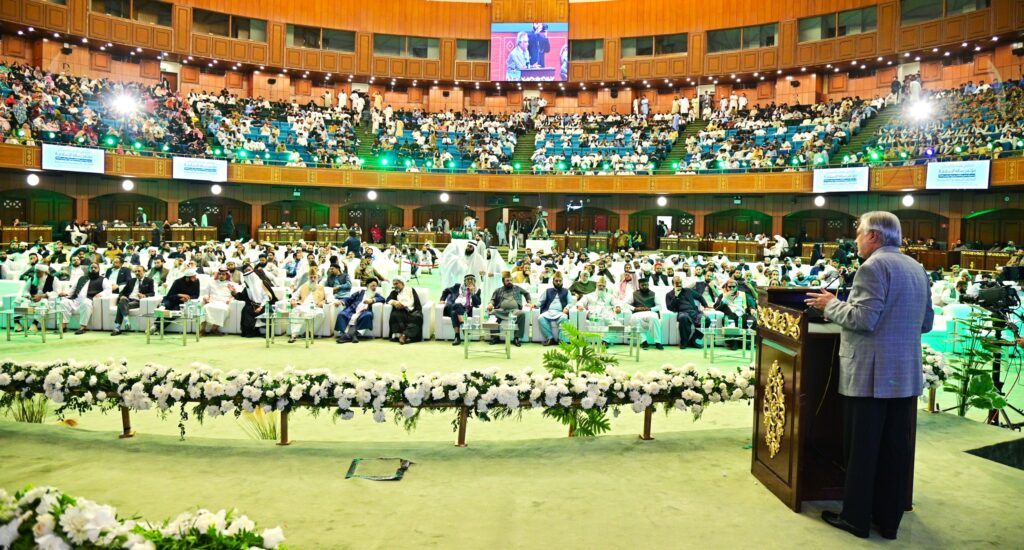
ISLAMABAD: Islamabad hosted a gathering of religious scholars and policymakers on Thursday as Pakistan’s foreign minister used the platform to restate the country’s diplomatic priorities, regional outlook and domestic narrative of resilience.
The Deputy Prime Minister and Foreign Minister, Senator Mohammad Ishaq Dar, addressed the second session of the Ulema Council Conference, where he welcomed the participation of both national and international scholars. Officials present described the conference as part of an ongoing effort to engage religious leadership in discussions that intersect with diplomacy, identity and regional stability.
In his address, Dar stressed what he called Pakistan’s consistent commitment to peace and stability in the region, saying that Islamabad had maintained sustained diplomatic engagement aimed at de-escalation and dialogue both within South Asia and beyond. His remarks came against the backdrop of continuing regional sensitivities, where diplomatic messaging is often closely watched and carefully calibrated.
The Deputy Prime Minister reiterated Pakistan’s long-standing positions on Jammu and Kashmir and Palestine, framing both as central to the country’s foreign policy stance within the Muslim world. He also highlighted the importance of unity among Muslim-majority countries, placing emphasis on the role of the Organization of Islamic Cooperation as a platform for collective action.
He argued that coordinated engagement through multilateral institutions remained essential for addressing shared political and humanitarian concerns. The foreign minister further spoke about Pakistan’s efforts to confront Islamophobia internationally and to promote interfaith harmony, presenting it as part of a broader diplomatic and moral responsibility on the global stage.
